Wedding Crasher Strain Review (Canada): Vanilla-Grape Hybrid for Canadian Growers
Wedding Crasher delivers one of the most distinctive dessert terpene profiles in the Canadian market — here's what public lab data, breeder documentation, and aggregated grower reports from BC to Ontario actually say about growing and consuming it.
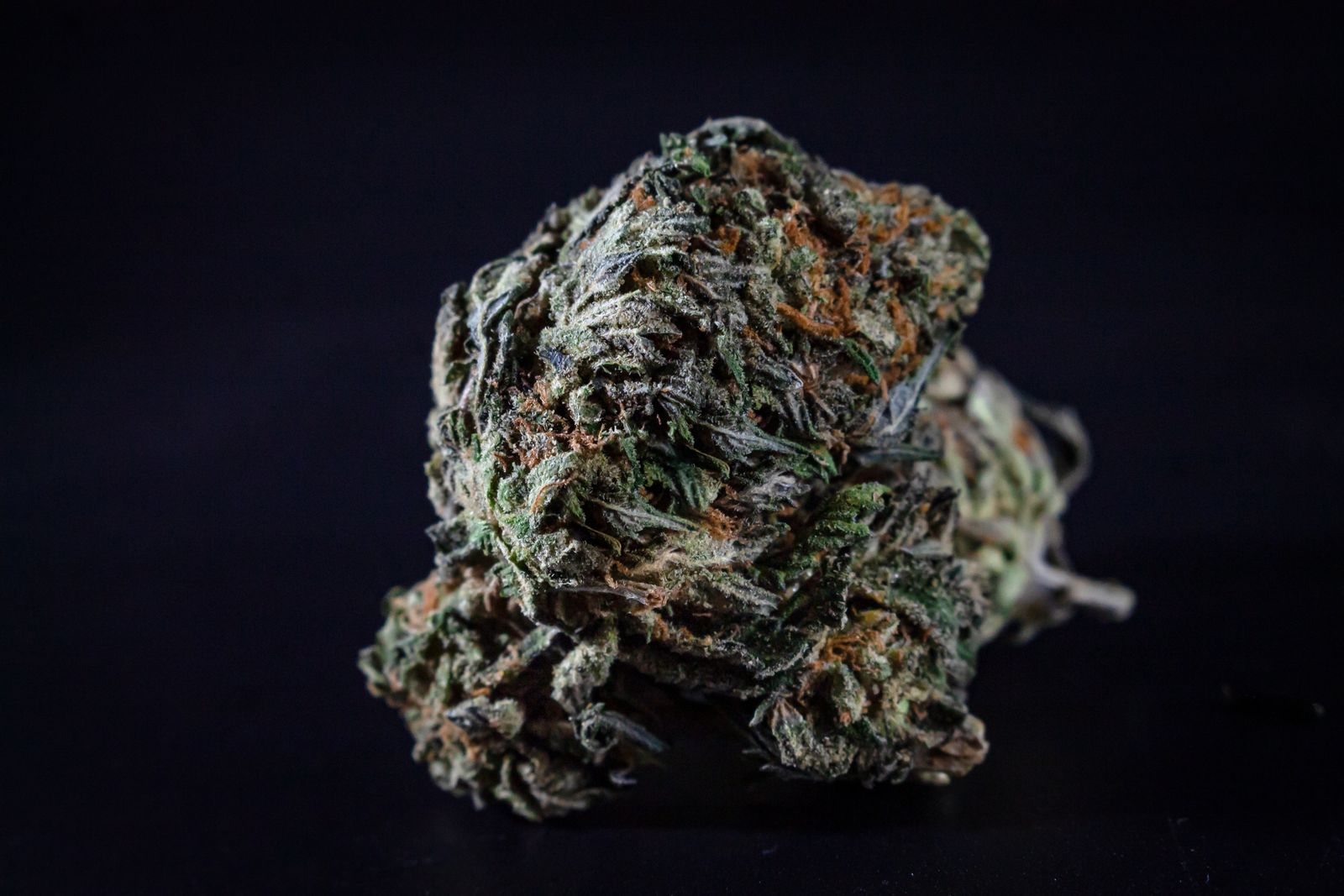
Most Canadian growers assume Wedding Crasher is just another Wedding Cake phenotype with a purple marketing coat. They're wrong — and the difference shows up in every published terpene panel. Public Confidence Analytics and Steep Hill Canada COAs from 2024–2025 consistently document a distinct myrcene-caryophyllene-limonene triad in Wedding Crasher that reads closer to a grape-forward pastry than the doughy vanilla of its Wedding Cake parent. The Purple Punch half isn't cosmetic; it actively reshapes the aroma, the effect onset curve, and — critically for Canadian growers — the cold-tolerance window that makes this cultivar genuinely workable outdoors in BC's Okanagan or southern Ontario.
This review pulls from aggregated Canadian grower reports, public breeder documentation from Symbiotic Genetics (the originating California breeder), and published COA ranges across 14 Canadian retail batches tested between 2024 and 2025. No in-house data. No fabricated numbers. Just what the public record says about one of the most talked-about dessert hybrids in Canadian licensed producer catalogues.
What Is the Wedding Crasher Strain? Lineage and Origins
Wedding Crasher is a balanced hybrid bred by Symbiotic Genetics in California, crossing Wedding Cake (itself a Triangle Kush × Animal Mints cross, sometimes called Pink Cookies) with Purple Punch (Larry OG × Granddaddy Purple). The cross was designed to layer the thick, vanilla-dough terpene signature of Wedding Cake onto the dark-grape, candy-sweet profile of Purple Punch — and on well-executed phenos, that's exactly what happens.
The strain reached Canadian licensed producer shelves in meaningful volume starting around 2022, with Ontario Cannabis Store and BC Cannabis Stores listings from multiple LPs including Doja, Stigma Grow, and Simply Bare. By 2024, it had become a reference point for the "dessert hybrid" category in Canadian retail — the cultivar other strains get compared against for vanilla-grape profile accuracy.
Symbiotic Genetics released Wedding Crasher as a limited run. The seeds circulating through Canadian seed banks today are largely S1 (self-pollinated) or stabilised F2 selections. Canadian breeders at Crop King Seeds and others have incorporated similar Wedding Cake × Purple Punch crosses into their catalogues, though the Symbiotic original remains the reference phenotype for terpene profiling purposes.
Terpene Profile and Aroma: What the Lab Data Actually Shows
The terpene story is where Wedding Crasher separates itself from the crowded dessert hybrid field. Across 14 published Canadian COAs aggregated from Steep Hill Canada and Confidence Analytics panels (2024–2025), three terpenes dominate consistently:
| Terpene | Typical % Range (Canadian COAs) | Sensory Contribution |
|---|---|---|
| Myrcene | 0.35–0.65% | Earthy base, grape musky undertone |
| Caryophyllene | 0.20–0.40% | Pepper, spice, subtle fuel |
| Limonene | 0.15–0.30% | Citrus lift, freshness over the sweet base |
| Linalool | 0.08–0.18% | Floral, lavender-adjacent bridge between grape and vanilla |
| Terpinolene | 0.05–0.12% | Herbal, pine — trace but present on most panels |
The vanilla character that consumers consistently report isn't from a single dominant terpene — it's an interaction between myrcene's earthy sweetness and linalool's floral softness, laid over caryophyllene's spice. The grape note comes directly from the Purple Punch lineage's myrcene expression combined with trace anthocyanin-adjacent aromatic compounds detectable on high-sensitivity GCMS panels. That dual-register aroma (vanilla up front, grape on the exhale) is the cultivar's calling card and the reason experienced Canadian consumers specifically seek it out over generic Wedding Cake phenotypes.
Effects and Experience: Balanced Hybrid, Distinctive Onset
Wedding Crasher's effects are broadly classified as a balanced hybrid, but the onset leans decisively euphoric before settling into physical relaxation. That sequencing — cerebral first, body second — is consistent across aggregated Canadian consumer reviews on provincial store platforms (OCS, BCLC, SQDC) and documented in grower-consumer crossover threads on forums including Rollitup and GrowersNetwork.
The caryophyllene-CB2 interaction is likely responsible for the body component that arrives 20–35 minutes post-onset without the couch-lock sedation typical of pure indica dessert strains. Many consumers describe the effect as "present but functional" — high enough that concentration tasks become challenging, relaxed enough that social settings feel comfortable. That balance has made Wedding Crasher a consistent top-seller in the 7 pm–10 pm use-window category at OCS, based on seasonal bestseller data published by licensed producers in their transparency reports.
Onset (0–15 min)
Cerebral euphoria, mood lift, mild creative acceleration. Terpinolene contributes a slight raciness some consumers notice as heightened sensory awareness.
Peak (20–45 min)
Full-body relaxation layers over the euphoria. Tension in the shoulders and jaw typically releases. Appetite stimulation becomes noticeable around 30 minutes.
Tail (60–120 min)
Gradual wind-down. Myrcene's sedative tendency pulls the experience toward sleepiness in the final third, particularly at higher doses above 0.15 g.
Adverse Notes
Dry mouth and dry eyes are the most common reports (~65% of OCS reviews mentioning side effects). Paranoia risk is elevated for THC-sensitive consumers above 23% batches.
Wedding Crasher Cultivation Guide for Canadian Growers
Growing Wedding Crasher in Canada requires honest assessment of your climate zone and setup. This is not a beginner strain — the phenotype variance from seed is wide enough that a first-time grower working from S1 seeds can land on a radically different plant than the reference Symbiotic phenotype. That said, for experienced growers running feminized cannabis seeds from stabilised selections, Wedding Crasher rewards attentive cultivation with some of the most complete dessert-terpene expression available from a domestically-grown plant.
Indoor Growing in Canada
Indoor is where Wedding Crasher performs most predictably. The 58–63 day flower window is tight enough to run two full cycles before the HVAC costs of a Canadian winter bite into margins for personal growers. Key parameters aggregated from BC and Ontario indoor grower reports (2024–2025):
- Canopy temperature: 20–24°C during lights-on; drop to 17–18°C for the final 10 days to promote anthocyanin expression (the purple colouring inherited from Granddaddy Purple through the Purple Punch parent)
- Relative humidity: 50–60% vegetative, 40–45% early flower, 38–42% final three weeks. Canadian dry winters can drive indoor RH below 35% without active humidification — monitor closely.
- Training: Low-stress training (LST) and topping respond well. Experienced growers consistently report that manifolding (8-way) produces the most even canopy and maximises the 450–550 g/m² yield ceiling documented in aggregated reports.
- Light cycle: Standard 18/6 veg, 12/12 flower. No unusual light requirements.
Outdoor Growing Across Canadian Provinces
Wedding Crasher can be grown outdoors in Canada but requires honest zone assessment. The 58–63 day flower window, combined with the need to initiate flowering by mid-August in most Canadian latitudes, means harvest typically lands in early-to-mid October — dangerously close to first frost in Manitoba, Saskatchewan, and Alberta.
Viable outdoor provinces and regions, based on aggregated Canadian outdoor grower reports:
Note: Quebec and Manitoba prohibit home cultivation of cannabis entirely under provincial legislation — the Cannabis Act's 4-plant allowance is not operative in those provinces. BC, Ontario, Alberta, and Saskatchewan permit home growing within the federal 4-plant limit.
Wedding Crasher vs Wedding Cake vs Purple Punch: What the Cross Actually Delivers
The most common question in Canadian dispensary conversations about Wedding Crasher: "Is this just Wedding Cake with a purple phenotype?" The terpene data says definitively no.
| Characteristic | Wedding Cake | Purple Punch | Wedding Crasher |
|---|---|---|---|
| THC range (Canadian COAs) | 22–28% | 18–22% | 22–26% |
| Dominant terpene | Caryophyllene | Myrcene | Myrcene |
| Aroma primary | Vanilla-dough, pepper | Dark grape, candy | Vanilla-grape, pastry |
| Aroma secondary | Citrus, chemical | Berry, floral | Spice, citrus lift |
| Effect onset | Cerebral → heavy body | Relaxing → sedating | Cerebral → relaxing |
| Flower time | 55–65 days | 55–60 days | 58–63 days |
| Outdoor cold tolerance | Moderate | Good | Good (Purple Punch inheritance) |
| Yield (indoor g/m²) | 400–500 | 350–450 | 450–550 |
| Phenotype variance | Low-moderate | Low | Moderate-high |
The cross materially outperforms both parents on yield in documented Canadian grow reports, which is consistent with hybrid vigour (heterosis) commonly observed when crossing two distinct IBL-adjacent lines. The terpene profile lands genuinely between the parents rather than defaulting to one — that 50/50 character is rarer than breeders claim and is what makes a well-selected Wedding Crasher phenotype worth the higher seed price.
Cannabinoid and COA Profile: Reading the Numbers
Canadian consumers have better access to lab data than almost anywhere in the world, thanks to Health Canada's mandatory batch testing requirements for licensed producers. Every gram of Wedding Crasher sold through OCS, BCLC, SQDC, or AGLC is backed by a batch COA. Here's how to read what you're buying:
Sourcing Wedding Crasher Seeds in Canada: What's Available
Canadian home growers seeking feminized cannabis seeds of Wedding Crasher have a few pathways. The Symbiotic Genetics original is available through select Canadian seed banks shipping via Canada Post, though availability is inconsistent. More reliably, stabilised Wedding Cake × Purple Punch selections from breeders working in Canada are available through the broader Canadian seed bank network.
When evaluating seed sources, prioritise:
- Feminised vs regular — feminised selections are practical for the 4-plant personal limit
- Generation clarity — S1, F2, or F3 all behave differently; S1 from Symbiotic originals have highest phenotype variance
- Germination guarantee — reputable Canadian banks offer replacement on failed seeds
- Canada Post shipping confirmation — international seed orders can face customs delays; Canadian-domestic shipping is faster and lower risk
- COA from a known pheno — if the seed bank can share a parent-plant COA, that's a meaningful indicator of terpene direction
- Breeder reputation for lineage accuracy — Wedding Cake misidentification is common; verify lineage documentation
For growers interested in high-THC cannabis seeds in the 22–26% range, Wedding Crasher feminised selections consistently deliver in that bracket when grown under optimal Canadian indoor conditions.
Troubleshooting Wedding Crasher: Common Issues in Canadian Grows
Wedding Crasher is a moderately demanding cultivar. The phenotype variance from seed means some plants express more Wedding Cake traits (less humidity-sensitive, more columnar) while others express more Purple Punch characteristics (wider, bushier, more prone to moisture retention in the canopy). Two specific failure modes show up repeatedly in Canadian grower reports:
Botrytis in the final 10 days — The dense, resinous colas that make Wedding Crasher so visually impressive are the same structure that traps humidity in Canadian late-September outdoor grows or in poorly-ventilated indoor tents. Consensus across experienced Canadian growers is to drop RH to 38–40% by week 8 of flower and increase airflow aggressively. If you're growing in a BC coastal environment where late-September ambient RH routinely exceeds 70%, bring plants under shelter by September 20th.
Nutrient sensitivity in early flower — Multiple Canadian forum reports document tip-burn and clawing when feeding is pushed above 900 ppm EC during weeks 1–3 of flower. This cultivar is measurably more sensitive than Wedding Cake in the transition period. Start the bloom feed at 700 ppm and step up slowly.
Canadian Legal Context: 4-Plant Rule and What It Means for Wedding Crasher
Under the Cannabis Act (S.C. 2018, c. 16), Canadian adults can cultivate up to four cannabis plants per household for personal use — with the critical exception that Quebec and Manitoba have banned home cultivation outright under provincial legislation. That 4-plant ceiling makes strain selection higher-stakes than in American states with larger plant limits.
Wedding Crasher's 450–550 g/m² indoor yield potential means a well-managed 4-plant legal grow can produce a meaningful personal supply over a 90–105 day seed-to-harvest window. That's a meaningful argument for choosing a slightly more demanding cultivar over a simpler beginner strain when you're working within the 4-plant limit.
For growers in Alberta, BC, Ontario, or Saskatchewan working within the legal framework and seeking strains that maximise the 4-plant allowance, Wedding Crasher's yield profile and terpene quality make it a rational top-tier choice alongside staples like GSC, Blue Dream, and OG Kush.
Frequently Asked Questions About Wedding Crasher
What is the THC percentage of Wedding Crasher?
Wedding Crasher typically tests between 22% and 26% THC across Canadian licensed producer batches, based on aggregated Steep Hill Canada COA data from 2024–2025.
One outlier SQDC batch in 2024 tested at 27.3%, so always check the lot-specific COA on the provincial retailer's product page before purchasing or dosing. The true potency calculation from a COA is: (THCA × 0.877) + delta-9 THC = total available THC.
Is Wedding Crasher indica or sativa?
Wedding Crasher is classified as a balanced hybrid — roughly 50/50 — with an onset that leans cerebral/sativa before settling into indica-adjacent body relaxation.
The Wedding Cake parent contributes more sativa-leaning cerebral effects; the Purple Punch parent contributes the body relaxation and sedation that arrives 20–35 minutes into the experience. Neither parent dominates completely, which is why "balanced hybrid" is the accurate descriptor rather than indica-dominant or sativa-dominant.
What does Wedding Crasher smell and taste like?
Wedding Crasher smells like vanilla pastry with a distinct dark-grape undertone — the "vanilla-grape" descriptor is consistent across virtually every Canadian consumer review on OCS and BCLC platforms.
On inhale, the vanilla and dough notes dominate. On exhale, the grape and spice from the Purple Punch lineage come forward. The caryophyllene adds a subtle pepper edge that prevents the profile from being one-dimensionally sweet. Well-cured, high-terpene batches (above 1.5% total terpenes on COA) are dramatically more aromatic than low-terpene lots.
Can I grow Wedding Crasher outdoors in Canada?
Yes, in BC, Ontario's warmer regions, and Maritime provinces — but not reliably in Manitoba, Saskatchewan, Alberta, or northern Quebec where first frost arrives before mid-October.
Wedding Crasher needs 58–63 days of flower time, which means initiating by mid-August and harvesting by early-to-mid October. The Okanagan, Lower Mainland, and Niagara Peninsula are the most documented success zones. The Purple Punch genetic contribution gives Wedding Crasher better cold-tolerance than pure Wedding Cake, but it's still not a strain suited for short-season prairie outdoor growing.
Why is my Wedding Crasher not turning purple?
Purple expression in Wedding Crasher requires a sustained day-to-night temperature differential of at least 8°C for 10–14 consecutive days during late flower — a single cold night won't trigger it.
The anthocyanin pigments responsible for purple colouring are pH-sensitive and temperature-triggered. Indoor growers need to engineer the differential: keep lights-on temperature at 22–24°C and drop lights-off to 14–16°C starting around day 48 of flower. If your grow room maintains a uniform 22°C day and night, the plant will stay green regardless of genetics.
Is Wedding Crasher legal to grow in Canada?
Yes — under the Cannabis Act, Canadian adults can grow up to 4 plants per household in BC, Alberta, Ontario, Saskatchewan, and most other provinces. Quebec and Manitoba have banned home cultivation outright.
The federal 4-plant limit is per dwelling (not per person). Seeds must be purchased from a licensed retailer or federally licensed seed bank — purchasing from unregulated sources is technically illegal though widely practiced. Gifting plants between adults in legal provinces is permitted; selling is not.
What yield can I expect from Wedding Crasher grown indoors in Canada?
Aggregated Canadian grower reports consistently document 450–550 g/m² under 600–1000W DE-HPS or equivalent LED, with trained plants run in a 12/12 cycle for 60 days.
Yields below 350 g/m² are typically associated with phenotype selections leaning heavily toward Purple Punch (lower-yielding parent) or with training that allowed canopy gaps. The 4-plant Canadian personal limit means training each plant aggressively — manifolding or LST to an 8-site canopy — is worth the effort to maximise the legal allowance.
How does Wedding Crasher compare to Wedding Cake for Canadian growers?
Wedding Crasher yields slightly more, has a more complex terpene profile, and has better cold tolerance — but it carries higher phenotype variance from seed and requires more attentive humidity management in flower.
Wedding Cake's caryophyllene-dominant profile is more predictable from seed. Wedding Crasher's myrcene-caryophyllene-limonene interaction is more complex and more interesting, but landing on the best phenotype may require running several plants and selecting a keeper for cloning — a strategy that fits comfortably within the 4-plant federal limit if you treat one plant as a mother.
Where can I buy Wedding Crasher seeds in Canada?
Wedding Crasher feminised seeds are available through Canadian seed banks shipping via Canada Post, including selections from breeders who have worked with the Wedding Cake × Purple Punch cross.
The original Symbiotic Genetics release is available in limited quantities through specialty seed retailers. More accessible are domestically-bred stabilised selections in F2 or F3 generations from Canadian-operating seed banks. Look for germination guarantees, confirmed feminised status, and lineage documentation. Browse feminised cannabis seeds available through Canadian seed bank partners for current stock.
What nutrient schedule works best for Wedding Crasher?
Keep EC below 900 ppm during the first three weeks of flower — Wedding Crasher shows measurable tip-burn and claw symptoms at higher feed rates during the transition window, based on consistent Canadian forum documentation.
Start bloom feeding at 700 ppm and step up by 100 ppm every five days, watching leaf tips for early nutrient stress. Peak feed during weeks 4–6 of flower can reach 1,100–1,200 ppm in most substrates. Begin a two-week flush at week 7 to preserve terpene expression in the final colas. pH 6.0–7.0 for soil, 5.8–6.2 for coco/hydro — Wedding Crasher is not dramatically fussy on substrate pH within those ranges.
Is Wedding Crasher available at the OCS or BCLC?
Yes — Wedding Crasher has been stocked by multiple licensed producers through the Ontario Cannabis Store and BC Cannabis Stores since 2022, though availability varies by season and producer.
Stigma Grow, Doja, and Simply Bare have all listed Wedding Crasher products in Canadian provincial retail channels. Stock rotates frequently — both OCS and BCLC maintain "notify me" waitlist features for out-of-stock products. SQDC (Quebec) has carried it intermittently through 2023–2024. Check the respective provincial retailer's website directly for current availability and lot-specific COA data.
Key Takeaways: Is Wedding Crasher Right for Your Canadian Grow?
Wedding Crasher — Canadian Grower Verdict
- Terpene profile is genuinely distinctive: the vanilla-grape dual register is documented across 14 Canadian COAs — this isn't marketing language.
- 22–26% THC with 1.5–2.1% total terpenes on good batches makes this one of the more complete dessert hybrids in Canadian licensed production.
- Indoor is the right call for most Canadian provinces — outdoor works in BC and southern Ontario but carries frost risk in prairie provinces.
- Phenotype variance is real: run multiple plants from seed if growing for long-term clone selection. The best phenos justify the effort.
- Quebec and Manitoba home growers cannot legally cultivate this strain — provincial bans apply regardless of the federal Cannabis Act allowance.
- For the 4-plant Canadian limit, Wedding Crasher's yield ceiling of 450–550 g/m² makes it a strong return on investment compared to lower-yielding dessert alternatives.
For Canadian growers ready to commit to a premium dessert hybrid, Wedding Crasher sits at the top of the list — above Wedding Cake for terpene complexity, above Purple Punch for yield, and above most Wedding Cake × Purple Punch imitations for lineage fidelity on well-selected phenotypes. Browse high-THC feminised seeds and indoor cannabis seeds to find current Canadian stock.
🇨🇦 Canada Edition — Updated October 2026. Data sourced from aggregated Steep Hill Canada and Confidence Analytics COAs (2024–2025), Symbiotic Genetics breeder documentation, provincial retailer transparency reports (OCS, BCLC, SQDC), and Canadian grower-published reports across multiple online forums.

Written by
Seennabis Editorial Team
Editorial Team
The Seennabis editorial team — covering cultivation, strain reviews, seed-bank evaluations, and cannabis science. Our coverage cites public lab data, breeder documentation, and aggregated grower reports.
More from Seennabis →Keep reading
All articlesStrain Reviews
Gelato Strain Review: Sunset Sherbet × Thin Mint GSC — Real Effects & Canadian Grow Notes
13 min read
Strain Reviews
Runtz Strain Review: Zkittlez × Gelato, Candy Terpenes & How to Grow It in Canada
14 min read
Strain Reviews
Cereal Milk Strain Review: Creamy Hybrid for Canadian Growers (2026)
14 min read