Understanding THC and CBD Levels: What the Percentages Actually Mean
A seed listing says 22% THC, a retail package says Total THC 18.4%, and a lab certificate says THCA 21.1%. None of them contradict each other, and none of them tells you what your own plant will produce.
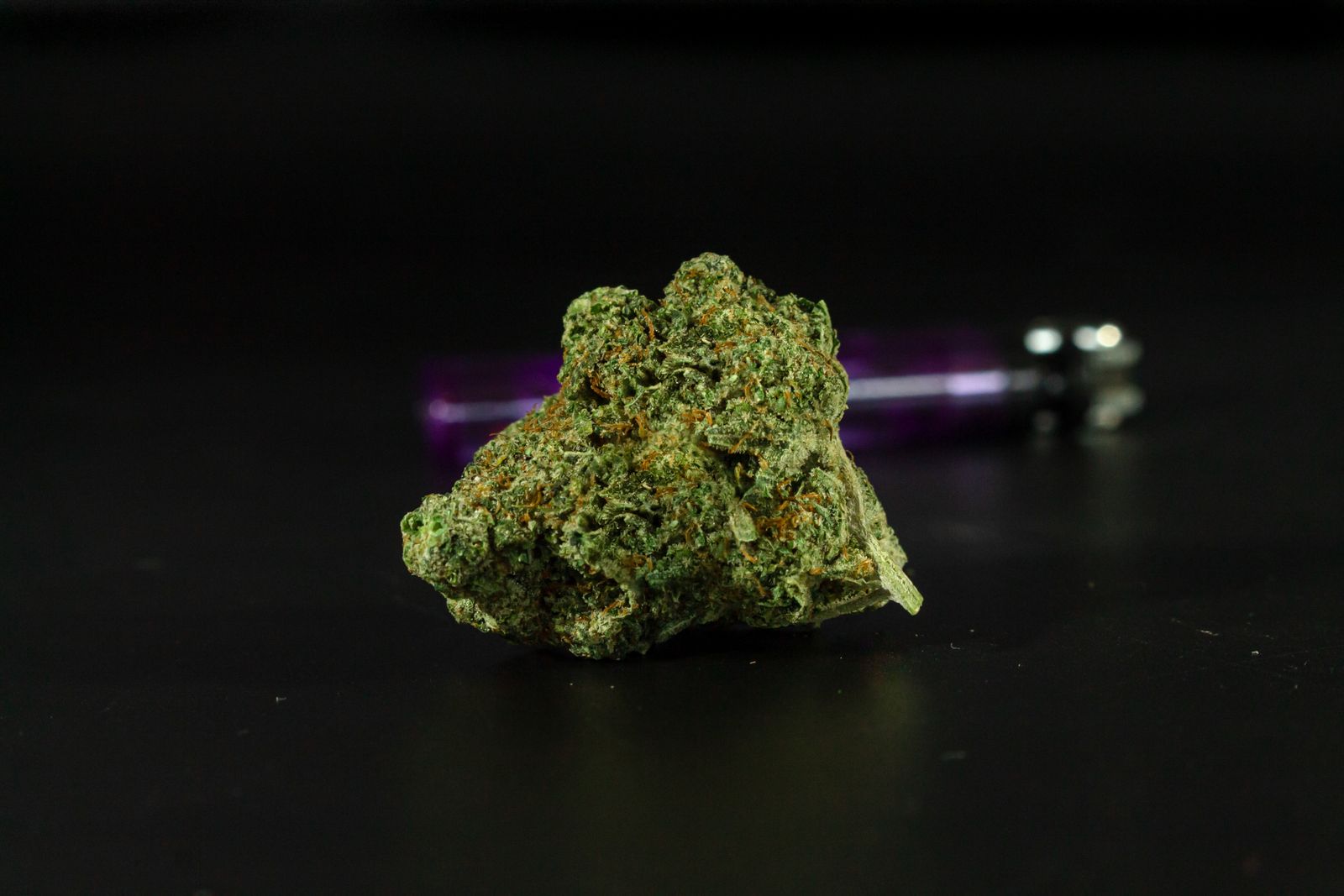
A seed listing says 22% THC. A legal retail package says Total THC 18.4%. A lab certificate for the same cultivar lists THCA at 21.1% and THC at 0.3%. None of these numbers contradict each other, and none of them tells you what your own plant will produce.
This guide explains what the percentages measure, how the arithmetic works, and why the number on a seed listing is a genetic ceiling rather than a result.
What the Percentage Actually Measures
A cannabinoid percentage is a proportion of dry weight. A flower reported at 20% THC contains roughly 200 mg of THC per gram of dried material.
That is the whole definition. It is not a measure of strength relative to other products, it is not a quality score, and it is not comparable across product formats — an edible or a concentrate is measured in entirely different units.
Two implications follow immediately:
- A percentage only means something alongside the weight you actually consume. Half a gram of 20% flower delivers the same THC as a full gram at 10%.
- Because the figure is dry-weight-relative, moisture content changes it. The same flower tested at different cure stages can report measurably different percentages without anything about the plant having changed.
THCA, THC, and Why Total THC Is Not a Sum
Fresh cannabis contains very little THC. What it contains is THCA — tetrahydrocannabinolic acid, the biosynthetic precursor. THCA is not intoxicating.
Heat converts THCA to THC by removing a carboxyl group, a reaction called decarboxylation. This happens when the flower is smoked, vaporised, or baked, and slowly during drying and curing.
Because THCA loses mass in that conversion, you cannot simply add the two figures together. The molar mass ratio gives a conversion factor of 0.877:
Total THC = THC + (THCA × 0.877)
Using the certificate figures from the opening: 0.3 + (21.1 × 0.877) = 0.3 + 18.5 = 18.8% Total THC.
CBD works identically through its own precursor, CBDA:
Total CBD = CBD + (CBDA × 0.877)
Health Canada requires legal cannabis products to be labelled with Total THC and Total CBD, which is why a retail package and a raw lab certificate for the same material look so different. The package has already done this arithmetic. A certificate often has not.
When comparing two numbers, confirm you are comparing like with like. A raw THCA figure next to a Total THC figure will overstate the difference by roughly 14%.
Why a Seed Listing Percentage Is Not a Measurement
This is the part most worth understanding before buying seeds.
A percentage on a seed listing describes what the genetics have been documented to reach under favourable conditions — a breeder's reported potential, typically from a well-executed grow. It is not a measurement of the seeds in the packet, and it is not a prediction of your result.
The expressed cannabinoid content of a finished plant depends on:
- Genetics. This sets the ceiling. No cultivation technique takes a 12% cultivar to 25%.
- Light. Intensity and spectrum through flowering strongly influence cannabinoid development.
- Harvest timing. Cannabinoid content rises through flowering and then begins to degrade. THC oxidises to CBN as the plant goes past peak maturity, which is why an overdue harvest reads lower in THC and more sedating in effect.
- Drying and curing. Both affect the dry-weight denominator and the rate of degradation.
- Storage. Light, heat, and oxygen degrade cannabinoids over time.
Phenotypic variation adds a further spread: within a single seed lot, individual plants of the same cultivar can differ measurably from each other.
The practical consequence is that a home-grown harvest has no tested potency at all unless you pay a laboratory to analyse it. Treat a listing figure as a plausible upper bound for well-executed cultivation, not as a specification.
Reading a Certificate of Analysis
A certificate of analysis, or COA, is the only document that reports an actual measurement of actual material. When one is available, these are the fields that matter:
| Field | What to check |
|---|---|
| Sample identity | A batch or lot number that matches the product in front of you |
| Date of analysis | Cannabinoids degrade; an old COA describes older material |
| Laboratory | A named, accredited laboratory rather than an unattributed table |
| THCA and THC, CBDA and CBD | Both the acid and neutral forms, so you can verify the total yourself |
| Total THC / Total CBD | Should reconcile with the 0.877 arithmetic above |
| Moisture content | Contextualises every percentage on the page |
A COA that reports only a single rounded total, with no acid forms, no lot number, and no named laboratory, is not evidence of anything in particular.
Ratios Matter More Than Peak Numbers
Cannabinoid profiles fall into three broad groups, and the group is usually more consequential than the exact percentage within it.
THC-dominant. High Total THC, CBD below roughly 1%. Strongly intoxicating. This is the great majority of modern commercial cultivars and the category most seed listings compete in on headline numbers.
Balanced. Meaningful quantities of both, often described as ratios such as 1:1. CBD does not cancel THC, but balanced profiles are widely reported as producing a different and often less sharply intoxicating experience than THC-dominant material at comparable THC levels.
CBD-dominant. High CBD, THC typically under 1%. Minimal intoxication. Chosen by people who want the cannabinoid without the high.
Terpenes complicate any ranking by potency alone. Two cultivars with identical Total THC and different terpene compositions are routinely reported as feeling quite different. Potency and character are not the same axis, and buying exclusively on the first will frequently disappoint on the second.
Higher Is Not Automatically Better
The headline-number arms race has a practical cost. High-THC material is easy to over-consume, particularly for anyone new to cannabis, and the usual result is an unpleasant experience rather than a better one.
Two things are more useful than chasing the highest advertised figure:
- Dose by total, not by percentage. Consume less of a stronger product. The maths is linear and entirely in your control.
- Choose a profile, not a maximum. Decide whether you want THC-dominant, balanced, or CBD-dominant material first, then look at numbers within that group.
If you are selecting seeds, browse high-THC cannabis seeds for THC-dominant genetics or CBD cannabis seeds for high-CBD and balanced profiles. Compare documented ranges across cultivars rather than treating any single figure as a guarantee.
The Bottom Line
A cannabinoid percentage is milligrams per gram of dry weight, nothing more. Total THC requires the 0.877 conversion from THCA, which is why raw certificates and retail labels report different-looking numbers for the same material.
A seed listing percentage is a documented genetic ceiling under favourable conditions. What your plant expresses depends on light, harvest timing, drying, and curing — and will be unmeasured unless you have it tested.
Decide on a cannabinoid profile first, dose by weight rather than by headline number, and treat any percentage without a lot number, a date, and a named laboratory behind it as an estimate rather than a fact.

Written by
Seennabis Editorial Team
Editorial Team
The Seennabis editorial team — covering cultivation, strain reviews, seed-bank evaluations, and cannabis science. Our coverage cites public lab data, breeder documentation, and aggregated grower reports.
More from Seennabis →Keep reading
All articles
Growing Guides
How to Germinate Cannabis Seeds in Canada (Cold Climate Grow Guide + 95% Success Rate)
18 min read
Strain Reviews
Cold-Hardy Cannabis Strains That Actually Finish Before Canadian Frost (Aggregated Across Three Latitudes)
14 min read
Seed Banks
How to Buy Cannabis Seeds Legally in Canada: Every Province, Plain English
14 min read