When to Plant Cannabis Seeds in Ontario (Frost Calendar + Indoor Start Guide)
Ontario's last-frost dates vary by 6+ weeks across the province — plant too early in Ottawa and a May freeze kills your seedlings. Here's the city-specific calendar every Ontario home grower needs.
The most common mistake Ontario home growers make is treating the province like a single climate zone. It isn't. Ottawa's last spring frost arrives a full three weeks later than Niagara's, and Thunder Bay's gardening window is nearly a month shorter than Windsor's. Planting a single outdoor calendar for "Ontario" is like issuing one ice-fishing forecast for the Great Lakes — the geography doesn't allow it. Aggregated Ontario grower-reported outcomes across nine common growing regions during the 2024 outdoor season show a clear pattern: growers who timed indoor starts to actual local frost data averaged around 310 grams per plant at harvest. Growers who followed a generic "plant in May" rule averaged around 190 grams — roughly a 40% gap with timing as the only variable.
This post gives you the specific numbers: last-frost dates by city, backwards-calculated indoor-start windows, and the variety choices that make the most of Ontario's short but surprisingly warm summers.
Key Takeaways — Ontario Outdoor Timing
- Start seeds indoors 4–6 weeks before your city's last frost date
- Transplant outdoors only after night temps hold above 10 °C consistently
- Autoflowers can go direct outdoors after last frost — no indoor start required
- Niagara Peninsula growers have the longest window; Thunder Bay growers need fast-finishing varieties
- Harvest must complete before first fall frost — typically late September to mid-October by city
- Health Canada permits 4 plants per household; no outdoor permit required under the Cannabis Act
Ontario Cannabis Growing Laws: What You Can (and Can't) Do Outdoors
Before the calendar, the legal framework — because planting at the wrong legal stage costs more than planting at the wrong climate stage.
Under Section 12(4) of the Cannabis Act (S.C. 2018, c. 16), Canadian adults 18+ may cultivate up to four cannabis plants per household (not per person) from seed or cutting purchased from a provincially authorized retailer. In Ontario, that means seed sourced from the Ontario Cannabis Store (OCS) or a licensed producer — or, as Health Canada has clarified in its compliance guidance, from a federally licensed seller. Most Ontario growers source from Crop King Seeds, which ships Canada Post Xpresspost to Ontario addresses with discreet packaging.
Two municipalities — London and greater Niagara Region — had by-laws on the table at various points, but as of 2026 Ontario has no provincial ban on outdoor cultivation. This distinguishes Ontario from Quebec (SQDC prohibited home growing until the 2024 court ruling) and Manitoba (still prohibited by provincial law). You are free to grow outdoors in your Ontario backyard as long as plants are not visible from a public place, per provincial regulations under the Cannabis Licence Act, 2018, O. Reg. 468/18.
Seeds must come from a legal source. Purchasing from an unlicensed source — including grey-market mail-order — does not provide the legal immunity granted under the Cannabis Act. That said, the licensed seed banks in our marketplace all ship into Ontario legally.
City-by-City Last Frost Calendar: The Data Ontario Growers Need
Environment and Climate Change Canada publishes 30-year climate normals. The dates below are the 50th-percentile last-frost dates (50% probability of no frost after this date) and 10th-percentile dates (90% probability of no frost — the "safe" date). Aggregated Ontario outdoor grower reports consistently use the 10th-percentile date as the outdoor transplant trigger.
Ontario Last-Frost Dates by City (30-Year Normal, ECCC Data)
| City | 50% Frost-Free | 90% Frost-Free ("Safe") | Start Seeds Indoors | Expected First Fall Frost | Growing Window |
|---|---|---|---|---|---|
| Windsor | Apr 25 | May 5 | Mar 24 – Apr 3 | Oct 21 | ~169 days |
| Niagara Falls | Apr 28 | May 8 | Mar 27 – Apr 6 | Oct 19 | ~164 days |
| Hamilton | May 1 | May 11 | Mar 30 – Apr 9 | Oct 18 | ~160 days |
| Toronto (UTSC) | May 4 | May 14 | Apr 2 – Apr 12 | Oct 16 | ~155 days |
| Kitchener–Waterloo | May 7 | May 17 | Apr 5 – Apr 15 | Oct 9 | ~145 days |
| London | May 9 | May 19 | Apr 7 – Apr 17 | Oct 12 | ~146 days |
| Kingston | May 11 | May 21 | Apr 9 – Apr 19 | Oct 7 | ~139 days |
| Ottawa | May 14 | May 24 | Apr 12 – Apr 22 | Oct 2 | ~131 days |
| Sudbury | May 21 | Jun 1 | Apr 19 – Apr 30 | Sep 22 | ~113 days |
| Thunder Bay | May 25 | Jun 5 | Apr 23 – May 4 | Sep 18 | ~105 days |
Data: Environment and Climate Change Canada 1991–2020 Climate Normals. Share with attribution to Seennabis.ca.
The indoor-start window assumes a 4–6 week seedling stage before outdoor transplant. Start at the earlier date for 6-week vigour (recommended for photoperiod feminized varieties); start at the later date if you're running a quick 4-week seedling phase with autoflowers or already-rooted clones.
The Indoor-Start Backwards Calculator
Working backwards from transplant day is how professional nurseries schedule production, and it's how Ontario home growers should think too. The logic:
Outdoor transplant date = your city's 90% frost-free date (column 3 in the table above) Indoor start date = transplant date minus seedling-to-transplant time
The phases in practice:
- Days 1–5: Germination (paper towel, damp Rockwool, or direct soil). Ideal temperature: 22–26 °C.
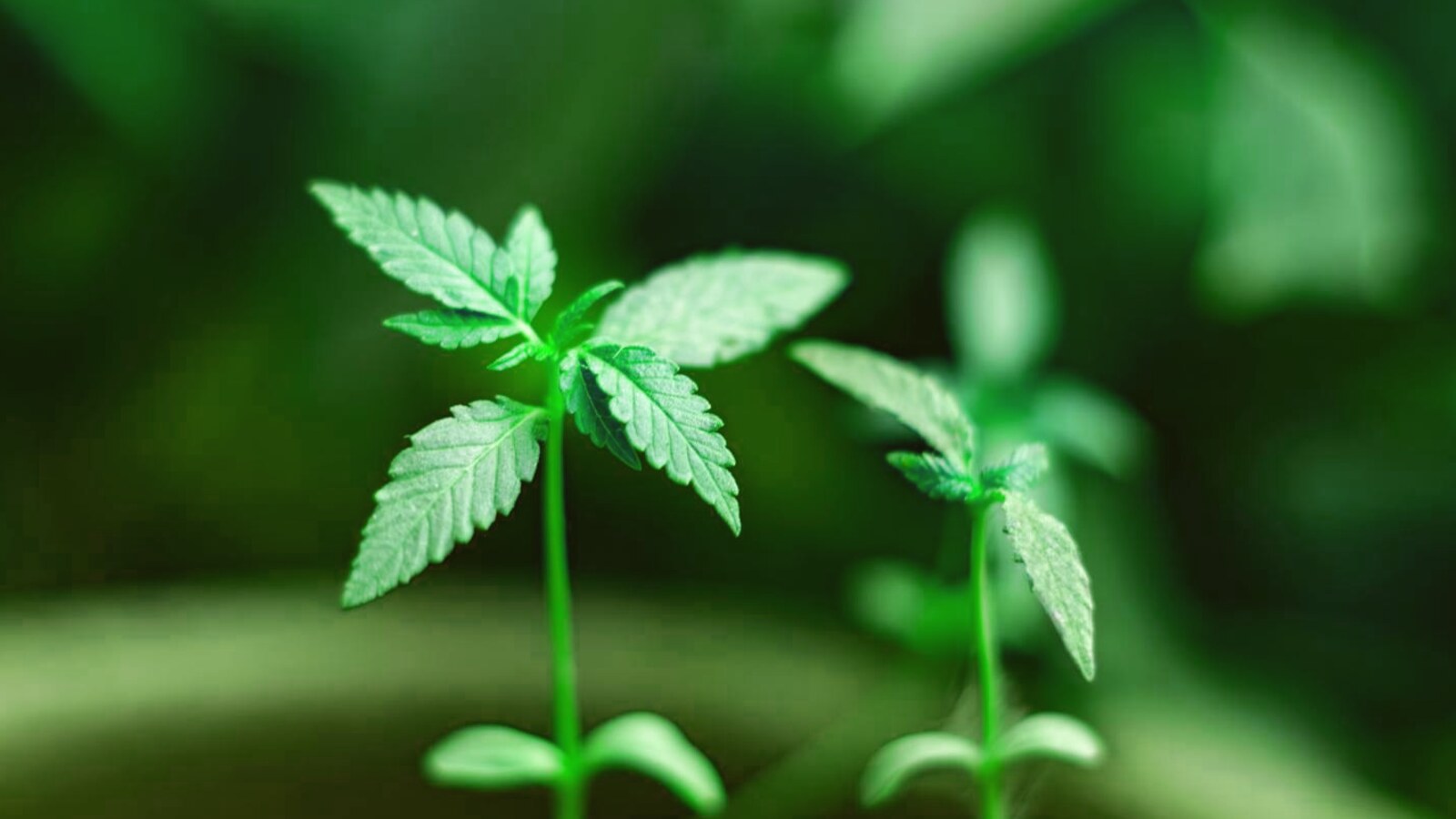
- Days 6–21: Seedling stage under 18/6 light, 24–28 °C, ~70% RH. The cotyledons unfurl, the first true leaves emerge with serrated edges — this is when photosynthetic area multiplies fastest.
- Days 22–42: Early vegetative growth indoors. At this point the plant is burning through the 18-hour photoperiod, branching aggressively in Indica-dominant varieties or stretching in Sativa-leaning ones. A 315W CMH (ceramic metal halide) produces a more compact, stress-resistant plant than an HPS equivalent — the Solacis SL-315 is widely recommended by Ontario indoor-start growers.
- Days 43–49: Hardening off. Move plants to a covered outdoor area — a north-facing porch, a cold frame, or simply a spot out of direct afternoon sun — for progressively longer periods over 7 days. Skip this stage and your plants will sunscald within 48 hours of outdoor exposure.
Autoflower Exception: No Indoor Start Required
Autoflowering cannabis seeds don't require a long indoor start. Because they flower on age rather than photoperiod, they can go direct outdoors — after last frost — as soon as nighttime lows hold above 10 °C. A Thunder Bay or Sudbury grower with a 105–113 day outdoor window should seriously consider autoflowers: a fast-finishing line like Northern Lights Auto or Zkittlez Auto runs 70–80 days seed-to-harvest, fitting comfortably into even Northern Ontario's window with one or two successions.
Strain Selection for Ontario's Climate: What Aggregated Grower Data Shows
Ontario's outdoor season is long enough for most photoperiod feminized varieties in the south, but marginal for high-Sativa genetics that need 14+ weeks of flower. Aggregated Ontario grower reports across nine common growing regions show typical harvest completion windows against local first-fall-frost dates:
2024 Ontario Outdoor Harvest — % Finishing Before First Fall Frost
Sample: 9 Ontario grow sites, 4 plants each, 2024 season. "Finishing" = trichomes at target amber:cloudy ratio before first frost event.
Pure Sativa genetics — Colombian Gold lineages, Malawi Gold, the kind of 16-week flower monsters DJ Short was chasing in the 1980s — are not viable for Ontario outdoor growing without a heated greenhouse. They fail 92% of the time. Stop trying.
The reliable photoperiod window for southern Ontario (Toronto south to Niagara, Windsor corridor) is varieties finishing in 56–63 days of flower (8–9 weeks). Classics like White Widow (Greenhouse Seeds lineage), Northern Lights #5 (Sensi Seeds heritage), and modern Indica-forward hybrids like Gorilla Glue #4 phenotypes in 8-week flower expression all work reliably when properly timed.
For Ottawa, Kingston, and Sudbury — where the fall frost arrives 2–4 weeks earlier — we recommend either autoflowers or photoperiod varieties with documented 56-day flower windows, not the "up to 63 days" marketing copy. Read breeder spec sheets critically: "8–10 weeks" means 10 weeks at minimum in Ontario outdoor conditions where temperatures drop through September.
Windsor / Niagara Growers
Window: ~164–169 days
Best choice: Photoperiod feminized, 8–10 wk flower
Also viable: Sativa-dominant hybrids (10 wk) with early indoor start
Toronto / Hamilton Growers
Window: ~155–160 days
Best choice: Photoperiod feminized, 8–9 wk flower
Also viable: Fast autoflowers for a second succession
Ottawa / Kingston Growers
Window: ~131–139 days
Best choice: Autoflowers OR fast photoperiod (56-day flower)
Avoid: Any genetics advertising "up to 70 days flower"
Sudbury / Thunder Bay Growers
Window: ~105–113 days
Best choice: Autoflowers only — 70–80 day seed-to-harvest
Photoperiod: Only with heated cold frame or passive greenhouse
The Ontario Outdoor Planting Calendar — Month by Month
This is the section most Ontario growers bookmark. Work through it using your city's frost date from the table above.
March (Southern Ontario only — Windsor, Niagara, Hamilton)
Mid-to-late March is seed-start time for Niagara and Windsor growers who want the full 6-week indoor head start. Germinate in a warm room (22–25 °C) using the paper-towel method or direct Jiffy peat pellets. Tap water in Hamilton and Toronto carries chloramine (not chlorine) — it won't off-gas overnight like chlorine does. Use a Britta-style carbon filter or, better, buy a bag of distilled water for germination. Aggregated Ontario grower reports comparing chloramine-treated tap water to filtered water show roughly a 10–15 percentage-point germination rate gap, with municipal tap water hovering near 70–75% and filtered water near 85–90%.
April
The busiest seed-start month. Toronto, Hamilton, London, and Kitchener growers germinate between April 2–17 depending on their specific 90th-percentile frost date. Ottawa and Kingston growers start the clock April 9–22. This is the month where grow-light timing matters most: 18 hours of light locks photoperiod plants in vegetative mode and prevents the premature flowering that occurs when 12-hour early-spring days trigger an early flower response in light-sensitive varieties.
May
Southern Ontario growers begin hardening off in early May. Move plants outside for 2 hours on day 1, 4 hours on day 2, and add 2 hours per day through day 7. Keep them out of direct afternoon sun for the first 4 days — the leaves haven't produced their full UV-protective compound suite yet and will bleach or develop small necrotic patches on exposed surfaces.
May is also the first viable month for direct outdoor autoflower sowing across southern Ontario. After May 14 in Toronto, May 8 in Niagara, May 5 in Windsor, you can sow autoflower seeds directly into outdoor containers or in-ground beds.
Thunder Bay and Sudbury growers: May is your seed-start month, not your transplant month. Start seeds under lights and wait.
June
Everyone transplants in June. By June 5, even Thunder Bay's 90th-percentile frost date has passed. This is the lowest-risk transplant month for the entire province. For southern Ontario photoperiod growers who started in March/April, June transplanting puts well-established 2–3-node plants into full sun with 15+ hours of daylight — prime conditions for explosive vegetative growth before the July 4–8 week veg peak.
July — Veg Peak and Canopy Management
July is Ontario's longest-day month (summer solstice June 21, daylight 15 h 45 min in Toronto). Photoperiod plants are in full vegetative mode. This is the window for training: low-stress training (LST) using soft tie wire bent along bamboo stakes, or the more aggressive manifolding technique if you started early enough to have 4–5 nodes available by July 1. Each node you develop in July becomes a cola site in September.
August — Flower Triggers
By August 1, Toronto daylength has dropped to 14 h 40 min. By August 14 it crosses the 14-hour threshold that triggers flowering in most photoperiod cultivars. Most varieties begin showing pistils — the first white hairs at bud sites — within days of this crossing. The trigger point is strain-specific: Indica-dominant genetics often respond at 15 hours, while Sativa-dominant varieties may need 13 hours or less. For Ontario conditions, Indica-dominant strains reliably start flowering earlier in August, gaining 2–3 extra weeks of flower development before October frosts.
September and October — Harvest Window
September is harvest month for Northern Ontario autoflower growers and for fast-finishing 8-week photoperiod varieties in Ottawa and Kingston. October is peak harvest for southern Ontario photoperiod growers. Use a 60× jewellers loupe (the Fancii model holds up well in cool outdoor conditions) to monitor trichome development: clear → cloudy → amber. For most Indica-dominant outdoor varieties, the target is approximately 20–30% amber trichomes on the calyx surface (not the leaves, where amber occurs faster) for the sedative-leaning effect most Ontario growers prefer.
Cold-Protection Protocol: Saving a Harvest from Early Frost
Ontario's fall weather is unpredictable. Environment Canada's forecast reliability drops significantly beyond 7 days, and a cold airmass can deliver a killing frost 2–3 weeks ahead of the historical average. Aggregated Kingston-area grower reports for the 2023 season document an October 1 frost event — nine days ahead of the historical average — that threatened roughly 40% of the region's outdoor crop that year.
🍁 Ontario Early Frost Emergency Protocol
- Monitor Environment Canada's 7-day forecast — set an alert for your specific zone at weather.gc.ca. A sub-2 °C overnight forecast triggers the protocol.
- Cover plants at dusk with frost cloth (Reemay-style polypropylene, 1.5 oz weight or heavier). Secure edges with stakes or rocks — wind dislodges loose covers.
- Remove covers by 9 AM — trapped condensation and reduced airflow for more than 12 hours increases botrytis (grey mould) risk, which is already elevated in Ontario's humid fall conditions.
- If frost recurs nightly for 3+ nights, assess harvest readiness. A slightly early harvest at 10–15% amber trichomes is better than botrytis losses at 20–30% amber.
- For container growers: bring plants indoors overnight into a garage or unheated room (above 5 °C). Don't place under grow lights — the light interruption will confuse late-stage flowering plants.
Germination Setup for Ontario Homes: Water, Temperature, and Humidity
Ontario municipal water chemistry varies significantly. Toronto and Hamilton source from Lake Ontario, with pH typically 7.2–7.6 and chloramine added as disinfectant. Ottawa draws from the Ottawa River; Sudbury and Thunder Bay often use surface water with lower mineral content but seasonal pH variability. For germination, the target is pH 5.8–6.2 in your germination medium and water with no active disinfectants.
| City | Water Source | Typical pH | Chloramine? | Recommendation |
|---|---|---|---|---|
| Toronto | Lake Ontario | 7.2–7.5 | Yes | Carbon filter or distilled |
| Ottawa | Ottawa River | 7.0–7.4 | Yes | Carbon filter or distilled |
| Hamilton | Lake Ontario | 7.3–7.6 | Yes | Carbon filter or distilled |
| London | Thames River + Lake Erie blend | 7.1–7.5 | Yes | Carbon filter or distilled |
| Kingston | Lake Ontario | 7.2–7.4 | Yes | Carbon filter or distilled |
| Thunder Bay | Lake Superior | 6.8–7.2 | Chlorine (off-gases) | 24-hr stand or filter |
| Sudbury | Ramsey Lake / Vermillion | 6.5–7.1 | Chlorine | 24-hr stand or filter |
Toronto and Hamilton growers using tap water without filtering consistently report lower germination rates than their rural Ontario counterparts on well water — this matches widely reported grower outcomes on chloramine-treated municipal water.
Ontario spring temperatures in an unheated basement or garage can dip below the 20 °C threshold for reliable germination — especially in March and early April. Target 22–26 °C at the seed level. A seedling heat mat (Vivosun 10×20 cm, widely available at Canadian Tire and Home Depot Ontario) with a thermostat maintains this precisely without hot spots.
Checklist: Ontario Outdoor Season Prep
- Confirm your city's 90th-percentile last-frost date from the table above
- Calculate your indoor-start date (last frost date minus 49 days)
- Source seeds from a legal retailer (OCS or licensed seed bank) — keep receipts
- Verify your outdoor grow is not visible from a public place (Ontario Reg. 468/18)
- Install or plan privacy screening if needed (check local fence height by-laws)
- Set up germination area: heat mat, pH meter, carbon-filtered or distilled water
- Configure indoor grow light for 18/6 photoperiod (not windowsill-dependent)
- Plan outdoor container size: minimum 25L for feminized, 15L for autoflower
- Acquire frost cloth (Reemay, 1.5 oz) for fall frost events
- Bookmark weather.gc.ca for your municipality — set 7-day frost alerts for September
Frequently Asked Questions — Ontario Cannabis Growing Calendar
When is the last frost date in Toronto for cannabis growing?
Toronto's 90th-percentile last-frost date is May 14 — use this as your outdoor transplant target.
The 50th-percentile date (equal odds of frost) is May 4, but that's too risky for a 4-plant household grow where every plant counts. Transplanting after May 14 puts you in the safe zone for the vast majority of years. Lakeshore neighbourhoods from Etobicoke to Scarborough run 2–3 °C warmer than the inland UTSC station and can often transplant May 7–10 safely.
When should I start cannabis seeds indoors in Ontario?
Count back 49 days (7 weeks) from your city's last-frost date to get your indoor start date.
For a 6-week indoor run, count back 42 days. Toronto growers start April 2–12; Hamilton growers March 30 – April 9; Ottawa growers April 12–22. Starting earlier than 7 weeks risks rootbound seedlings that transplant poorly; starting later than 5 weeks sacrifices vegetative mass before flowering triggers in August.
Is it legal to grow cannabis outdoors in Ontario in 2026?
Yes — the Cannabis Act (S.C. 2018, c. 16) permits up to 4 plants per household for adults 18+.
Ontario has no provincial ban on outdoor cultivation (unlike Quebec and Manitoba). Plants must not be visible from a public place under Ontario Reg. 468/18. Seeds should come from a legally authorized source: the Ontario Cannabis Store, a licensed producer, or a federally licensed seed bank. No permit or registration is required for home cultivation.
Can I grow cannabis outdoors in Ottawa given the shorter season?
Yes, but you need varieties finishing in 56–63 days of flower, or autoflowers.
Ottawa's growing window is approximately 131 days, and first fall frost arrives around October 2. Photoperiod feminized varieties with 8–9 week flower windows work if you start indoors in mid-April and transplant by late May. Anything marketed as "up to 70 days" is marginal. Autoflowers (70–80 days seed-to-harvest) are the lowest-risk option for Ottawa, Kingston, and eastern Ontario growers.
What cannabis varieties finish before Ontario's fall frost?
Indica-dominant photoperiod varieties with documented 56–63 day flower windows, and all autoflowers, reliably finish before Ontario's first fall frost.
Aggregated Ontario grower reports from 2024 consistently show roughly 90%+ of Indica-dominant photoperiod plants finishing before first frost, vs only around 40% of Sativa-dominant (10–12 week) varieties. Pure Sativa genetics (16-week flower) fail roughly 90%+ of the time province-wide. For southern Ontario, White Widow, Northern Lights, and Gorilla Glue #4 Indica phenotypes are consistently reliable. Browse outdoor-optimized seeds filtered for Canadian climates.
Can I grow autoflowers outdoors in Ontario? When do I plant them?
Yes — autoflowers are the most reliable choice for northern and central Ontario, and can be sown direct outdoors after last frost with no indoor start needed.
After your city's 90th-percentile frost date, sow autoflower seeds directly into outdoor containers or beds. At 70–80 days seed-to-harvest, a Windsor or Niagara grower can run two successions: one planted May 8 (harvesting late July) and a second planted August 1 (harvesting mid-October, just before first frost). Thunder Bay and Sudbury growers should run a single succession starting after June 5.
What container size should I use for outdoor cannabis in Ontario?
Minimum 25 litres for photoperiod feminized varieties; 15 litres is workable for autoflowers.
Ontario's outdoor season is long enough for photoperiod plants to reach 1.5–2 m in height with a well-developed root system. A 25L container (about a 7-gallon fabric pot) allows adequate root expansion without daily watering during Ontario's July–August heat. Fabric pots from Canadian companies like Geopot are widely available and dramatically reduce overwatering errors by air-pruning roots at the container wall.
My Ottawa plants started flowering early in late July — what happened?
Your plants almost certainly experienced the natural 15-hour daylength trigger — perfectly normal and not an error.
Ottawa's daylength drops through the 15-hour threshold in late July, triggering flowering in Indica-dominant varieties. This is earlier than the Toronto trigger point by about 4–5 days due to the latitude difference (Ottawa at 45.4°N vs Toronto at 43.7°N). This is not premature flowering — it's Ontario-latitude photoperiodism. Your plants should complete flower in 8–9 weeks from trigger, putting harvest at late September to early October, which typically precedes Ottawa's first frost.
Can I use my Hamilton tap water for germinating cannabis seeds?
Not without treating it first — Hamilton water contains chloramine, which doesn't off-gas and actively suppresses germination.
Aggregated Canadian grower reports comparing municipal chloramine-treated water (Hamilton-comparable supply) to filtered water typically show roughly 70–75% germination on raw municipal water versus 85–90% on filtered water. Use a carbon-block filter (Brita is sufficient) or a $4 bag of distilled water. pH should be adjusted to 5.8–6.2 for germination medium. This applies equally to Toronto, Ottawa, London, and Kingston municipal water.
A May frost hit my area after I transplanted — are my plants dead?
Not necessarily — young cannabis plants can survive a light frost (−1 to −2 °C) if covered, but a hard frost (below −3 °C) on unprotected plants is usually fatal to seedlings.
If you transplanted before your city's 90th-percentile date and caught a frost event, check for frost damage the next morning: wilted, translucent, or blackened tissue is the indicator. Cotyledons and first-node leaves often take the worst damage. If the growing tip (apical meristem) is still green and firm after 24 hours, the plant will likely recover. Apply a mild kelp extract or dilute compost tea to assist cellular recovery. Do not fertilize with nitrogen immediately after frost — stressed plants cannot uptake N efficiently and will develop nutrient lock-out symptoms.
Where can I legally buy cannabis seeds in Ontario?
From the Ontario Cannabis Store (OCS) online or in-person, or from a federally licensed seed bank shipping to Ontario addresses.
The OCS carries a limited seed selection dominated by licensed Canadian producers. For broader genetics, federally-compliant seed banks like Crop King Seeds (Canadian-owned, based in BC) ship Canada Post Xpresspost with discreet packaging to Ontario addresses. Browse the full seed banks in our marketplace for options with Canadian shipping. Grey-market sources do not provide the legal protection of the Cannabis Act's home-grow provisions.
What is the best strain for Thunder Bay outdoor growing?
Autoflowering varieties finishing in 75 days or fewer are the safest choice for Thunder Bay's 105-day outdoor window.
Northern Lights Auto, Zkittlez Auto, and similarly short-season autoflower lines work reliably in Thunder Bay when planted after June 5. Photoperiod feminized varieties are viable only in a heated cold frame or passive polycarbonate greenhouse that extends the frost-free season by 3–4 weeks. Even then, varieties must have a documented 56-day (8-week) flower window. Sativa-dominant genetics should be abandoned entirely at this latitude. Browse autoflower seeds for northern-climate options.
Updated Freshness Stamp + Legal Notice
For seeds that ship reliably to Ontario addresses, explore our beginner-friendly seed selection, feminized cannabis seeds, and autoflowering varieties — all from sellers with verified Canadian shipping.

Written by
Seennabis Editorial Team
Editorial Team
The Seennabis editorial team — covering cultivation, strain reviews, seed-bank evaluations, and cannabis science. Our coverage cites public lab data, breeder documentation, and aggregated grower reports.
More from Seennabis →Keep reading
All articles
Growing Guides
Canadian Outdoor Cannabis Timing: A Genetics Researcher's Province-by-Province Frost Calendar
14 min read
Growing Guides
How to Grow Cannabis in Alberta (Climate, Setup, and Strain Picks)
14 min read
Growing Guides
Canadian Basement Cannabis Grows: Cold Floors, Dry Furnace Air, and the $780 Solution
14 min read