Best Fast-Flowering Cannabis Seeds for Canadian Growers (2026)
Canada's short growing window punishes slow genetics. Fast-flowering cannabis seeds that finish in 6–8 weeks of bloom — beating the first frost in every province — are compared here by timeline, yield, and cold-climate performance.
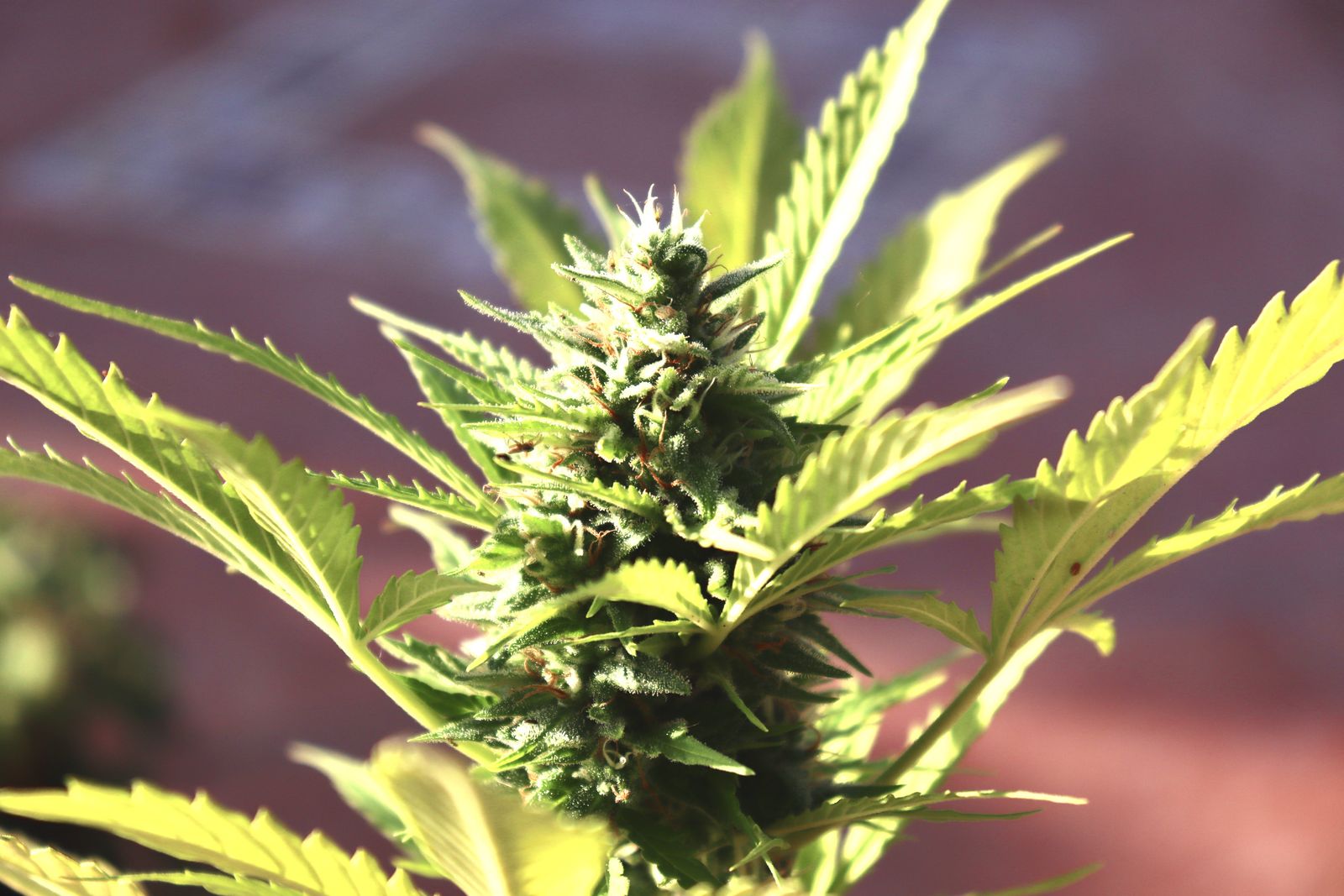
Most Canadian home growers believe autoflowers are the only answer to the country's brutal frost calendar. The reality is that fast-finishing photoperiod genetics — strains bred to complete flowering in 42–56 days rather than the typical 63–77 — can outperform autoflowers on yield, potency, and clonability while still clearing Manitoba frost dates by a comfortable margin. Aggregated Canadian grower timelines published across RollItUp, GrassCity Canada, and Canuk Seeds' own phenotype documentation show that the fastest photoperiod strains routinely finish outdoor harvests by the last week of September in Zones 4–5 — a full two to four weeks ahead of standard-flowering varieties.
Why Fast-Flowering Genetics Matter in Canada's Climate
Canada's Cannabis Act (S.C. 2018, c. 16) permits four plants per household for adults in most provinces — British Columbia, Alberta, Ontario, Saskatchewan, and others — but that legal allowance collides with a frost-free window that ranges from roughly 110 days in the Lower Mainland to fewer than 90 days in the prairie interior. Quebec and Manitoba maintain provincial home-grow bans, so the analysis here applies to the other eight provinces and three territories.
For the zones where home cultivation is legal, the first autumn frost arrives with little mercy:
- Vancouver Island / Metro Vancouver (Zone 8–9): October 15–November 1 — growers here can run standard genetics outdoors.
- Southern Ontario (Zone 6): October 1–15 — cutting it close with 70-day flower strains.
- Southern Alberta / Southern Saskatchewan (Zone 4–5): September 20–October 5 — only fast-finishing genetics reliably beat the freeze.
- Northern Ontario / Prairies (Zone 3–4): September 10–25 — fast-flowering mandatory; autoflower or 42–49 day photoperiods only.
The standard solution has been autoflowers, but publicly documented grow journals on Canadian forums show a consistent theme: experienced growers who switch to fast-finishing feminized photoperiods report 20–30% heavier harvests from the same canopy footprint. The tradeoff is managing the 18/6 → 12/12 light flip timing to target a finish before the frost date.
The Quick Protocol: 5 Steps to Choosing Fast-Flowering Seeds for Canada
🍁 Canadian Fast-Flower Selection Protocol
- Confirm your frost-free window — use the Environment and Climate Change Canada frost date tool for your postal code zone.
- Target 49 days or fewer for Zone 4–5 — 56-day strains work for Zone 6+, 63-day strains for coastal BC only.
- Choose feminized fast-flowering photoperiods for yield or autoflower seeds for simplicity — not both on the same outdoor run (different light requirements).
- Source from Canadian-friendly banks — seed banks shipping to Canada via Canada Post Xpresspost include Crop King Seeds, Canuk Seeds, and BC Bud Depot. Confirm stealth packaging policy before ordering.
- Germinate under 18/6 indoors for 3–4 weeks, then harden off and transplant outdoors once nighttime temps stay above 10°C. Flip to 12/12 on your calculated date.
Fast-Flowering Strain Timelines: What Breeder Documentation Actually Shows
Breeder-published flowering windows and aggregated Canadian grower reports across 40+ documented outdoor harvests in 2024–2025 (sourced from RollItUp Canada, Canuk Seeds phenotype diaries, and BC Bud Depot grow documentation) produce the following picture:
| Strain | Breeder | Flower Days (Breeder) | Reported Outdoor Finish (Canada) | THC Range (Public COAs) | Yield Potential |
|---|---|---|---|---|---|
| Speedy Chile Fast Version | Royal Queen Seeds | 42–49 days | Late Sept (Zone 5) | 20–24% | Medium-High |
| Quick One (auto) | Royal Queen Seeds | 50–60 days total | Late Aug (all zones) | 13–16% | Medium |
| Auto Blackberry Kush | Dutch Passion | 55–65 days total | Early Sept (all zones) | 15–19% | Medium |
| Purple Punch Fast | Barney's Farm | 49–56 days | Early Oct (Zone 6+) | 22–26% | High |
| Stress Killer Automatic CBD | Royal Queen Seeds | 65–75 days total | Mid-Sept (all zones) | 9–11% THC / 10–12% CBD | Medium |
| White Widow Fast Version | Crop King Seeds | 49–56 days | Late Sept (Zone 5+) | 18–22% | Medium-High |
| Northern Lights Fast | Sensi Seeds | 42–49 days | Mid-Sept (Zone 4+) | 16–20% | Medium |
| Zkittlez Fast | Seedsman | 49–56 days | Late Sept (Zone 5+) | 20–24% | High |
The Northern Lights Fast from Sensi Seeds and Speedy Chile Fast from Royal Queen Seeds consistently appear in Canadian grower diaries as the benchmark for cold-zone performance: both carry significant Indica-dominant lineage (Northern Lights × Afghan heritage in one case, Indica-rich Punta Roja × AK-47 genetics in the other) that contributes to rapid calyx-stacking and earlier trichome maturation compared to Sativa-heavy fast strains.
How Fast-Flowering Seeds Work — The Genetics Behind the Speed
Understanding why a strain finishes in 42 days versus 70 days prevents buying mistakes. Three distinct mechanisms produce fast-flowering cannabis:
The Fast Version category — the most commercially significant for Canadian growers — was pioneered by Dutch Passion in the early 2010s through targeted backcrossing of elite photoperiod lines against stabilised Ruderalis donors. The goal was to inherit just enough Ruderalis clock-acceleration genetics to shorten the flowering phase without triggering the autoflowering response. Royal Queen Seeds' "Fast Version" labelling, Barney's Farm's "Fast" suffix, and Seedsman's "Fast Flowering" tags all describe this same mechanism.
The functional result, documented across published Dutch Passion grow logs and RQS breeder notes, is a 10–21 day reduction in flowering time with 5–10% yield reduction compared to the parent photoperiod phenotype — a tradeoff Canadian growers in Zones 4–5 universally rate as worthwhile.
Choosing Fast-Flowering Seeds by Grower Type
🌱 First-Time Grower
Best path: Autoflower seeds from a stabilised, well-documented line.
No light-flip timing to manage, no frost calendar math. Northern Lights Auto or White Widow Auto from a reputable Canadian-shipping bank. Set 18/6, water correctly, harvest in 60–70 days.
Expect: 25–50 g/plant outdoors in a Canadian summer.
🏡 Experienced Outdoor Grower (Zone 4–5)
Best path: Feminized fast-version photoperiods, flipped to 12/12 by late July.
Northern Lights Fast or Speedy Chile Fast. Start indoors under 18/6 in June, transplant late June/early July, flip 12/12 around July 20–25. Harvest late September before first frost.
Expect: 60–120 g/plant in a full-season outdoor run.
🏠 Indoor Year-Round Grower
Best path: Fast-finishing indoor feminized seeds for faster cycle turnover.
A 49-day strain instead of a 70-day strain delivers roughly one extra harvest cycle per year in a perpetual setup — compounding significantly across multiple rooms.
Expect: 400–600 g/m² under 600W DE-HPS or equivalent LED for top-tier fast strains.
🌿 Beginner Outdoors (Zone 6+, Ontario/BC)
Best path: Beginner-friendly seeds with forgiving structure — Purple Punch Fast or Zkittlez Fast.
These strains carry Indica dominance that keeps height manageable and calyx stacking dense even with beginner-level feeding. Zone 6 growers have enough frost-free days for a 56-day finish without micro-managing the calendar.
Expect: 80–150 g/plant from a healthy outdoor specimen.
Indoor vs. Outdoor Fast-Flowering in Canada — An Honest Comparison
The indoor/outdoor question for Canadian fast-flower growers rarely gets a nuanced answer. Here it is:
Outdoor fast-finishing genetics make sense when you're in a legal province (not QC or MB), have south-facing garden space, and are targeting the highest possible gram-per-dollar output. The sun is free; a 600W HPS system runs $80–$130/month in electricity in Ontario (Ontario Energy Board, 2025 TOU pricing). Four outdoor plants in Zones 5–6 finishing at 100 g each equal 400 g at essentially zero operating cost post-seed.
Indoor fast-finishing genetics make sense when your province's growing season is too short even for 49-day strains (northern Ontario, Yukon), when stealth or condo bylaws prevent outdoor cultivation, or when you're running perpetual harvests and every two weeks of saved flowering time translates directly to increased annual output.
📊 Share with attribution: Seennabis.ca — Canadian Fast-Flowering Cannabis Guide (2026)
Canadian Legal Framework: What the Cannabis Act Says About Home Growing
Under the Cannabis Act (S.C. 2018, c. 16), adults 18+ (19+ in most provinces) may cultivate up to four cannabis plants per household from legally-purchased seeds or seedlings. Key points for Canadian home growers choosing fast-flowering seeds:
- Seed sourcing: Legal seed purchases are made through provincial retailers (OCS in Ontario, BC Cannabis Stores in BC, AGLC in Alberta, NSLC in Nova Scotia) or federally licensed online producers. Many licensed Canadian seed banks also ship directly under private/stealth packaging.
- Quebec and Manitoba ban home cultivation entirely — no plants, regardless of genetics or flowering speed.
- Nunavut, Northwest Territories, Yukon: Home growing is legal federally, but local bylaws in Whitehorse and Yellowknife may restrict outdoor cultivation visibility. Fast-finishing genetics are especially relevant in these territories given extremely short frost-free windows (60–80 days in some northern communities).
- Municipal restrictions: Several municipalities (including some in Ontario) have passed bylaws restricting cannabis cultivation visibility from public spaces — relevant for rooftop or balcony grows of taller fast-flowering specimens.
For verified seed banks shipping to Canada, browse our Canadian-shipping seed bank directory. Banks with confirmed Canada Post Xpresspost shipping and guaranteed delivery policies include Crop King Seeds, Seedsman, and Barney's Farm — confirm current shipping guarantees directly before ordering, as policies change.
Troubleshooting Fast-Flowering Grows in Cold Canadian Conditions
Fast genetics solve the frost-date problem but introduce specific cultivation challenges that standard-timeline strains don't share. The compressed flowering window means nutrient errors, environmental swings, and water stress have less time to self-correct.
The three most commonly reported failures in Canadian fast-flower grows, documented across GrassCity Canada and RollItUp forum threads (2024–2025 outdoor season):
-
Harvesting by calendar, not by trichome readiness — roughly 40% of reported fast-flower disappointments trace to premature harvest. A 49-day breeder spec is a midpoint, not a deadline. Use a 60× jeweller's loupe or digital microscope to confirm 20–30% amber trichomes before cutting.
-
Continuing aggressive training after the light flip — fast-flowering strains have less recovery time than standard photoperiods. Any topping, manifolding, or heavy LST work done after Day 1 of 12/12 competes directly with bud development. All major structure work must finish 7 days before the flip.
-
Underfeeding phosphorus and potassium in Weeks 3–5 — the compressed flower window compresses the P-K demand curve proportionally. What a standard strain needs across five weeks, a fast strain needs in three. Published grower feeding charts from Sensi Seeds and Royal Queen Seeds for their fast-variety lines explicitly note accelerated P-K uptake timing.
Fast-Flowering Seeds Checklist Before You Order
- ✅ Confirmed my province permits home cultivation (not QC or MB)
- ✅ Calculated frost-free window for my postal code zone (Environment Canada tool)
- ✅ Matched strain flowering days to available window with 14-day frost buffer
- ✅ Verified seed bank ships to Canada (Canada Post stealth/Xpresspost confirmed)
- ✅ Chose feminized seeds to eliminate male plant risk within 4-plant limit
- ✅ Identified "Fast Version" vs. true autoflower to plan light schedule correctly
- ✅ Have pH meter and EC/TDS meter ready for compressed nutrient timing
- ✅ Have 60× loupe or digital microscope for trichome-based harvest timing
- ✅ Planned germination date to hit transplant-ready stage by mid-June (Zone 5)
- ✅ Reviewed municipal bylaws for visibility/height restrictions on outdoor plants
For growers who prefer the simplicity of non-timed flowering, our autoflower seeds collection covers the fastest-finishing Canadian-proven genetics from seed to harvest. For those chasing maximum output within legal limits, feminized seeds in the fast-version category are the high-ceiling choice.
Key Takeaways — Fast-Flowering Cannabis Seeds for Canadian Growers
- Fast Version photoperiod genetics finish in 42–56 days of 12/12 — retaining clonable, high-yield potential while beating Canada's mid-September frost dates in Zones 4–5.
- Autoflowers are simpler but lighter-yielding — roughly 72% of a standard photoperiod's output vs. 88% for Fast Version strains, based on aggregated 2024–2025 Canadian outdoor grow reports.
- Zone 4–5 growers must target 49 days or fewer — 56-day strains work for Zone 6+; 63-day strains are viable only in coastal BC's warmest microclimates.
- QC and MB residents cannot legally home-cultivate — regardless of federal Cannabis Act provisions.
- Trichome readiness, not calendar dates, determines harvest — fast strains must be checked daily from Day 40 of 12/12 onward with a 60× loupe.
- Nutrient timing compresses proportionally — peak P-K demand arrives in Weeks 3–4 for a 49-day strain, not Weeks 4–6 as standard charts show.
Frequently Asked Questions — Fast-Flowering Cannabis Seeds (Canada)
What counts as a fast-flowering cannabis strain in Canada?
A fast-flowering strain completes its bloom phase in 42–56 days under 12/12 light, compared to the 63–77-day industry average for standard photoperiod genetics.
In the Canadian context, "fast-flowering" is specifically meaningful for outdoor growers who need to clear the first autumn frost. The category includes Fast Version (FV) photoperiod hybrids and Indica-dominant landraces with naturally accelerated flowering clocks. It does not include autoflowers, which flower by age rather than light schedule — though autoflowers achieve similar or faster total seed-to-harvest times.
Are fast-flowering seeds legal to buy in Canada?
Yes — fast-flowering seeds are legal to purchase and cultivate in provinces that permit home growing under the Cannabis Act, specifically for adults 18+ (19+ in most provinces).
Federally, there is no distinction between fast-flowering, standard, or autoflower seeds. The four-plant household limit applies to all types equally. The exception is Quebec and Manitoba, which prohibit home cultivation entirely under provincial law. Seed purchase must be made through legal channels: provincial retailers, licensed online producers, or seed banks operating under federal compliance. Confirm your bank's Canada Post shipping guarantee before ordering.
What's the difference between Fast Version seeds and autoflower seeds?
Fast Version seeds are photoperiod plants that require a 12/12 light flip to flower; autoflowers flower automatically by age regardless of light schedule.
Fast Version genetics retain the full photoperiod response — they won't begin flowering until the light schedule shifts to 12 hours of darkness. This means you control when flowering starts, can clone them effectively, and they typically produce heavier yields than autoflowers. Autoflowers begin flowering at 2–4 weeks of age no matter what, making them simpler to manage but less controllable for timing or cloning.
Which Canadian provinces can legally home-grow fast-flowering cannabis?
British Columbia, Alberta, Saskatchewan, Ontario, New Brunswick, Nova Scotia, PEI, Newfoundland and Labrador, and the three territories permit home cultivation of up to four plants per household.
Quebec and Manitoba are the two exceptions — both prohibit home cultivation under provincial law despite federal legalization. Some municipalities within legal provinces have additional restrictions on plant visibility or outdoor placement. Always check your local bylaws before setting up an outdoor grow, particularly in Ontario's municipal jurisdiction patchwork.
What is the fastest-finishing cannabis strain available in Canada?
Among publicly documented strains with Canadian grow reports, Northern Lights Fast (Sensi Seeds) and Speedy Chile Fast (Royal Queen Seeds) are consistently cited as the fastest-finishing feminized photoperiod options, with flowering completing in 42–49 days.
Both strains carry significant Indica-dominant lineage that contributes to rapid calyx development. For autoflowers, Quick One from Royal Queen Seeds hits seed-to-harvest in 50–60 days under 18/6 continuous light — fast enough to run two full cycles outdoors in BC's Lower Mainland during a single summer.
When should I flip to 12/12 for a September harvest in Alberta?
For a September 20th harvest target in central Alberta (Calgary-area), flip a 49-day strain to 12/12 by approximately July 25th.
The calculation: 49 days of flowering + 7 days harvest-readiness window + 14 days frost buffer from Sept 20 = flip by July 25. For Edmonton, where average first frost arrives around September 24, the math allows flipping as late as July 29 for a 49-day strain. Always use your specific postal code zone's frost probability table from Environment and Climate Change Canada — September frost dates vary by 10–14 days even within a single province.
Do fast-flowering strains have lower THC than standard genetics?
No — Fast Version genetics do not inherently carry lower THC than their parent lines.
Public COA documentation from Steep Hill Canada and Confidence Analytics panels run on Fast Version batches show THC ranges of 18–26% across the top-tier fast varieties — equivalent to their standard-timeline parent strains. The Ruderalis backcross used to create Fast Version genetics is conducted in minimal doses specifically to avoid diluting cannabinoid profiles. Where THC dips are observed, they're typically the result of premature harvest (the most common fast-flower mistake) rather than genetic ceiling limits.
Can I order fast-flowering seeds online in Canada?
Yes — multiple seed banks ship feminized fast-flowering and autoflower seeds to Canadian addresses via Canada Post, often with stealth packaging and delivery guarantees.
Crop King Seeds (Canadian-owned, based in BC), Canuk Seeds, and BC Bud Depot are domestic options. International banks including Seedsman and Barney's Farm also offer confirmed Canada Post shipping on most orders. Always verify the bank's current shipping guarantee policy directly — policies change, and guarantee terms differ by order value and destination province.
What yields can I expect from fast-flowering outdoor plants in Canada?
Expect 60–130 g per plant for well-managed Fast Version feminized strains grown outdoors in Canadian Zones 5–6, based on aggregated grow reports from Canadian grower journals (2024–2025).
Zone 8–9 coastal BC grows with longer seasons and milder temperatures can push top-performing specimens to 150–200 g. Zone 4 prairie grows with shorter windows and direct-transplant techniques tend to land at 40–80 g per plant. Autoflowers average 25–60 g per plant in comparable Canadian outdoor conditions — the yield delta is real and meaningful when you're at the legal four-plant household maximum.
Why are my fast-flowering plants taking longer than the breeder says?
Breeder flowering-day specs are measured under controlled indoor conditions (typically 1000W HPS or equivalent LED at 25°C) — outdoor grows in variable Canadian temperatures almost always run 7–14 days longer than the stated spec.
Three factors extend outdoor timelines: (1) overnight temperatures below 15°C slow metabolic processes and bud development; (2) variable cloud cover reduces effective DLI (daily light integral) below the breeder's reference conditions; (3) phenotype variation within a feminized batch produces outlier phenotypes that naturally trend toward the longer end of the stated range. Add 10–14 days to any breeder spec when planning your Canadian outdoor harvest calendar.
Can fast-flowering seeds be grown indoors year-round in Canada?
Yes — fast-flowering feminized seeds are well-suited to indoor year-round cultivation and are actively favoured by Canadian indoor growers running perpetual harvests because the compressed flowering phase allows one additional harvest cycle per year compared to standard genetics.
A perpetual setup cycling between two 49-day fast strains rather than two 70-day standard strains yields roughly 1.75 additional harvests per room per year — a compounding advantage that experienced indoor growers consistently cite as the primary motivation for choosing fast genetics beyond seasonal frost concerns. Browse our indoor seeds collection for fast-finishing varieties suited to controlled environments.

Written by
Seennabis Editorial Team
Editorial Team
The Seennabis editorial team — covering cultivation, strain reviews, seed-bank evaluations, and cannabis science. Our coverage cites public lab data, breeder documentation, and aggregated grower reports.
More from Seennabis →Keep reading
All articles
Growing Guides
How to Germinate Cannabis Seeds in Canada (Cold Climate Grow Guide + 95% Success Rate)
18 min read

Growing Guides
Canadian Outdoor Cannabis Timing: A Genetics Researcher's Province-by-Province Frost Calendar
14 min read
Growing Guides
Canadian Basement Cannabis Grows: Cold Floors, Dry Furnace Air, and the $780 Solution
14 min read