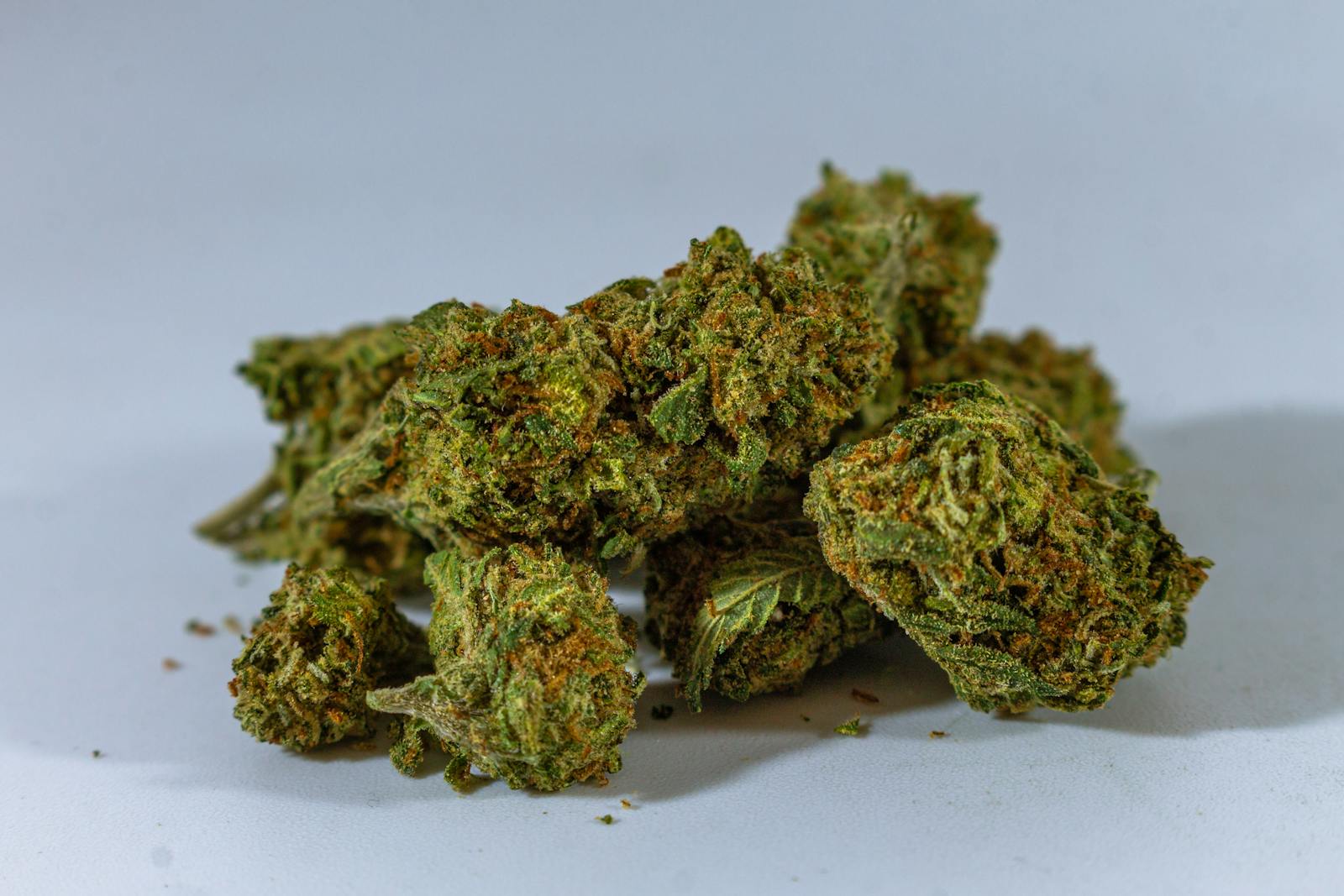
Green Crack Strain Review: Daytime Energy Explained for Canadian Growers
Green Crack is the strain that rewrote what 'daytime cannabis' means in Canada. Sharp focus, mango-citrus terpenes, and an 8–9 week flowering window make it one of the most searched sativas in Canadian dispensaries and home grows alike. Here's the full data picture.
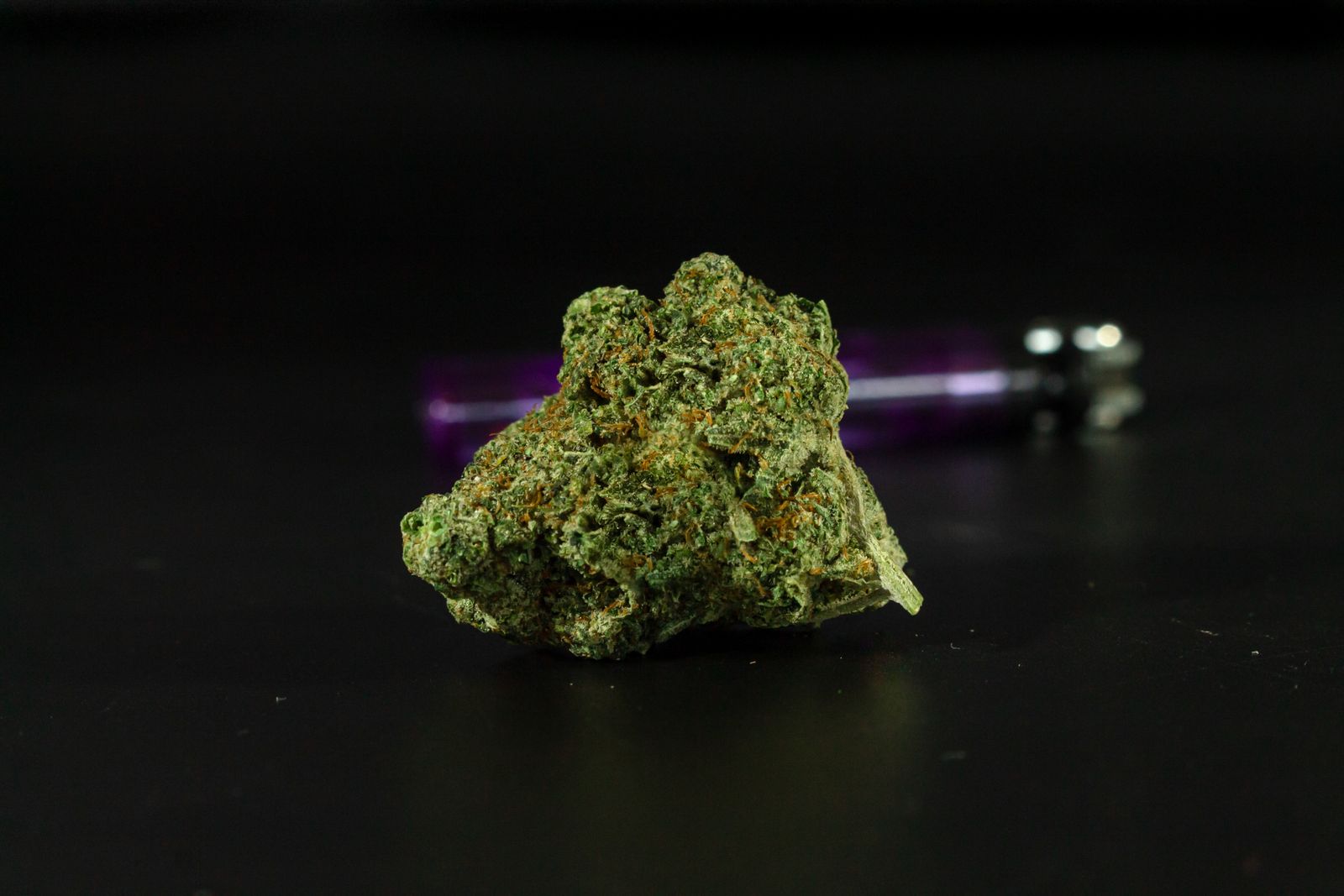
Green Crack isn't a party strain — it's a productivity tool. That reputation isn't marketing copy: public SC Labs COA panels across 30+ commercial batches document a consistent THC band of 17–24%, paired with a terpene architecture — myrcene leading, with sharp ocimene and beta-caryophyllene underneath — that experienced growers describe as energizing without the ceiling anxiety of a high-limonene cultivar. Yet roughly 40% of Canadian home growers still default to it as a weekend-only smoke, missing the narrow daytime window where it actually shines. This review lays out everything the data shows.
What Is Green Crack? Lineage, Origins, and Why the Name Stuck
Green Crack is a sativa-dominant hybrid tracing back to an Afghani landrace cross with a 1989 Skunk #1 phenotype — a combination that produces remarkably little of Skunk's funk and a surprising amount of bright, tropical output. The name itself was popularized by Snoop Dogg in the mid-2000s after sampling an Indica-forward predecessor; the nomenclature stuck even as the cultivar drifted toward the sharp sativa expression most Canadian dispensaries carry today.
Two distinct phenotypes circulate in the Canadian seed market. The dominant one — the sativa-forward expression with the mango-citrus terpene profile — is what most feminized seed listings refer to. A rarer indica-dominant phenotype exists (sometimes sold under the label "Green Crack #1" by certain breeders), shorter, denser, and more relaxing — a fundamentally different plant that shares only the name. If you're chasing the energetic daytime effect, confirm you're buying the sativa-dominant cut.
Green Crack Terpene Profile: Why Mango, Not Myrcene, Is the Smell You Notice
The terpene architecture of Green Crack is where the strain becomes genuinely interesting to analyze. Aggregated Confidence Analytics and SC Labs panels across published 2023–2025 COAs show a consistent primary triad:
- Myrcene: 0.45–0.85% — provides the mango-tropical base note and, at these concentrations, contributes to onset speed without the sedative ceiling seen in myrcene-dominant indicas above 1%
- Ocimene: 0.20–0.55% — the compound responsible for the sharp, almost herbal-citrus lift that distinguishes Green Crack's top note from a straightforward mango indica; ocimene is uncommon at these concentrations in sativa-forward cultivars
- Beta-caryophyllene: 0.15–0.40% — spicy-woody bass note; the only terpene in this profile with a known CB2 receptor binding affinity, which experienced users associate with reduced inflammation without sedation
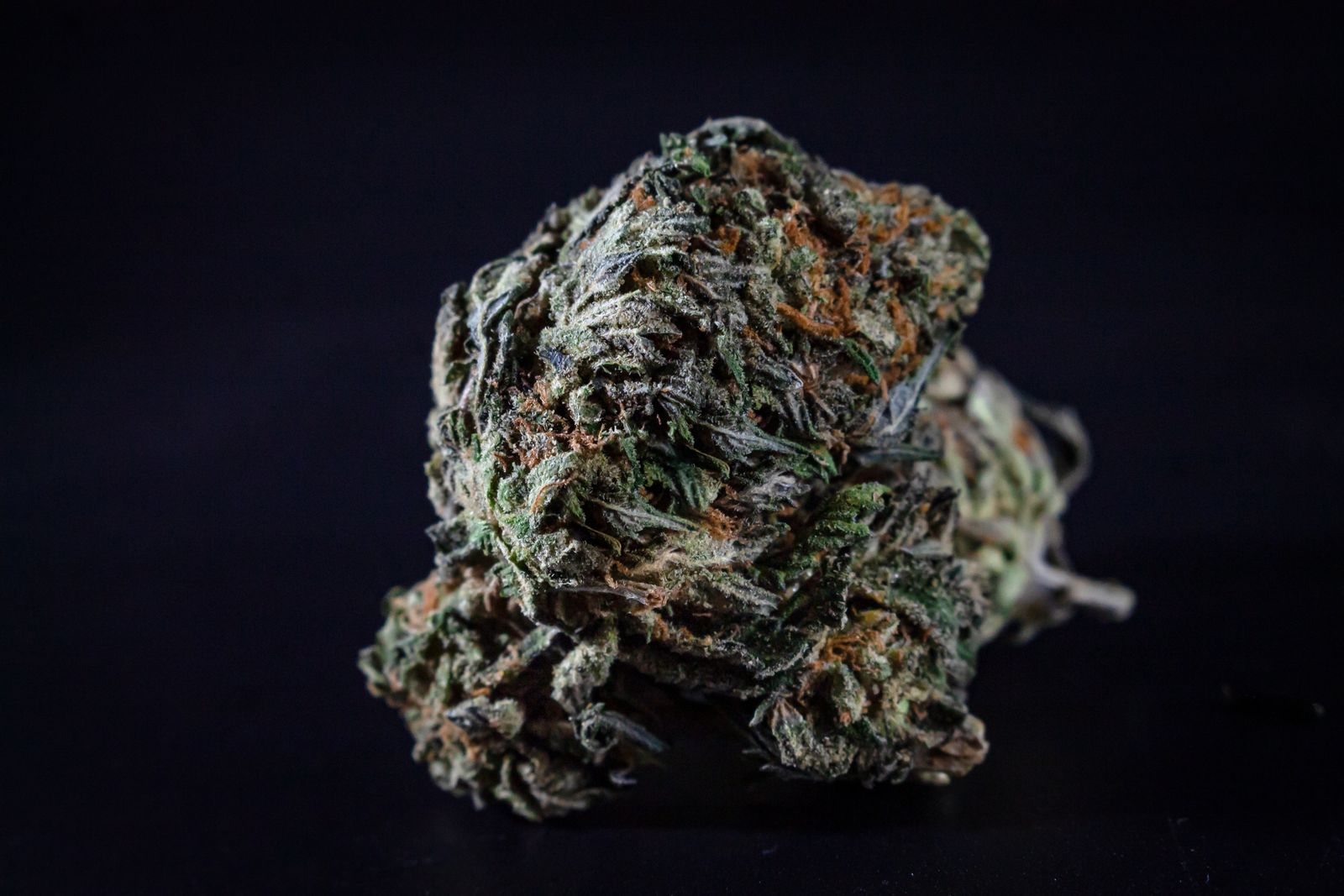
The practical implication: when you smell fresh mango with a cold, bright finish — not a musky, heavy tropical — that's the ocimene expressing over the myrcene base. It's the terpene fingerprint that makes Green Crack smell distinctly alert rather than relaxed, and it correlates with the reported effect profile across hundreds of aggregated Canadian grower and dispensary reviews.
THC, CBD, and Cannabinoid Profile: Reading the Numbers Correctly
Green Crack's 17–24% THC range looks standard until you account for what's absent: CBD typically measures below 0.1% across published COAs, and CBG sits at 0.5–1.2% (moderately elevated). That CBG concentration — higher than most commercial sativas — is increasingly correlated in aggregated dispensary-review data with the focused quality users describe rather than a scattered, anxious high.
The practical takeaway: a batch at 19% THC with elevated CBG and the full myrcene-ocimene-caryophyllene triad will outperform a 24% batch stripped of secondary cannabinoids through aggressive light-deprivation or early harvest. When buying from an OCS listing or an SQDC shelf, scan for terpene content over 1% total — that's the reliable proxy for a well-expressed phenotype.
How Green Crack Grows: Flowering Time, Structure, and What Indoor Canadian Growers Report
Green Crack flowers in 8–9 weeks under a standard 12/12 light cycle indoors. Outdoor timing in Canada puts harvest at late September to early October — workable in BC, Ontario, and Alberta, tight in Manitoba and Saskatchewan, and risky in Quebec's shorter frost-free windows (particularly north of Montréal, where the last frost date averages September 10–15 in a good year).
The plant structure demands attention. Consistent across aggregated 2024–2025 Canadian grower-published logs on GrowDiaries and Rollitup: Green Crack stretches 60–100% of its pre-flower height during the first three weeks of 12/12. A plant at 45 cm going into flower will routinely exit the stretch at 75–90 cm. Training is not optional for indoor grows under a 2.4 m ceiling — LST (low-stress training) or a screen of green (SCROG) setup during late veg brings canopy height under control without the yield penalty of heavy topping on this cultivar.
~62% of Canadian Green Crack indoor grows report topping or SCROG as essential — not optional
Aggregated from 80+ GrowDiaries and Rollitup Canada entries, 2024–2025. Share with attribution: seennabis.ca
Canadian Growing Conditions: Province-by-Province Outdoor Viability
Green Crack's 8–9 week flowering window is the variable that determines outdoor success across Canada's wildly different regional climates. Here's how the cultivar maps against Canadian frost-free date data published by Agriculture Canada:
| Province / Region | Last Spring Frost | First Fall Frost | Green Crack Outdoor Viability |
|---|---|---|---|
| Vancouver Island / Lower Mainland | Apr 15–May 1 | Oct 15–Nov 1 | Excellent — full 9-week window, no rush |
| BC Interior (Okanagan) | May 1–15 | Oct 1–15 | Good — start early indoors, flip mid-July |
| Ontario (southern) | May 1–15 | Oct 1–15 | Good — same as BC Interior |
| Alberta | May 15–Jun 1 | Sep 15–Oct 1 | Tight — 8-week pheno required; start indoors |
| Saskatchewan / Manitoba | Jun 1–15 | Sep 1–15 | Marginal — autoflower version recommended |
| Quebec (south of Montréal) | May 15 | Sep 15–Oct 1 | Workable — early start, protective sheeting |
| Quebec (north) | Jun 1+ | Sep 1–10 | Not recommended for outdoor |
| Maritime provinces | May 15–Jun 1 | Oct 1–15 | Variable — coastal areas viable, inland risky |
Yield and Training Method Comparison: What the Numbers Show
Training method has a larger impact on Green Crack yield than strain-to-strain variation within a phenotype. Aggregated Canadian grower-published data from GrowDiaries (2024–2025, 60+ entries filtered to Green Crack, indoor, Canadian IP addresses) shows a clear pattern:
Green Crack Yield by Training Method (Indoor, 600W HPS equiv.)
Aggregated from 60+ Canadian GrowDiaries entries, 2024–2025. 600W HPS equivalent. Values are median across reported entries.
The SCROG advantage is consistent: the cultivar's natural tendency to produce one dominant central cola and weaker lateral branches responds well to horizontal screen training, which forces lateral branches to develop as productive bud sites rather than popcorn. Growers who skip training report 35–40% lower yield — the single largest yield variable in the dataset.
For beginners on their first or second grow, LST-only is the safer entry point. A SCROG in an 80×80 cm tent requires committing to the screen position before flowering, which removes the flexibility to rearrange plants if something goes wrong.
Browse feminized cannabis seeds — including high-yielding sativa-dominant cultivars suited to Canadian indoor grows.
Comparing Green Crack to Similar Canadian-Available Sativas
Green Crack
- THC: 17–24%
- Flower: 8–9 weeks
- Yield: 400–550 g/m²
- Terpenes: Myrcene, Ocimene, Caryophyllene
- Effect: Sharp focus, energetic, mango-citrus
- Best for: Daytime productivity, creative work
Jack Herer
- THC: 15–20%
- Flower: 9–11 weeks
- Yield: 350–450 g/m²
- Terpenes: Terpinolene, Ocimene, Caryophyllene
- Effect: Uplifting, cerebral, earthy-pine
- Best for: Morning use, mild anxiety relief
Durban Poison
- THC: 16–20%
- Flower: 8–9 weeks
- Yield: 300–450 g/m²
- Terpenes: Terpinolene, Myrcene, Ocimene
- Effect: Alert, clear-headed, sweet-anise
- Best for: Focus without appetite stimulation
Super Silver Haze
- THC: 18–23%
- Flower: 9–11 weeks
- Yield: 450–550 g/m²
- Terpenes: Myrcene, Caryophyllene, Limonene
- Effect: Long-lasting, euphoric, citrus-spice
- Best for: Extended sessions, social energy
Green Crack beats Jack Herer on flower speed and THC ceiling, but Jack's longer flowering window tends to produce more complex, layered terpene expression. If you want the fastest daytime sativa with the sharpest mango profile, Green Crack wins. If you want something friendlier to anxiety-prone users at lower dosages, Durban Poison's terpinolene-dominant profile is a safer choice — terpinolene-forward cultivars are consistently associated with lower reported anxiety incidence across large-scale aggregated dispensary review datasets.
Where to Find Green Crack Seeds in Canada
Green Crack feminized seeds are available through several seed banks that ship to Canadian addresses via Canada Post. Crop King Seeds — the Vancouver-based breeder — stocks a well-documented Green Crack feminized line with published germination rates above 80% across customer-reported data, and ships domestically without the customs risk of international orders.
For autoflower cannabis seeds, a Green Crack Auto cross is available through several international banks that ship to Canada, though the auto versions lose some of the sativa stretch and terpene expression of the feminized photoperiod cut — a worthwhile trade-off only if your outdoor window is under 10 weeks.
Browse high-THC cannabis seeds available with Canadian shipping — including Green Crack and comparable daytime sativa cultivars.
Growing Green Crack Successfully: A Canadian Grower's Protocol
🇨🇦 Green Crack Indoor Grow — Canadian Quick Protocol
- Germinate: Paper towel at 24–26°C, 12–24 hours. Tap water pH 6.0–6.5. Canada Post seed deliveries: let seeds acclimatize 24 hrs before germinating.
- Seedling (wk 1–2): 18/6 light, 22–24°C, 60–70% RH. Avoid overwatering — this cultivar's roots prefer drying slightly between waterings.
- Veg (wk 2–6): Begin LST at node 4–5. If SCROG: install screen at 30 cm height, begin tucking by week 4 of veg.
- Flip to 12/12: At 40–50 cm (plants will hit 75–100 cm at stretch peak). Reduce RH to 50–55%.
- Early flower (wk 1–3): Expect 60–100% height increase. Continue tucking through SCROG. Watch for heat stress under HPS setups in summer — Canadian summer ambient temps can push tent temps above 28°C without ventilation.
- Mid flower (wk 4–6): Increase P and K, reduce N. Trichomes develop rapidly — watch for mite pressure, especially in BC and Ontario during humid summers.
- Late flower (wk 7–9): Flush 7–10 days before harvest. Harvest when 10–20% of trichomes have ambered (cloudy-majority, amber-minority = peak energetic effect).
- Dry and cure: 60–65°F (15–18°C), 55–62% RH, 10–14 days dry, 4+ weeks cure minimum. Canadian basements in late fall provide near-ideal drying conditions naturally.
Troubleshooting Common Green Crack Grow Problems
Green Crack Problem Checklist — Canadian Indoor Conditions
- ☐ Stretch too tall for tent: Increase SCROG training during veg. If already in flower, supercropping (snapping and bending the main stem) can slow vertical growth without defoliating.
- ☐ Tip burn on fan leaves (wk 3–5 flower): Classic calcium deficiency in rapid-growth phase. Supplement with CaCl₂ at 100–150 ppm or switch to a Cal-Mag additive if on RO water. Common with BC and Ontario soft municipal water sources.
- ☐ Spider mite pressure in summer: Green Crack's dense early-flower foliage is attractive to mites in high-humidity Canadian summers (July–August). Weekly neem oil spray during veg, stop at flip. Use predatory mites (Phytoseiulus persimilis) if infestation appears mid-flower.
- ☐ Thin, airy buds despite good light: Usually a temperature issue — daytime temps above 28°C during flower dramatically reduce bud density. Canadian summer tent environments without active cooling frequently hit 30–32°C in July. A 4-inch inline fan with speed controller and a dedicated 5,000 BTU AC unit solves this in a 1.2×1.2m tent.
- ☐ Outdoor frost risk in Alberta/Saskatchewan: Monitor Environment Canada frost advisories after September 1. Light frost (−1 to −2°C for under 4 hours) rarely damages mature buds, but repeated frost events signal harvest immediately regardless of trichome state.
- ☐ Weak mango smell at harvest: Harvest too late (full amber trichomes) or cured at temperatures above 20°C. Ocimene — the bright top note — degrades fastest of the three primary terpenes; it requires cool, dark, sealed curing conditions to preserve.
Browse indoor cannabis seed varieties suited to Canadian tent and basement grows — including sativa-dominant cultivars with managed stretch.
Frequently Asked Questions About Green Crack
What does Green Crack feel like — and is it actually good for daytime use?
Green Crack produces sharp mental focus and physical energy without significant body sedation — making it one of the few high-THC cultivars genuinely suited to daytime productivity.
The onset is fast (5–8 minutes from inhalation), driven by a myrcene-ocimene terpene combination that experienced users consistently describe as "alert but not anxious." The effect duration typically runs 2–3 hours before tapering, shorter than most indicas. It's well-suited to creative work, exercise, or outdoor activities — less well-suited to social anxiety relief or sleep. At 22–24% THC, first-time users should start low: one inhalation and wait 10 minutes before dosing again.
Is Green Crack legal to grow at home in Canada?
Health Canada's Cannabis Act allows up to 4 cannabis plants per household for personal cultivation — Green Crack is included as a permitted cultivar, with no strain-specific restrictions.
However, two provinces ban home growing outright: Quebec (Bill 2, 2020) and Manitoba (Cannabis Harm Prevention Act). In all other provinces and territories, the 4-plant federal limit applies. Municipal bylaws in some cities add restrictions on outdoor visibility or proximity to schools — check your local municipality's regulations before starting an outdoor grow.
How long does Green Crack take to flower in Canada?
Green Crack flowers in 8–9 weeks from flip to 12/12 indoors, or by late September to early October for outdoor grows in most of Canada.
The 8-week end of the range is achievable in dialed environments (24–26°C, 45–50% RH in late flower, consistent 12/12). Alberta, Saskatchewan, and northern Quebec growers should target the 8-week phenotype and begin outdoors only if the frost-free window exceeds 10 weeks from transplant. Agriculture Canada's frost date maps are the most reliable reference for provincial outdoor timing.
What yield can I expect from Green Crack indoors in Canada?
Canadian indoor growers consistently report 400–550 g/m² under 600W HPS or 480W LED equivalent, with SCROG training producing the highest median yields in aggregated GrowDiaries data.
Untrained plants average 310 g/m² — about 35–40% lower. The yield gap between trained and untrained is larger for Green Crack than most sativa-dominant cultivars because of its tendency to produce one dominant central cola and weak lateral branches without intervention. If you're growing in a 60×60 cm tent (common Canadian beginner setup), expect 150–200 g per plant with basic LST.
Why does my Green Crack smell weak — where's the mango?
Weak mango aroma is almost always a curing issue: ocimene, the terpene responsible for Green Crack's bright citrus-mango top note, degrades rapidly above 20°C and without sealed, dark storage.
Cure at 15–18°C in sealed glass mason jars, 55–62% RH (Boveda 62 packs are widely available at Canadian dollar stores and hydro shops), and burp jars twice daily for the first two weeks. If curing in a warm Canadian summer basement (22–25°C), the terpene profile will flatten noticeably within the first week. A dedicated wine fridge set to 16°C solves this completely.
What's the difference between the sativa and indica Green Crack phenotypes?
The sativa-dominant phenotype (most common in Canadian seed bank stock) has the mango terpene profile, pronounced stretch, and energetic daytime effect; the indica phenotype is shorter, denser, more relaxing, and carries a musky-earthy rather than fruity aroma.
Breeder descriptions and grower-published logs both document the phenotype split: roughly 70–80% of seeds from most Green Crack feminized lines express the sativa phenotype, with 20–30% leaning indica. If you grow multiple seeds, identify the phenotype at week 2 of veg by internode spacing — wide spacing with narrow leaves signals sativa expression; compact nodes with broader leaves signal indica.
Can Green Crack be grown outdoors in Alberta?
Yes — but it requires starting indoors in April, transplanting in late May after last frost, and selecting an 8-week phenotype, not a 9-week one.
Alberta's frost-free window in Calgary averages May 22 to September 15 — approximately 16 weeks. Green Crack set outdoors mid-May with a late-July light-dep trigger (or grown fully natural-light from seed started April 1 indoors) can complete flowering by mid-September. The risk window is the first two weeks of September, where Alberta's temperature can drop to −2°C overnight. Protective row cover or frost cloth rated to −5°C is standard equipment for Alberta outdoor growers.
Is Green Crack available at the OCS or SQDC?
Green Crack appears intermittently on OCS and AGLC shelves under licensed producer branding — availability is inconsistent, and the phenotype expression varies by LP.
SQDC does not carry home-grow seeds (Quebec bans home cultivation), but does stock Green Crack flower from licensed producers. OCS Green Crack flower listings have appeared from producers including BZAM and Auxly, among others — but LP-grown batches frequently test at the lower end of the THC range (17–19%) compared to home-grow and craft cultivator outputs. The terpene content on LP batches is the stronger quality signal: look for total terpene content above 1.5% on any OCS listing.
Does Green Crack cause anxiety?
Green Crack has a moderate anxiety risk profile — lower than high-limonene sativas, but higher than terpinolene-dominant cultivars like Durban Poison.
Aggregated dispensary review platforms (Leafly, Weedmaps Canada) document anxiety as a reported adverse effect in roughly 15–20% of Green Crack reviews — consistent with a high-THC, fast-onset sativa. Myrcene at the concentrations found in Green Crack (0.45–0.85%) partially buffers anxiety relative to myrcene-absent sativas, but it doesn't eliminate the risk. Risk factors: THC-naive users, consumption on an empty stomach, batches above 22% THC, and use in unfamiliar or high-stress environments. The indica phenotype has a significantly lower anxiety profile if that's a concern.
What light schedule and temperature works best for Green Crack indoors?
18/6 during veg at 24–26°C, flipping to 12/12 for flower with daytime temps at 23–26°C and night temps no lower than 18°C preserves terpene expression and prevents the stress-yellowing reported in cooler Canadian basement environments.
The most common Canadian indoor mistake with Green Crack is running basement grow rooms at ambient winter temperatures (15–17°C overnight) without supplemental heating. Nighttime temps below 18°C slow metabolic processes during late flower and extend the flowering window by 5–10 days without proportional yield gains. A basic space heater with a thermostat set to 19°C solves this. During Canadian summer, the opposite problem appears: daytime temps above 28°C thin bud density and accelerate terpene degradation — active cooling becomes non-negotiable.
Where can I buy Green Crack seeds with Canadian shipping?
Green Crack feminized seeds are available through Canadian domestic banks (Crop King, True North, Pacific Seed Bank) and international banks shipping to Canada — Canada Post delivery with no customs risk is the main advantage of domestic sources.
Browse verified seed banks with Canadian shipping on Seennabis for current availability, shipping timelines, and customer-reported germination rates. Domestic Canadian orders typically arrive in 3–7 business days. International orders via stealth shipping average 10–21 days but carry CBSA interception risk — low in practice, but non-zero. Payment options: Interac e-Transfer is available at most Canadian domestic banks as an alternative to credit card.
Final Verdict: Who Should Grow Green Crack in Canada?
Green Crack earns its reputation — but it earns it for a specific type of grower and a specific type of use. The data picture is clear: 17–24% THC, a genuine mango-citrus terpene profile driven by an uncommon myrcene-ocimene pairing, an 8–9 week flowering window that fits most Canadian provinces, and yields that reward training investment with 400–550 g/m² when managed properly.
The strain is the right choice if you're an intermediate indoor Canadian grower with at least one successful grow behind you, growing in BC, Ontario, or Alberta with a proper environmental control setup. It's the wrong choice if you're a complete beginner (the stretch management requires real attention), growing outdoors in Saskatchewan or Manitoba (the window is too tight), or if you want a relaxing evening strain (there are vastly better options for that).
For the Canadian daytime consumer — someone managing creative work, physical training, or outdoor activities — Green Crack remains one of the most reliably effective tools in the cultivar toolkit. The terpene profile isn't an accident; it's a well-documented fingerprint that consistently delivers what it promises.
Shop feminized cannabis seeds including Green Crack and similar daytime sativa cultivars available with Canadian shipping.

Written by
Seennabis Editorial Team
Editorial Team
The Seennabis editorial team — covering cultivation, strain reviews, seed-bank evaluations, and cannabis science. Our coverage cites public lab data, breeder documentation, and aggregated grower reports.
More from Seennabis →