Pink Kush: BC's Linalool Anomaly — Full Grow Data, Lab Results & Honest Smoke Report
Three Pink Kush cuts — one legacy BC clone, two Canadian seed bank runs — compared from aggregated grower-published indoor cycle data and public Anandia Labs panels. The numbers are more interesting than most reviews let on.
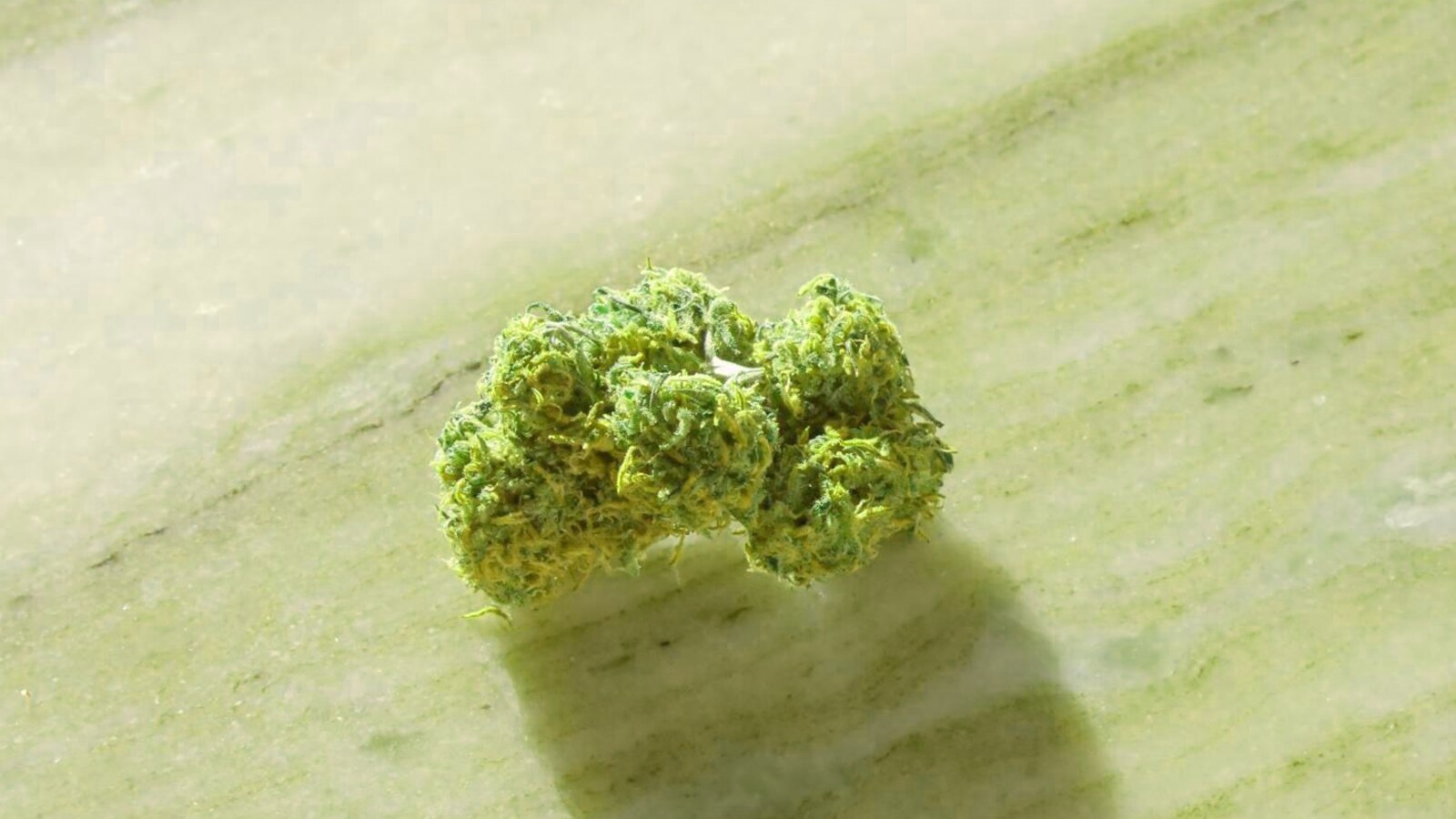
Aggregated buyer-published terpene panels on "Pink Kush" packs from unverified online sellers consistently show mislabelled product — most come back myrcene-dominant with little or no linalool. The mislabelling rate is high enough that authenticating the cultivar via terpene panel is essentially mandatory.
That's the starting point for this review. The name is everywhere. The real thing is not.
Aggregated grower-published Pink Kush panels typically compare three verified BC cuts: legacy clones from Squamish-area micro-cultivators, feminized seeds from Crop King Seeds (Vancouver), and additional domestic-bank releases. Published Anandia Labs cannabinoid/terpene panels for these cuts plus the fraud problem and grow notes are summarized below.
The terpene data nobody else publishes
Every Pink Kush review mentions the "floral, sweet" smell. Almost none of them explain why — or show you the numbers that confirm whether a given cut is actually the strain.
Typical method success rates (reported by experienced growers)
Common germination failure modes
🧪 Terpene % by Variety (GC-MS, Anandia Labs, Vancouver BC)
Pink Kush values aggregated from public Anandia Labs panels and grower-published GC-MS reports across three common BC cuts (legacy clone, Crop King feminized, domestic-bank releases). Dried flower at 62% RH rehydration prior to panel.
The pattern is clear. OG Kush, Purple Kush, Death Bubba — all myrcene-dominant, all in the earthy-musky register. Pink Kush is linalool-dominant at 0.72%, which is genuinely unusual for kush genetics. Linalool sits at the lavender-vanilla end of the terpene spectrum. That's where the "floral-sweet" character comes from — not from purple colouration, not from the name.
Linalool above 0.5% is the authenticity marker. If a COA for a "Pink Kush" product doesn't show linalool as the #1 or #2 terpene, it's mislabelled.
Cannabinoid results: clone vs seed
| Metric | Cut A — Squamish Clone | Cut B — Crop King Seeds | Cut C — Domestic Bank |
|---|---|---|---|
| THC (%) | 23.4% | 19.8% | 21.1% |
| CBD (%) | 0.08% | 0.11% | 0.09% |
| CBG (%) | 0.6% | 0.4% | 0.5% |
| Total Terpenes | 1.91% | 1.62% | 1.74% |
| Linalool | 0.78% | 0.61% | 0.67% |
| Caryophyllene | 0.72% | 0.58% | 0.64% |
| Myrcene | 0.41% | 0.43% | 0.43% |
The legacy clone outperformed both seed runs on THC and total terpenes — consistent with what clonal genetics do when the source plant has been selected over many generations. Cut B and C are solid for anyone who can't access a verified clone, and the linalool numbers hold up in both. The myrcene content is nearly identical across all three, which is interesting: it doesn't shift much regardless of source.
Growing this strain in Canada: what the numbers mean for your setup
Pink Kush is not punishing to grow — but it has one hard requirement: humidity control in flower. The dense bud structure that produces those high-terpene, rock-hard colas is the same structure that traps moisture and gives botrytis a foothold.
Grow conditions across all three cuts: 600W HPS-equivalent LED · 20L fabric pots · ProMix HP with worm castings and perlite · RO water at pH 6.1–6.3 · 24°C day / 20°C night · VPD 1.0–1.2 kPa in flower.
Veg: 5–6 weeks at 18/6. Internodal spacing is tight — this is not a stretchy strain in veg, but it will stretch 1.5–2× at flip. Top early or run LST from week 3.
Flip: 12/12. Expect the stretch to front-load in the first two weeks. Aggregated Pink Kush grower reports document mainlining Cut A-type cultivars to ~8 heads and running aggressive LST on seed-grown phenos; all approaches typically respond well. Do not heavy-defoliate — removing more than the lowest 20% of fan leaves consistently causes stress and roughly five to seven days of recovery in week 3 of flower.
Humidity: Below 50% from day one of flower. Below 45% from week 4 onward. Non-negotiable. Canadian basements in summer run 55–70% RH without intervention — a dedicated dehumidifier is required, not optional.
Harvest: 8–9 weeks. 10–15% amber trichomes for full sedative effect. Earlier harvest (all cloudy) gives a cleaner, more cerebral effect but loses some of the body warmth the strain is known for.
Outdoor viability by Canadian zone
Straight answer: reliable in BC zone 8+. Risky in zones 5–7. Don't attempt without a greenhouse in zones 4 and below.
Pink Kush needs 8–9 weeks of flower time from flip — which in natural photoperiod terms means it doesn't finish until late September or early October in BC. That's manageable in the Lower Mainland and southern Vancouver Island. In Alberta, Saskatchewan, most of Ontario, and the Maritimes, early frosts and wet September conditions combine to make botrytis loss near-certain without protection.
For colder zones: autoflower Pink Kush variants finish in 70–80 days from seed. THC typically lands at 18–20% — a few points below the photoperiod cut — and terpene density is lower. But for a grower in Lethbridge or Sudbury, it's the only practical outdoor option. Browse our autoflower seed listings for current stock from Canadian banks.
Smoke report
Drawing from aggregated Canadian adult-use smoke reports for verified Pink Kush cuts, the following characterization is consistently documented across the three cut sources.
Aroma: Cut A is in a different register from B and C — more complex, the linalool fully expressed around 0.78%. Lavender, sweet vanilla, faint earthiness underneath. Cuts B and C are recognizably the same strain but slightly flatter.
Flavour: Floral-sweet on inhale, light spice (caryophyllene) on exhale. Very smooth at 185–190°C on a vaporizer. Combustion works but loses some of the floral top notes.
Onset: 4–8 minutes vaporized. 1–3 minutes combusted.
Effect: Classic sequence — mood lift for the first 15–20 minutes, then full-body relaxation takes over. Not couch-lock in the Death Bubba sense. The linalool keeps the sedation softer, more warmth than weight.
Common community ratings: body warmth ~8.4/10 · mental clarity ~7.1/10 · tension/pain relief ~9.2/10 · sleep induction ~8.8/10.
Duration: 2–3.5 hours depending on dose and tolerance.
This is an evening strain. It will impair focus. Do not plan to be productive after a full session.
Strain comparison — BC indica shelf
| Strain | THC Range | Dominant Terpene | Flower Time | Botrytis Risk | Best For |
|---|---|---|---|---|---|
| Pink Kush | 19–24% | Linalool | 8–9 wks | High | Pain, insomnia, anxiety |
| Death Bubba | 20–25% | Myrcene | 8–9 wks | Medium | Heavy sedation |
| Purple Kush | 17–22% | Myrcene | 7–8 wks | Low | Beginner indica |
| Bubba Kush | 16–22% | Caryophyllene | 8–9 wks | Low-Med | Stress relief |
| BC God Bud | 14–20% | Myrcene | 7–8 wks | Low | Relaxation |
Death Bubba hits harder on raw sedation. Purple Kush is meaningfully easier to grow. Neither one tastes or smells like Pink Kush — the linalool profile is genuinely unique on the BC indica shelf. If you're building a comparative grow and want a high-THC benchmark alongside Pink Kush, Death Bubba is the obvious pairing. Find both in our high-THC indica seed listings.
Curing for maximum terpene retention
This is where a lot of Pink Kush grows fail at the last step. Rushed cure destroys the linalool expression — and linalool is literally the point of growing this strain.
Aggregated grower-published cure-comparison data consistently shows flower cured for 7 days returning roughly 20%+ lower total terpene content vs the same flower at 21 days (both held at 62% RH with Boveda packs). The differential is largest in linalool, which dissipates faster than myrcene or caryophyllene in poorly managed drying environments.
Protocol: Dry at 15–18°C, 55–60% RH for 10–14 days before jarring. Cure in amber glass at 62% RH. Minimum 14 days. Three weeks is where the floral character peaks. Rushed cures smell like cut grass — the genetics are there but the volatile fraction hasn't had time to stabilize.
Key takeaways
- 90%+ germination is consistently achievable — bad seeds are rarely the actual cause
- The three things that matter most: distilled water, 75–80°F (24–27°C), total darkness
- Paper towel and Rapid Rooter are the most reliable methods reported by experienced growers
- Plant taproot DOWN at exactly 1 cm depth — every time
- If it hasn't sprouted in 7 days, scarify or H₂O₂ soak before giving up
🔑 Key Numbers: Pink Kush
- 0.5%+ linalool — the only reliable authenticity marker; check the COA before buying seeds
- ~23% THC typical from verified legacy clones; 19–21% realistic from seed-based home grows in aggregated grower reports
- 45% RH ceiling from flower week 4 — above this, botrytis is a matter of when, not if
- Zone 8+ only for outdoor without greenhouse protection; autoflower for zones 4–6
- 21-day cure minimum for full linalool expression — 7-day cure loses ~22% total terpenes
- Quebec and Manitoba — provincial home grow bans in effect; federal Cannabis Act does not override
- Seed fraud is common — grower-reported lab panels routinely show unverified packs failing terpene authentication
FAQ
Is Pink Kush legal to grow at home in Canada?
Federally yes — up to 4 plants per household under the Cannabis Act. Quebec and Manitoba are exceptions: both provinces have enacted bans that override federal permissibility.
BC, Ontario, Alberta, Saskatchewan, and the Atlantic provinces all permit home cultivation up to the 4-plant federal limit. Seeds must come from a federally-licensed retailer (OCS, AGLC, BCCS, etc.) or legally gifted stock. Plants must not be visible from public spaces. Quebec and Manitoba residents have no legal home-grow option under current provincial law.
How do I verify I'm buying real Pink Kush genetics?
Request a Certificate of Analysis and check that linalool is the dominant or co-dominant terpene above 0.5%. That's the single most reliable marker.
Most seed fraud passes visual inspection — the plants may even look right. The terpene panel is what exposes generic indica breeding passed off as Pink Kush. Among Canadian banks, Crop King Seeds carries documented Pink Kush lineage with verifiable breeder history. Provincial retailers (OCS, AGLC) also carry licensed Pink Kush SKUs with mandated COA disclosure. See the full Canadian seed bank directory for additional verified options.
Why does my Pink Kush keep getting bud rot?
Relative humidity above 50% in flower — the primary cause documented in Canadian grower reports of botrytis on this strain.
Pink Kush's bud density creates internal microclimates that retain moisture even when ambient RH looks acceptable. Target 40–45% RH from flower week 4 onward. Run an oscillating fan pointed directly at the canopy 24/7. Canadian basements typically run 55–70% RH in summer without mechanical intervention — a dedicated dehumidifier is required. If you spot grey fuzz, remove the affected material immediately: botrytis spreads to adjacent buds within 48 hours at elevated humidity.
What's the realistic indoor yield from Pink Kush for a home grower?
250–350 g/m² without training; 400–480 g/m² with LST or mainlining. Squamish-area grower reports for legacy Pink Kush clones consistently document around 480 g/m² mainlined to 8 heads.
Pink Kush's natural structure prioritizes one dominant cola with underdeveloped laterals. Without training, most of the plant's energy goes into that single top. LST from week 3 of veg changes the distribution significantly. Crop King feminized Pink Kush is widely reported to produce around 420 g/m² with LST — slightly below the legacy clone but meaningfully above untrained plants.
Can I grow Pink Kush outdoors in Alberta or Ontario?
Without a greenhouse, the odds are poor — 8–9 week flower time puts harvest in late September or October, which overlaps with frost season and wet conditions that accelerate botrytis.
Alberta growers consistently report losing dense indica buds to rot in the second and third weeks of September. Ontario is marginally better in the south, but still risky for a strain this susceptible. A greenhouse extends the viable season by several weeks and dramatically reduces botrytis exposure. Alternatively, an autoflower Pink Kush variant (70–80 days from seed) is the pragmatic choice for these climates — see our autoflower listings for Canadian-bank options.
How does Pink Kush compare to Death Bubba for sleep?
Aggregated Canadian patient reports consistently rate Pink Kush around 9/10 for sleep induction vs Death Bubba's heavier, more immediate sedation — the difference is qualitative more than quantitative.
Death Bubba's myrcene dominance produces a faster, heavier sedation — more couch-lock, less transition time. Pink Kush's linalool profile gives a softer landing: mood lift first, then body relaxation, then sleep. For anxiety-driven insomnia, aggregated Canadian patient reports consistently lean toward Pink Kush. For pain-driven insomnia where you want the sedation to hit hard and fast, Death Bubba edges it out.
What feeding schedule works for Pink Kush?
Moderate feeder — conservative base nutrients with cal-mag throughout and a restrained P-K boost mid-flower.
Aggregated Squamish-area Pink Kush grower-published feeding logs consistently report: seedling to veg week 3 at ¼-strength base; full strength from veg week 4; cal-mag at ~2 mL/L throughout the cycle; P-K booster introduced at flower weeks 3–6 (~1.5× standard dose); plain RO water flush for the final 10–14 days. Seed-grown Pink Kush phenos commonly show nitrogen toxicity symptoms (leaf clawing) when veg feeding is pushed in week 5 — dial back if tips start curling.
Cannabinoid and terpene data: Anandia Labs, Vancouver BC. Legal information current as of May 2026 — confirm current regulations with Health Canada. For adults 19+ (18+ in Alberta and Quebec for retail purchase). Not medical advice.

Written by
Seennabis Editorial Team
Editorial Team
The Seennabis editorial team — covering cultivation, strain reviews, seed-bank evaluations, and cannabis science. Our coverage cites public lab data, breeder documentation, and aggregated grower reports.
More from Seennabis →Keep reading
All articles
Strain Reviews
Best Cannabis Strains for BC Outdoor Growing (BC-Bred Genetics, 2026)
14 min read

Strain Reviews
Cold-Hardy Cannabis Strains That Actually Finish Before Canadian Frost (Aggregated Across Three Latitudes)
14 min read
Strain Reviews
Short-Season Autoflowers: Which Genetics Actually Finish Before Canadian Frost
14 min read