Indoor vs Outdoor Cannabis Growing in Canada: How to Choose
The two methods fail for completely different reasons. Indoor grows fail on cost and attention; outdoor grows fail on weather and timing. Here is how the decision actually breaks down across Canadian provinces, climates, and housing situations.
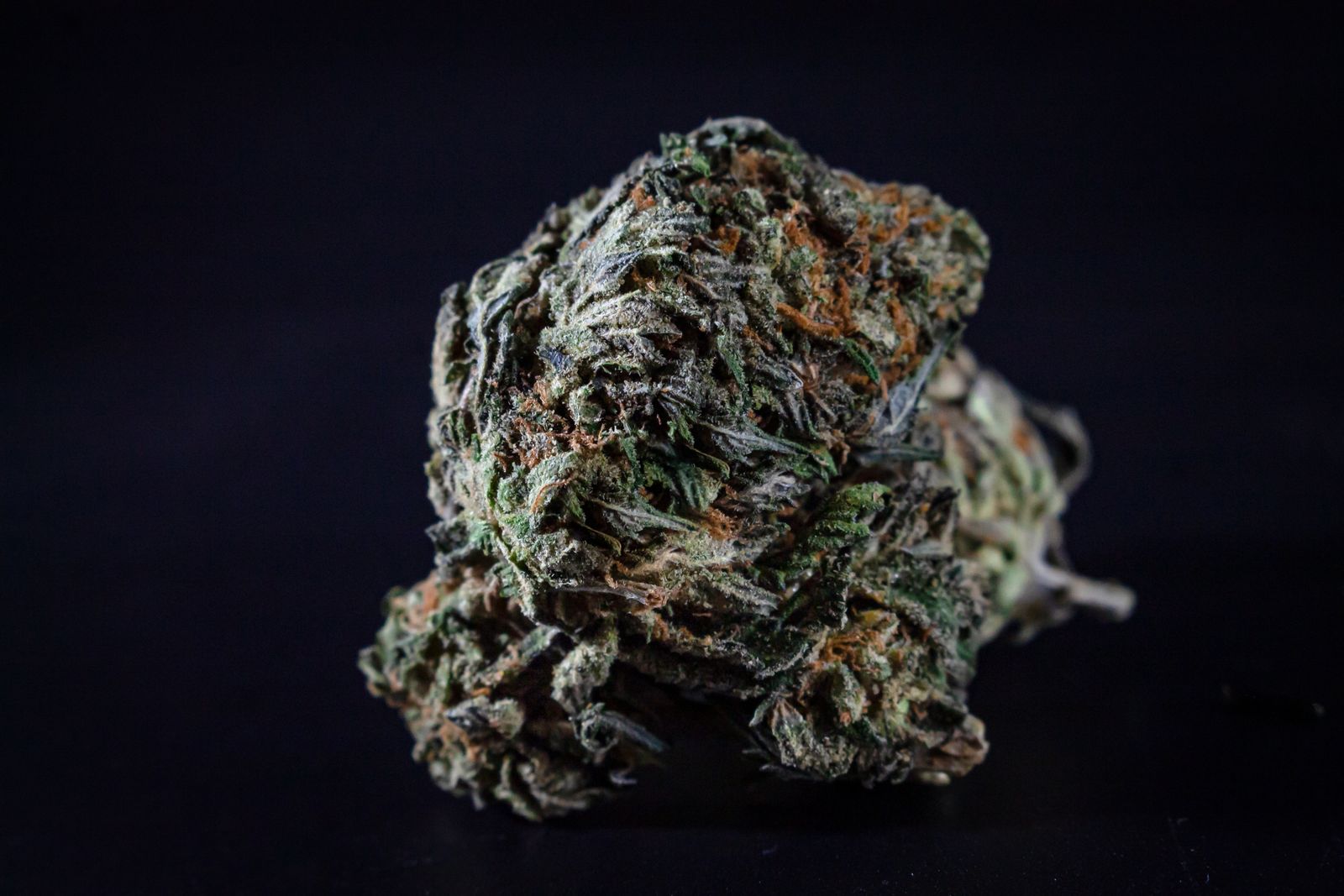
There is no universally correct answer to indoor versus outdoor, but there is a correct answer for your province, your housing situation, and your budget. The two methods fail for completely different reasons: indoor grows fail on cost and attention, outdoor grows fail on weather and timing.
This guide works through the decision the way a Canadian grower actually faces it.
Start With What Is Legal Where You Live
Before comparing methods, confirm which one is available to you at all.
The federal Cannabis Act permits adults to cultivate up to four cannabis plants per household from legal seed. Provinces are allowed to be more restrictive, and two of them are:
- Quebec: home cultivation is prohibited entirely.
- Manitoba: home cultivation is prohibited entirely.
Everywhere else the four-plant household limit applies, but the details that decide indoor versus outdoor are set locally, not federally:
- Several provinces require that outdoor plants not be visible from a public place.
- Municipalities may add setback or screening requirements.
- Rental agreements and condominium or strata bylaws frequently prohibit cultivation, smoking, or both, independently of provincial law.
Check your provincial cannabis authority and your lease or bylaws before buying equipment. A fully built indoor tent is an expensive thing to discover you are not permitted to use.
The Honest Cost Comparison
Most cost comparisons you will read quote dollar figures that are stale, American, or both. The useful thing is the cost structure, because you can price it against your own hydro rate in about two minutes.
Indoor: high setup, predictable running cost
Indoor cultivation front-loads spending on equipment — light, tent or dedicated space, ventilation and carbon filtration, pots, medium, nutrients, and a timer. After that, the dominant recurring cost is electricity, and it is calculable rather than mysterious:
Monthly lighting cost = (light wattage ÷ 1000) × hours run per day × 30 × your rate per kWh
A 200 W LED run 18 hours a day costs (200 ÷ 1000) × 18 × 30 = 108 kWh per month. At a residential rate of 12 cents per kWh that is about $12.96 a month for lighting, before ventilation and any dehumidification. Flowering at 12 hours a day cuts the lighting figure by a third.
Provincial hydro rates vary by a factor of roughly three across Canada, so the same tent genuinely costs very different amounts to run in Quebec, Ontario, and the Maritimes. Look up your own rate on a recent bill rather than trusting a number from a guide.
Outdoor: low setup, weather-dependent return
Outdoor cultivation front-loads almost nothing. Soil amendments, pots or a prepared bed, water, and basic pest management cover most of it. There is no lighting bill because the sun is free.
What you pay instead is variance. An outdoor season can deliver a far larger plant than any home tent will hold, or it can deliver a crop lost to an early frost, a wet September, or a pest pressure you did not anticipate. The cost is not on the bill; it is in the probability of getting nothing.
Climate Is the Deciding Factor Outdoors
Canada's outdoor window is not uniformly short, but it is unforgiving where it is short. Frost-free days from Environment and Climate Change Canada climate normals range from well over 200 on southern Vancouver Island to roughly 110 across much of the Prairies.
That range decides which genetics are even eligible:
- Long seasons (southern BC, Niagara, parts of southwestern Ontario): most photoperiod strains can finish outdoors.
- Moderate seasons (much of southern Ontario and Quebec, the Annapolis Valley): fast-finishing photoperiods and autoflowers.
- Short seasons (Prairies, northern regions, much of Newfoundland): autoflowers, or photoperiods started indoors weeks before transplant.
The failure mode is always the same arithmetic: a strain that needs eleven weeks of flowering, transplanted in early June in a zone whose first frost arrives mid-September, does not finish. For city-level frost dates and transplant windows, see our province-by-province frost calendar.
Indoors, none of this applies. That is the single biggest argument for indoor cultivation in Canada: you are choosing your own climate instead of negotiating with the one you have.
What Each Method Is Actually Good At
| Factor | Indoor | Outdoor |
|---|---|---|
| Setup cost | Higher — light, tent, ventilation, filtration | Lower — soil, pots, water |
| Running cost | Electricity, calculable monthly | Negligible |
| Harvests per year | Multiple, independent of season | One, fixed by the calendar |
| Plant size | Limited by tent or room height | Limited mainly by season and root space |
| Environmental control | Near total — light cycle, temperature, humidity | Weather dependent |
| Weather risk | None | Frost, rain, wind, hail |
| Pest pressure | Lower, but a single introduction spreads fast | Higher and continuous, though more natural predators |
| Odour management | Solvable with carbon filtration | Not controllable |
| Discretion | High, if odour is managed | Low — visible plants, visible scent |
| Attention required | Daily, through the whole cycle | Concentrated at transplant, flowering, and harvest |
| Strain choice | Unrestricted | Restricted by season length |
Choosing by Situation, Not by Preference
Apartment or condominium, no private outdoor space. Indoor is the only option, and odour control is not optional — carbon filtration is what keeps a legal grow from becoming a dispute with your building. Expect to work in a small footprint and choose compact genetics accordingly.
House with a private, screened yard in a long-season zone. Outdoor is the better value by a wide margin. One season, minimal equipment, and plant sizes no home tent can match.
House in a short-season or Prairie zone. Autoflowers outdoors, or an indoor tent, or the hybrid that experienced growers in these zones actually use: start indoors under lights in April, transplant after the soil is reliably above 12°C at 10 cm depth, and finish outdoors.
You want consistency more than volume. Indoor. Repeatable conditions produce repeatable results, which matters more than peak yield if you are growing to a predictable personal supply.
You are growing for the first time and want the cheapest possible honest attempt. Outdoor autoflowers in a long or moderate season. Low cost, forgiving genetics, and the season itself enforces the schedule for you.
Strain Selection Changes With the Method
The method constrains the genetics, not the other way round.
Outdoor selection is driven by season length and weather resilience: finishing speed first, then mould resistance if your autumn is wet, then everything else. Autoflowering genetics remove the photoperiod timing problem entirely, which is why they dominate short-season Canadian outdoor growing.
Indoor selection is driven by space. Height is usually the binding constraint in a tent, so stretch behaviour and training response matter more than raw vigour. A strain that triples in height during early flowering is a problem in a 1.5 m tent regardless of how well it performs in a greenhouse.
Browse outdoor cannabis seeds for season-matched genetics, indoor cannabis seeds for compact photoperiods, or autoflower seeds if you want the timing problem solved by the plant rather than by your calendar.
The Bottom Line
Indoor cultivation buys control and pays for it monthly in electricity and daily in attention. Outdoor cultivation is close to free and pays for it in weather risk and a single annual attempt.
If home cultivation is permitted where you live and you have private, screened outdoor space in a zone with a workable season, start outdoors — the cost of being wrong is small. If you are in an apartment, in a short-season zone, or you need predictable results rather than one hopeful harvest, build indoors and calculate your hydro cost before you buy the light.
Either way, confirm your provincial rules and your lease first. That is the only step in this comparison that has no workaround.

Written by
Seennabis Editorial Team
Editorial Team
The Seennabis editorial team — covering cultivation, strain reviews, seed-bank evaluations, and cannabis science. Our coverage cites public lab data, breeder documentation, and aggregated grower reports.
More from Seennabis →Keep reading
All articles
Growing Guides
Canadian Outdoor Cannabis Timing: A Genetics Researcher's Province-by-Province Frost Calendar
14 min read
Growing Guides
Canadian Basement Cannabis Grows: Cold Floors, Dry Furnace Air, and the $780 Solution
14 min read
Growing Guides
When to Plant Cannabis Seeds in Ontario (Frost Calendar + Indoor Start Guide)
15 min read