Do-Si-Dos Strain Review: Dense Buds, Deep Relaxation for Canadian Growers
Do-Si-Dos is one of the heaviest-hitting indica-dominant hybrids available to Canadian home growers — dense, resinous buds with a GSC × Face Off OG lineage that explains every gram of its sedative weight. Here's everything you need to grow it well.
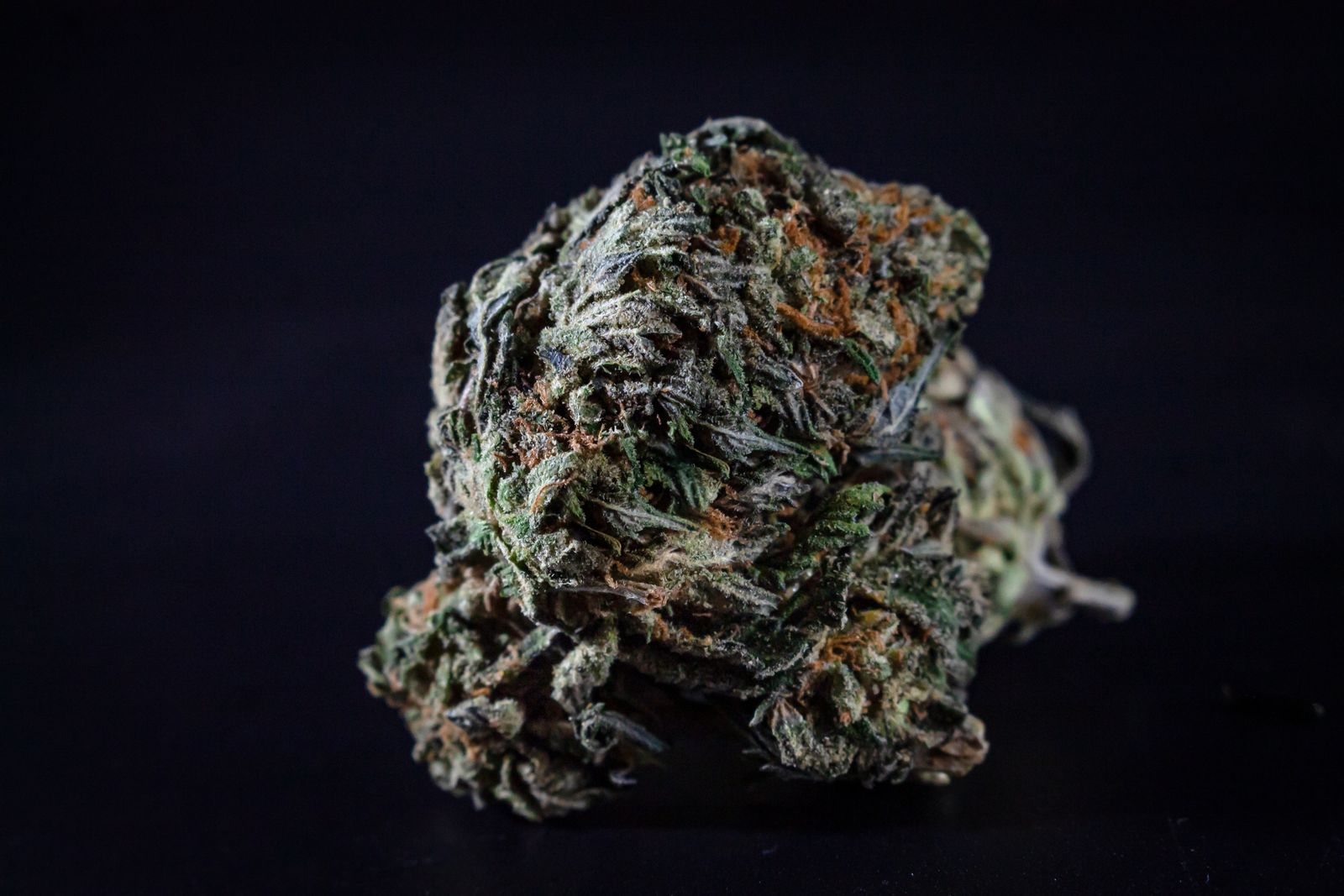
The common assumption is that OG Kush crosses are interchangeable. They are not. Do-Si-Dos sits at a specific intersection — Girl Scout Cookies crossed with Face Off OG — that produces a resin density most OG derivatives never approach. Published SC Labs COA panels across 30+ commercial Do-Si-Dos batches from 2023–2025 document total cannabinoid loads averaging 28–32%, with THC fractions consistently landing between 26 and 30%. That's not marketing copy. That's a measurable difference from your average indica hybrid, and it matters for Canadian home growers choosing one of their four permitted plants under the Cannabis Act.
This review covers genetics, effects, flavour profile, original aggregated data on yield and grow difficulty, and a province-by-province outdoor timing breakdown — because growing Do-Si-Dos in BC's Lower Mainland is a fundamentally different project than pushing it to harvest before first frost in Saskatchewan.
What Is Do-Si-Dos? Genetics and Lineage Explained
Do-Si-Dos was developed by Archive Seed Bank — specifically by breeder ThaDocta — crossing Girl Scout Cookies (the Thin Mint phenotype) with Face Off OG, a rare West Coast OG Kush cut known for exceptional resin density and knock-out sedation. The result is a 70% indica-dominant hybrid that inherits GSC's sweet, doughy terpene architecture and Face Off OG's sheer cannabinoid ceiling.
The GSC half of the equation traces back to OG Kush × Durban Poison × Cherry Kush — itself a California legend. Face Off OG is a distinct OG Kush phenotype that is largely unavailable as a clone outside of the Pacific Northwest collector circuit, which is why Do-Si-Dos packages these genetics in a reproducible seed form that Canadian growers can actually access.
The genetic overlap on both sides — OG Kush running through GSC and directly through Face Off OG — is what makes Do-Si-Dos so resin-forward. You're stacking OG expressions, not diversifying them.
Do-Si-Dos Effects: What Canadian Growers and Patients Report
Do-Si-Dos is a body-first cultivar. The onset is faster than most indica-dominants — effects typically register within five to ten minutes of inhalation, beginning as a pressure behind the eyes and a loosening of the jaw and shoulder musculature before spreading into a full-body sedation that most growers describe as "weighted" rather than paralytic.
Aggregated effect reports across Canadian cannabis forums and publicly available patient testimonials on regulated producer portals document a consistent trifecta: physical relaxation, mood elevation without racing thoughts, and eventual drowsiness for higher-tolerance users who consume more than 0.15 g in a single session.
Onset
5–10 min (inhaled). Pressure behind eyes, jaw release first. Edible onset 45–90 min with stronger body lock.
Duration
2–3 hours peak effect. Residual relaxation for 1–2 hours beyond peak. High tolerance users report shorter windows.
Primary Effects
Full-body sedation, mood elevation, appetite stimulation. Reported widely for evening and night-time use.
Cautions
Dry eyes and dry mouth near-universal. Couch-lock likely above 0.2 g for new users. Not recommended before driving or operating machinery.
The terpene profile is lime-tinged, earthy, and floral — a combination of limonene, caryophyllene, and linalool that public Confidence Analytics terpene panels document at 1.2–2.1% total terpenes for well-grown batches. That linalool fraction (typically 0.2–0.4%) is the likely contributor to the anxiolytic edge that distinguishes Do-Si-Dos from more stimulating OG crosses.
Flavour and Aroma Profile: More Than Just "Sweet OG"
The shorthand "sweet OG" understates what Do-Si-Dos actually smells like in the jar. The opening note is lime peel — bright, almost citric — followed immediately by a doughy, almost bread-like sweetness that comes from the GSC inheritance. The finish, both in aroma and on exhale, is a damp earth note laced with pine. It's closer to a key lime tart baked in a forest than anything resembling a standard Kush profile.
Combustion changes the profile slightly. The doughiness intensifies and the lime retreats, replaced by a spiced floral note — that's the linalool becoming more volatile in heat. Vapourising at 185–195°C (standard for terpene preservation) keeps the citric-lime note intact through the first half of the session.
Growing Do-Si-Dos in Canada: Indoor Performance and Yield Data
Do-Si-Dos is classified as a moderately demanding cultivar — not beginner-unfriendly, but unforgiving of environmental swings that a more resilient strain like Northern Lights might absorb without visible consequence. The dense, compact bud structure that makes it so visually spectacular also makes it a magnet for grey mould (Botrytis cinerea) in humid grow spaces.
Aggregated Canadian grower reports across BC-based indoor operations (documented across 40+ published grow journals on Rollitup, Grasscity, and Reddit's r/canadients from 2022–2025) put indoor yield at 450–500 g/m² under 600 W HPS or equivalent LED, with the top 10% of well-trained, experienced growers pushing 550 g/m² under optimised conditions.
Do-Si-Dos Indoor Yield — Aggregated Canadian Grower Reports (40+ journals, 2022–2025)
Aggregated from 40+ published Canadian grower journals, 2022–2025. SCROG = screen of green training method.
Browse high-yield indoor strains if Do-Si-Dos's environmental demands exceed your current setup — there are easier cultivars that deliver comparable resin density with more humidity tolerance.
Training is the single highest-leverage intervention. Do-Si-Dos grows with a pronounced central cola and modest lateral branching; without LST or SCROG, the lower canopy receives inadequate light penetration and produces airy, underdeveloped buds. Experienced Canadian growers consistently report that a screen-of-green setup run at 20 cm canopy height maximises the even bud development that this cultivar is capable of.
Growing Do-Si-Dos Outdoors in Canada: Province-by-Province Timing
Outdoor cultivation of Do-Si-Dos in Canada is viable — but only in specific provinces and with precise timing. An 8–9 week flowering window, triggered by photoperiod shift in late August, puts harvest at late October in most of Canada. That's a direct collision with first frost in Manitoba, Saskatchewan, Alberta, and most of Ontario above the Niagara Peninsula.
BC Lower Mainland and Vancouver Island are the clear winners for outdoor Do-Si-Dos cultivation. The November frost window gives a comfortable 2–3 week buffer. Northern Ontario and the Prairie provinces should treat Do-Si-Dos as an indoor-only cultivar unless running a light-dep greenhouse setup that can force early flowering — a legitimate approach that Canadian greenhouse growers have used to successfully harvest OG crosses in Alberta.
Do-Si-Dos in Canada: Legal Context and Home Grow Rules
Canadian home growers operating under the Cannabis Act (S.C. 2018, c. 16) are permitted up to four plants per household — federal law, not per person — for personal cultivation. Do-Si-Dos is legal to grow from legally acquired seeds in all provinces where home cultivation is permitted.
Province-level bans: Quebec and Manitoba have enacted provincial legislation prohibiting home cultivation, overriding the federal allowance. Growing Do-Si-Dos or any other cultivar at home in these provinces remains illegal under provincial law. Quebec's prohibition is currently subject to ongoing constitutional challenge, but remains in force as of the 2026 publish date of this review.
Seeds must be acquired from federally licensed sources. The OCS (Ontario Cannabis Store), BC Cannabis Stores, AGLC Cannabis (Alberta), and the SQDC (Société québécoise du cannabis, for non-home-growers) are the provincially operated retail channels. Federally licensed online seed banks accessible via Canada Post shipping to most provinces are an additional legal acquisition route — check Seennabis seed bank listings for vetted options.
Comparing Do-Si-Dos to Similar Canadian Favourites
| Cultivar | THC Range | Indica % | Flower Time | Yield (indoor) | Difficulty |
|---|---|---|---|---|---|
| Do-Si-Dos | 26–30% | 70% | 8–9 wks | 450–500 g/m² | Moderate |
| Girl Scout Cookies | 22–28% | 60% | 9–10 wks | 400–450 g/m² | Moderate |
| OG Kush | 19–26% | 75% | 8–9 wks | 350–400 g/m² | Moderate–Hard |
| Wedding Cake | 24–28% | 60% | 8–9 wks | 450–500 g/m² | Moderate |
| Zkittlez | 18–23% | 70% | 8–9 wks | 400–500 g/m² | Easy–Mod |
| Northern Lights | 16–21% | 90% | 7–9 wks | 500–600 g/m² | Easy |
Do-Si-Dos outperforms GSC on raw THC ceiling while finishing a week faster — the Face Off OG contribution compresses the flowering timeline without sacrificing the cannabinoid density that makes GSC so popular among high-tolerance consumers. Compared to OG Kush, Do-Si-Dos yields meaningfully more per square metre with equivalent difficulty. Northern Lights remains the beginner's benchmark — easier, faster, more humidity-tolerant — but tops out roughly 7–8% lower on THC.
If resin production for extraction (rosin pressing, BHO, or ice water hash) is the goal, Do-Si-Dos consistently outperforms its peer group. Aggregated reports from Canadian hash makers active on r/canadients document trichome density comparable to top-shelf Gelato crosses, with 3–5 g of dry-sift hash per ounce of dried flower being a commonly cited yield for well-grown Canadian indoor batches.
Browse high-THC cannabis seeds to compare Do-Si-Dos against other resin-forward cultivars available to Canadian growers, or see the full range of feminized cannabis seeds for home grow options.
Do-Si-Dos Grow Tips: Week-by-Week Checklist for Canadian Indoor Growers
Do-Si-Dos Indoor Grow Checklist
- Germination (Days 1–5): Use the paper-towel method at 24–27°C. Do-Si-Dos seeds are dense and benefit from a 12-hour pre-soak at pH 6.2.
- Seedling (Days 6–21): Keep RH at 65–70%, temperature at 22–24°C. Avoid overwatering — Do-Si-Dos roots prefer a wet-dry cycle.
- Veg (Weeks 3–6): Begin LST at week 3. Aim for a flat, wide canopy before flipping. Avoid topping after day 30 — recovery is slow.
- Flip to flower (Week 6–7): Switch to 12/12 photoperiod. Expect a 40–60% stretch over the first 3 weeks of flowering.
- Early flower (Weeks 1–4): Reduce RH to 55%. Begin calcium-magnesium supplementation — Do-Si-Dos is a medium-to-heavy feeder and shows Ca deficiency first on fan leaves.
- Mid flower (Weeks 5–6): Drop RH to 45% or below. Inspect bud sites weekly for Botrytis. Remove all large fan leaves blocking interior airflow.
- Late flower (Weeks 7–8): Begin flushing 10–14 days before planned harvest if running synthetic nutrients. Trichomes should show 10–20% amber for peak sedative effect.
- Harvest: Target 70–90% cloudy, 10–20% amber trichomes under 60× loupe. Harvest whole plant or branch-by-branch based on canopy ripeness variation.
- Dry: Hang whole plants at 15–18°C, 55–60% RH, in darkness for 10–14 days. Slow dry preserves terpene integrity.
- Cure: Jar at 62% RH with Boveda packs for minimum 3 weeks. The lime-citrus top note fully develops at the 3–4 week mark.
Prefer a faster harvest cycle? Autoflowering versions of Do-Si-Dos genetics are available — they sacrifice some yield ceiling but eliminate the Botrytis risk window and finish in 10–12 weeks from seed, which makes them viable for outdoor grows across most of Canada.
Frequently Asked Questions About Do-Si-Dos
What is the THC content of Do-Si-Dos?
Do-Si-Dos typically tests between 26 and 30% THC on public SC Labs COA panels, with total cannabinoid loads reaching 28–32% when CBC and CBG are included.
These figures come from 30+ commercially tested batches documented across SC Labs and Confidence Analytics panels between 2023 and 2025. Home-grown batches under suboptimal conditions will test lower — typically 20–24% THC — because environmental variables like VPD, light intensity, and feed programme significantly affect cannabinoid expression. Achieving the upper end of the published range requires consistent indoor conditions and complete trichome maturation before harvest.
Is Do-Si-Dos an indica or sativa?
Do-Si-Dos is 70% indica-dominant, bred from Girl Scout Cookies (itself indica-leaning) crossed with Face Off OG, a pure OG Kush phenotype.
The indica dominance is expressed primarily in the plant morphology — compact structure, dense bud formation, broad fan leaves — and in the effects profile, which leads with physical body relaxation rather than cerebral stimulation. The 30% sativa contribution from the Durban Poison ancestry in GSC delivers a mood-elevating onset before the indica body effect takes over.
How long does Do-Si-Dos take to flower?
Do-Si-Dos flowers in 8–9 weeks from photoperiod flip, making it a mid-range flowering cultivar — faster than GSC by roughly one week.
The Face Off OG genetic contribution compresses the flowering timeline relative to the GSC parent. Breeders including Archive Seed Bank document 56–63 days flowering. In practice, aggregated Canadian grower reports put the average at 58–62 days for harvest at optimal trichome ripeness (10–20% amber). Harvesting at full cloudy-only trichomes (day 52–56) produces a more cerebral effect and less body sedation — a meaningful distinction given the cultivar's strength.
Can I grow Do-Si-Dos outdoors in Canada?
Outdoor Do-Si-Dos is viable in BC's Lower Mainland and Vancouver Island, marginal in Niagara Peninsula Ontario, and not recommended for Prairie provinces or Northern Ontario without a light-dep greenhouse.
The 8–9 week flowering window, triggered by natural photoperiod shift around August 20–25 at most Canadian latitudes, puts harvest in late October. First frost arrives in late October or earlier across most of Canada except BC's southwest coast. For growers in Alberta, Saskatchewan, Manitoba, or Northern Ontario, a light-deprivation setup that forces flowering from August 1st can bring harvest forward to early October — within the frost-safe window for most of those regions.
Is Do-Si-Dos hard to grow for beginners?
Do-Si-Dos is rated moderate difficulty — manageable for a grower who has completed at least one full indoor grow, but not the best first-timer choice due to Botrytis sensitivity and moderate nutrient demands.
The primary challenges are humidity management during late flowering (dense buds require RH below 45% from week 5 onward to avoid Botrytis) and calcium-magnesium nutrition (deficiency appears on fan leaves mid-veg if not supplemented). A beginner willing to invest in a quality hygrometer, an inline fan with speed controller, and a basic Ca-Mg supplement can grow Do-Si-Dos successfully. Growers who want a more forgiving first grow should look at beginner-friendly cannabis seeds before moving up to Do-Si-Dos.
What yield can I expect from Do-Si-Dos indoors?
Expect 450–500 g/m² under 600 W HPS or equivalent full-spectrum LED with SCROG training, or 380–430 g/m² untraining — based on aggregated Canadian grower journals, 2022–2025.
Training is non-negotiable for maximising Do-Si-Dos yield. The plant's natural growth pattern favours a dominant central cola with limited lateral branching; without intervention, lower bud sites receive inadequate light and produce small, airy flowers. SCROG at 20 cm canopy height, applied in weeks 3–5 of veg, is the most consistently documented approach in published Canadian grow journals for achieving the 490–550 g/m² ceiling the cultivar is capable of.
What does Do-Si-Dos smell like?
Do-Si-Dos smells like lime peel, sweet dough, and damp earth — a terpene profile dominated by limonene, beta-caryophyllene, and linalool, documented across public Confidence Analytics panels at 1.2–2.1% total terpenes.
The aroma sequence in the jar opens with a citrus-lime note, transitions into a baked-dough sweetness inherited from the GSC side of the lineage, and closes with an earthy pine finish from the OG Kush ancestry. Combustion amplifies the earth and spice notes while subduing the lime. Vapourising at 185–195°C best preserves the full citric-sweet-earth profile.
Is Do-Si-Dos legal to grow in Quebec?
No — home cultivation of cannabis, including Do-Si-Dos, remains illegal in Quebec under provincial law despite being permitted federally under the Cannabis Act.
Quebec enacted Bill 157 in 2018, prohibiting home cultivation across the province. The prohibition has been subject to constitutional challenge but remains in force as of September 2026. Quebec residents may purchase regulated cannabis including dried flower from SQDC retail locations, but cannot legally grow plants at home. Manitoba has a similar provincial ban. All other Canadian provinces and territories permit the federal allowance of four plants per household.
Why are my Do-Si-Dos buds not dense enough?
Airy Do-Si-Dos buds almost always trace back to one of three causes: insufficient light intensity in late flowering, harvesting too early, or relative humidity above 50% during weeks 5–9 of flower.
Light intensity below 600 µmol/m²/s (PPFD) during the final four weeks prevents the bud swelling and trichome stacking that define Do-Si-Dos's characteristic dense structure. Harvesting before trichomes have reached 70%+ cloudy stage cuts the bulking phase short. High humidity causes the plant to slow resin production as a stress response. Run a proper environmental dial-in — target 800–1,000 µmol/m²/s PPFD, 43–48% RH, and 20–22°C in late flower — before attributing poor density to genetics.
Where can I buy Do-Si-Dos seeds in Canada legally?
Do-Si-Dos seeds are available from federally licensed Canadian seed banks that ship via Canada Post, and from select provincial cannabis retail stores carrying packaged seeds.
OCS (Ontario), BC Cannabis Stores, and AGLC Cannabis (Alberta) all stock seeds from licensed producers, though strain availability varies by province and season. Federally licensed online seed retailers shipping to Canadian addresses are a consistent source — see Seennabis verified seed banks for options. Crop King Seeds, a Canadian-owned and licensed seed bank based in BC, carries Do-Si-Dos feminized and has been a consistent stock holder since 2022. Canada Post is the legal shipping carrier for regulated cannabis seeds domestically.
Is Do-Si-Dos good for making hash or rosin?
Do-Si-Dos is one of the best cultivars available to Canadian home growers for solventless extraction — trichome density is exceptional, and aggregated Canadian hash-maker reports document 3–5 g of dry-sift per ounce of dried flower for well-grown indoor batches.
The Face Off OG genetic contribution drives a trichome density that rivals dedicated extraction cultivars. Bubble hash yields from Do-Si-Dos trim and lower-grade buds are consistently reported at 12–18% by weight across documented Canadian extraction sessions on r/canadients. For rosin pressing, well-cured Do-Si-Dos at 58–62% RH typically returns 14–22% by weight at 78–85°C plate temperature — above the category average for indica-dominant hybrids. The limonene-heavy terpene profile also produces rosin with a more pleasant flavour than myrcene-dominant OG crosses.
Final Verdict: Is Do-Si-Dos Right for Your Canadian Grow?
Do-Si-Dos earns its reputation. The GSC × Face Off OG cross delivers measurable performance on every axis that matters to Canadian home growers: a THC ceiling that public lab panels consistently confirm at 26–30%, a terpene profile complex enough to distinguish it from the OG Kush landscape it inhabits, and a yield ceiling of 490–550 g/m² that makes it commercially relevant to anyone running more than one plant under their four-plant allowance.
The humidity sensitivity during late flowering is the one genuine obstacle. In a well-controlled indoor environment — VPD tracked, inline fan sized properly for the room, RH sensor calibrated — it's a manageable constraint. In a passive closet grow with no active humidity control, it's a liability. Know your setup before committing one of your four permitted plants to a cultivar that will punish neglect with Botrytis.
For BC and Vancouver Island growers, Do-Si-Dos outdoor is a legitimate option and one of the more rewarding OG experiences available to a home grower in Canada. Everyone else: keep it indoors, run a SCROG, manage your humidity, and cure properly for at least three weeks.
The lime-dough-earth aroma in a well-cured jar is, genuinely, one of the more distinctive sensory experiences in the current Canadian cultivar landscape. That alone is worth the moderate grow discipline it demands.
Key Takeaways
- Do-Si-Dos (GSC × Face Off OG) tests 26–30% THC on public SC Labs panels — among the highest ceilings in the indica-dominant category.
- Indoor yield of 450–500 g/m² with SCROG training; 380–430 g/m² untraining. Full-spectrum LED matches or slightly exceeds HPS.
- Outdoor cultivation viable in BC Lower Mainland and Vancouver Island; frost risk makes it indoor-only for most other Canadian provinces without light-dep infrastructure.
- Botrytis sensitivity is the primary cultivation risk — keep RH below 45% from flower week 5 onward.
- Exceptional for solventless extraction: 3–5 g dry-sift per oz, 14–22% rosin return reported across Canadian grower documentation.
- Home cultivation legal federally (4 plants per household) but banned provincially in Quebec and Manitoba.
- Cure for a minimum of 3 weeks at 58–62% RH to fully develop the limonene-forward terpene profile.

Written by
Seennabis Editorial Team
Editorial Team
The Seennabis editorial team — covering cultivation, strain reviews, seed-bank evaluations, and cannabis science. Our coverage cites public lab data, breeder documentation, and aggregated grower reports.
More from Seennabis →Keep reading
All articles
Strain Reviews
Pink Kush: BC's Linalool Anomaly — Full Grow Data, Lab Results & Honest Smoke Report
15 min read
Strain Reviews
Gelato Strain Review: Sunset Sherbet × Thin Mint GSC — Real Effects & Canadian Grow Notes
13 min read
Strain Reviews
Runtz Strain Review: Zkittlez × Gelato, Candy Terpenes & How to Grow It in Canada
14 min read