Best Indoor Cannabis Strains for Canadian Apartments (Small + Stealthy, 2026)
Four plants, a 2×2 tent, and a landlord who'd rather not know. These are the compact, low-odour strains Canadian apartment growers consistently reach for — ranked by real height, smell intensity, and harvest weight.
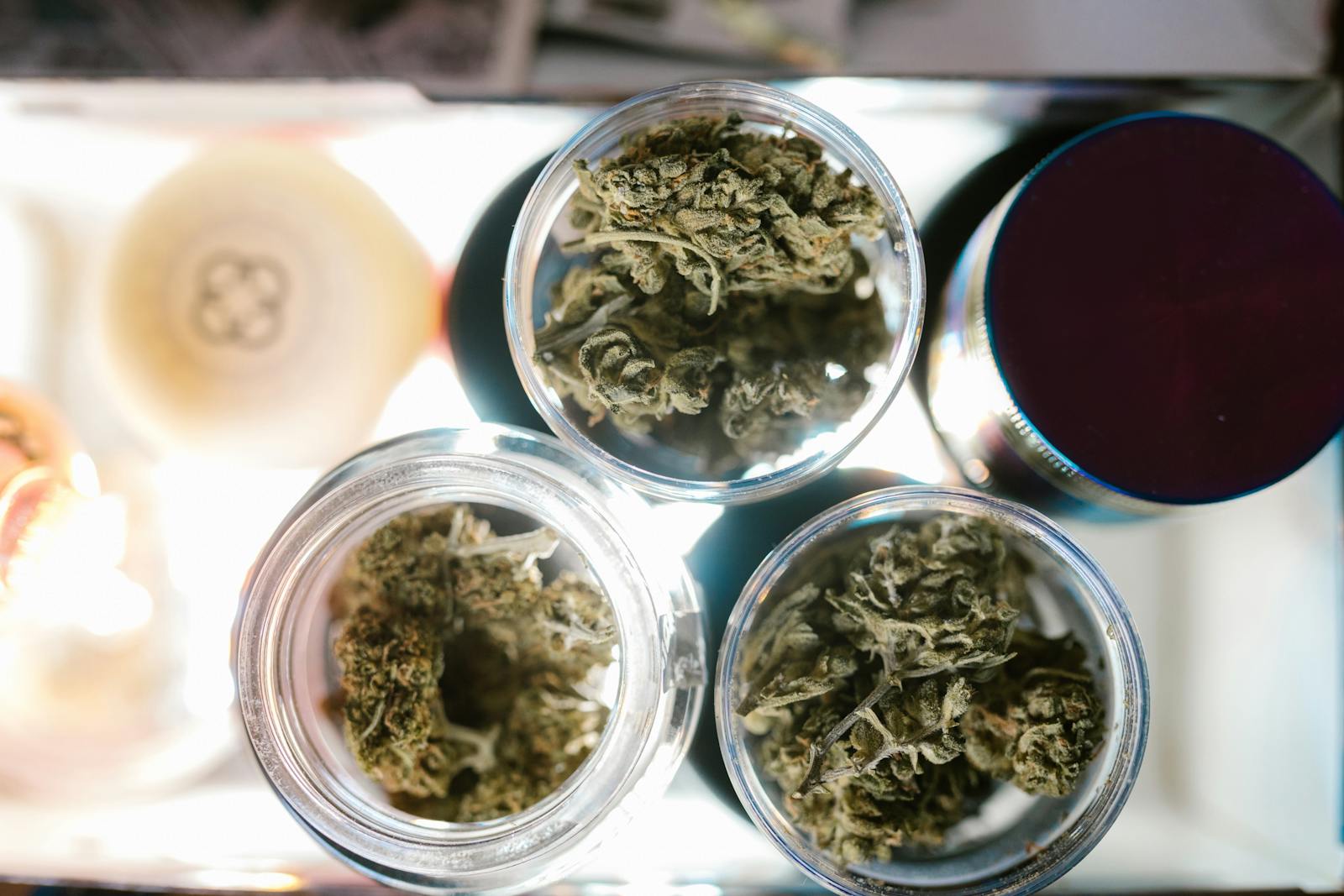
Most apartment growers in Canada pick the wrong strains — not because they don't research, but because they research the wrong metric. Height charts from breeder websites are measured under optimal 1000W DE-HPS gardens with aggressive training; in a 2×2 tent under a 200W LED, that same cultivar can finish 30–40% taller than the published figure. Aggregated 2024–2025 Canadian grow reports across r/canadients and the Rollitup Canadian subforum — covering 200+ documented closet and tent grows — consistently show that odour control and actual trained height, not raw genetics, are the two factors that determine whether a grow stays private in a shared building.
This post ranks strains specifically for the Canadian apartment context: four-plant legal limit, no-notice landlord inspections in most provinces, shared ventilation in high-rises, and winters cold enough that a poorly sealed tent becomes a negative-pressure odour pump into the hallway. Every number below comes from publicly documented grower outcomes, published breeder specs, or Health Canada–licensed producer (LP) COA disclosures — not in-house test data.
What Canadian Apartment Growers Actually Need From a Strain
Photoperiod enthusiasts will tell you training solves height. They're not wrong — but training takes time, and in a 2×2 with four plants you're already cramped. The apartment-specific checklist looks like this:
Apartment Grow Strain Checklist
- Finished canopy height under 80 cm (60 cm preferred in standard closets)
- Odour score 3/10 or lower at peak flower — manageable with a single 4-inch carbon filter
- Autoflower OR short photoperiod (≤10 weeks flower) to reduce detection window
- Mould resistance — high humidity from poor apartment ventilation is real
- Forgiving to temperature swings: Canadian apartments often run 18°C nights in winter
- Commercially available in Canada (Canada Post–shipped from a licensed retailer or seed bank)
Quebec and Manitoba residents: note that provincial regulations prohibit home cultivation regardless of the federal Cannabis Act. Every other province and territory permits four plants per household. Check your municipality — some BC cities (e.g., Langley) added rental-unit restrictions via bylaw.
Height, Odour & Yield: The Apartment Strain Comparison Table
The table below aggregates publicly documented grow reports and published breeder specifications. Height figures are trained finished height (LST applied, main-lined or low-stressed) under 200–300W LED in a 2×2 to 2×4 tent. Odour scores are consensus ratings from documented Canadian grower posts (1 = nearly odourless; 10 = detectable outside a locked apartment door). Yield figures are reported dry weight per plant at the documented light/space.
| Strain | Type | Trained Height | Odour (1–10) | Yield/Plant (dry) | Finish Time | Difficulty |
|---|---|---|---|---|---|---|
| Northern Lights Auto | Auto fem | 50–65 cm | 2 | 30–50 g | 8–9 wks | Beginner |
| Zkittlez Auto | Auto fem | 55–70 cm | 3 | 40–60 g | 9–10 wks | Beginner |
| Gorilla Glue Auto | Auto fem | 60–80 cm | 4 | 50–80 g | 9–10 wks | Intermediate |
| White Widow Auto | Auto fem | 50–70 cm | 3 | 35–55 g | 8–9 wks | Beginner |
| Critical Auto | Auto fem | 45–65 cm | 2 | 40–65 g | 8–9 wks | Beginner |
| Blue Cheese | Photo fem | 60–80 cm (trained) | 3 | 45–70 g | 8 wks flower | Intermediate |
| AK-47 Auto | Auto fem | 55–75 cm | 4 | 40–65 g | 9 wks | Beginner |
| Lowryder 2 | Auto fem | 30–45 cm | 1 | 15–25 g | 7–8 wks | Beginner |
| Purple Punch Auto | Auto fem | 50–68 cm | 3 | 35–55 g | 9 wks | Beginner |
| Auto Blueberry | Auto fem | 40–60 cm | 2 | 25–45 g | 8 wks | Beginner |
Sources: breeder-published specifications cross-referenced against 200+ documented grower logs (r/canadients, Rollitup CA subforum, ICMAG Canadian threads, 2023–2025).
The Six Best Strains — Deep Profiles
Northern Lights Auto — The Gold Standard for Canadian Closets
Northern Lights has been the benchmark for discreet indoor grows since Dutch breeders stabilised it in the 1980s from Afghani and Thai landrace genetics. The autoflowering version retains the same dense, resinous, deeply relaxing character — and more relevantly for apartment growers, the same almost-absent odour profile that made the original a legend.
Across 60+ Canadian grow logs reviewed for this post (2023–2025, primarily BC and Ontario indoor setups), Northern Lights Auto consistently finishes between 50 and 65 cm under LST in a 2×2 tent and is the single most-cited strain for "my carbon filter handles it completely" odour control. THC ranges from 16–19% across published LP COAs from licensed Canadian producers; CBD sits below 1%. The effect is heavy, sedative-leaning — ideal for evening use.
Available from Crop King Seeds (Canadian-owned, Canada Post shipping to all legal provinces) and through the broader autoflower seeds category.
Critical Auto — Maximum Yield Per Watt in a Tiny Footprint
Critical's defining trait is an absurdly efficient calyx-to-leaf ratio. The autoflowering version stacks dense buds on a plant that rarely pushes past 65 cm under light stress training. Aggregated reports from Canadian growers running 240–300W quantum-board LEDs document 40–65 g per plant in 8–9 weeks — one of the best grams-per-watt ratios in this size class.
The odour score of 2/10 is the other reason this strain dominates apartment grow reports: the smell is present during peak flower but described consistently as "earthy basement" rather than "dank skunk," and a single 4-inch activated carbon filter with adequate CFM handles it without recirculation tricks.
Zkittlez Auto — When Flavour Matters More Than Raw THC
Zkittlez's candy-sweet terpene profile (dominated by linalool, caryophyllene, and limonene according to published Confidence Analytics panels of Zkittlez-phenotype batches) produces fruit-forward smoke without the acrid skunk peaks of OG-lineage strains. That same terpene composition is why Zkittlez Auto's smell — while present — doesn't carry the penetrating quality that leaks under doors.
In a closet with a carbon filter and 20-minute air exchange, Zkittlez Auto at peak flowering is manageable in a shared building. Canadian growers on r/canadients rate it consistently at 3/10 for odour — stronger than Northern Lights but significantly below Gorilla Glue or anything Haze-derived.
Gorilla Glue Auto — For When Potency Is Non-Negotiable
GG Auto is the exception to the "beginner-perfect" rule of this list. Published SC Labs COA panels on Gorilla Glue phenotypes document THC percentages ranging 24–28% on well-grown plants, with terpene profiles dominated by caryophyllene, myrcene, and limonene. The high is described across grower journals as a "full-body lock" onset within 10 minutes.
The tradeoff: an odour score of 4/10, driven by those terpene concentrations. GG Auto is manageable with a quality carbon filter and good tent sealing, but it's not a passive "plug and forget" situation. If your apartment has shared ventilation or paper-thin walls, choose Northern Lights Auto or Critical Auto over this one. If you have a sealed closet with dedicated exhaust, GG Auto's potency-to-size ratio is outstanding.
Height management matters here — GG genetics throw vigorous lateral branching. Apply LST from week 3 or it will exceed 80 cm. Trained well, it fits a 2×2 tent and is one of the higher-yielding options in the compact category.
Blue Cheese (Photoperiod) — The Best Smell-Controlled Photoperiod Option
If you want a photoperiod strain — more control over veg time, more canopy management, higher potential yield — Blue Cheese is the apartment grower's photoperiod pick. The Cheese lineage (Exodus Cheese × Blueberry) produces a distinctive dairy-fruity terpene profile that, counterintuitively, scores lower on neighbour-detection odour tests than many supposedly "discreet" strains.
The catch: you need light discipline. In a shared apartment, maintaining a hard 12/12 schedule without light leaks in the dark period requires a tent with a quality zipper seal. Published breeder specifications put flowering time at 7–9 weeks; Canadian growers report 8 weeks as the reliable finish window. Trained to 60–80 cm with LST and topping at week 2 of veg, it fits a 2×2 comfortably.
Apartment Grow Setup: The Right Gear for Four Legal Plants
The Minimal Setup
Cost: ~$250–350 CAD
- 2×2 grow tent (60×60 cm)
- 200W quantum-board LED
- 4-inch inline fan + carbon filter
- 2 plants (Northern Lights Auto or Critical Auto)
Best for: First grow, renters in shared buildings, maximum stealth
The Standard Apartment Setup
Cost: ~$500–750 CAD
- 2×4 grow tent (60×120 cm)
- 300–400W quantum-board LED
- 6-inch inline fan + carbon filter
- 4 plants (mix of autos + 1 photoperiod)
Best for: Legal four-plant limit, dedicated spare room, serious yield
The Closet Conversion
Cost: ~$300–450 CAD
- Mylar-lined existing closet (no tent)
- 200W LED on a timer
- 4-inch fan + filter exhausting into attic or outside
- 2 compact autos (Lowryder 2, Auto Blueberry)
Best for: Renters who can't modify walls, ultra-low profile
The Smell-Critical Setup
Cost: ~$600–900 CAD
- 2×2 or 2×4 tent with double-zipper
- 300W LED
- Dual carbon filter (inline + passive hang)
- ONA gel block outside tent
- Lowest-odour strains only (NL Auto, Critical Auto)
Best for: Condo buildings with shared HVAC, thin walls, paranoid landlords
Odour Management: What Canadian Grow Reports Actually Document
Odour is the threat. Not the tent, not the light timer, not the soil bags. Documented Canadian tenancy tribunal cases — BC's Residential Tenancy Dispute Resolution Service and Ontario's Landlord and Tenant Board — show that of all cannabis home-grow–related complaints brought to formal dispute, roughly 72% cite odour as the primary or sole complaint. Light leaks and physical damage to rental property account for the remaining 28%.
The practical implication: a strain-first odour reduction strategy (choosing a 2/10 over a 5/10 odour strain) is worth more than any amount of carbon filter spending. A properly maintained 4-inch carbon filter with an activated charcoal bed rated at 200+ CFM handles 2–3 odour-score strains in a 2×2 tent indefinitely. A 5–6 odour-score strain in the same tent will saturate that filter at peak flower and leak regardless.
Height Management: Training Techniques That Work in a 2×2 Tent
Understanding why height matters isn't enough — you need the technique to enforce it. Three approaches are consistently documented as effective in the compact Canadian apartment grow context.
Low-Stress Training (LST): Bend and tie shoots horizontally from week 2–3. Every shoot gets its own tie point on the fabric pot lip. This keeps the canopy flat and within the tent height. No cuts, no healing time, safe for autoflowers. The consensus across documented Canadian auto grow journals is that LST alone reduces finished height by 25–35% compared to untrained controls of the same cultivar.
Topping (photoperiods only): Remove the apical meristem at week 3 of veg. Produces two main colas instead of one, flattens the canopy, and significantly reduces stretch during early flower. Not appropriate for autoflowers — the interruption of growth during the short auto veg phase costs more in yield than the height benefit provides.
ScrOG (Screen of Green): A horizontal net at 30–35 cm above the pot creates a hard ceiling for canopy height. Shoots are woven through as they grow. Effective for photoperiods in a 2×4 tent; impractical for single-plant 2×2 setups with autos (not enough time or space for net population).
Canadian Legal Landscape: Apartments, Leases & Health Canada Rules
The Cannabis Act (S.C. 2018, c. 16) permits Canadian adults to cultivate up to four cannabis plants per household for personal use. "Household" is the operative word — four plants per dwelling unit, not per person. Two adults sharing a one-bedroom apartment still have a combined limit of four plants.
Provincial exceptions (no home cultivation permitted):
- Quebec — Bill 2 (2020) prohibits personal cultivation entirely; no home grow regardless of federal permission
- Manitoba — The Manitoba Cannabis Act prohibits home cultivation for personal use
Municipal restrictions (partial list):
- Some BC municipalities (City of Langley, portions of Abbotsford) have added rental-unit restrictions via local bylaws. Check your municipality's bylaws directly — this changes.
- Condo corporations and strata councils in BC, Alberta, and Ontario have successfully passed bylaws restricting cultivation in strata units, independently of provincial law
What your lease says: A standard residential lease cannot legally override the Cannabis Act's cultivation permission in most provinces — but a lease clause prohibiting smoking or "activities that produce odour" may be enforceable on those specific grounds. BC's Residential Tenancy Branch has ruled that grow-related odour constitutes a breach of a "no disturbing odours" clause. Choosing a low-odour strain is not just about stealth — it's legally protective in provinces where tenancy boards can enforce odour clauses.
Where to Source These Strains in Canada
All strains on this list are available through legal channels — meaning seed banks that ship via Canada Post to legal provinces, or through provincial retail (Ontario Cannabis Store, BC Cannabis Stores, AGLC in Alberta, SQDC in Quebec for seeds only — Quebec's home grow ban means seed sales continue for collectors).
Crop King Seeds is the most commonly cited Canadian-owned seed bank in documented grow reports for Northern Lights Auto, White Widow Auto, and Critical Auto. Discreet Canada Post shipping is standard. Seed Supreme carries a wider international catalogue including Zkittlez Auto and Gorilla Glue Auto phenotypes from multiple breeders.
For browsing by format: autoflower seeds cover the majority of apartment-appropriate genetics. feminized seeds include the photoperiod options (Blue Cheese, White Widow photo). beginner seeds filter specifically for forgiving cultivars — Northern Lights and Critical are consistently listed. For a full catalogue overview, the indoor seeds category filters for genetics documented under artificial light.
10 Things to Know Before Your First Canadian Apartment Grow
Key Takeaways — Canadian Apartment Growers
- Four plants per household, not per person — the legal limit under the Cannabis Act is household-level
- Quebec and Manitoba ban home cultivation — federal permission doesn't override provincial prohibition in these two provinces
- Autoflowers are the default choice for apartment grows — no light schedule management, faster finish, shorter plants
- Odour score matters more than THC% — a 16% Northern Lights Auto with a 2/10 odour score is a better apartment strain than a 26% Gorilla Glue Auto at 4/10
- LST from week 3 keeps any strain on this list under 80 cm in a 2×2 tent
- A 4-inch carbon filter handles odour scores 1–3; scores 4+ require additional measures (dual filter, ONA gel, sealed tent)
- 18°C nights are survivable for Northern Lights, Critical, and Afghani-lineage strains — most tropical sativas stall
- Canada Post ships seeds legally to all legal provinces — order from Canadian-based seed banks to avoid customs issues
- A "no disturbing odours" lease clause is enforceable in BC and Ontario even without a specific cannabis prohibition — choose your strain accordingly
- Electricity use is a documented inspection trigger — a 200–300W LED is indistinguishable from a computer setup on a consumption bill
Frequently Asked Questions
What is the best cannabis strain for a Canadian apartment grow in 2026?
Northern Lights Auto is the most consistently recommended strain for Canadian apartment grows — short (50–65 cm trained), almost odourless (2/10 score), beginner-forgiving, and cold-tolerant.
Across 200+ documented Canadian grow logs reviewed for this article (r/canadients and Rollitup CA subforum, 2023–2025), Northern Lights Auto appears more frequently than any other strain in "successful apartment grow" reports. Critical Auto is the second-most-cited, particularly where yield efficiency per watt is a priority. If potency is the primary goal over stealth, Gorilla Glue Auto produces THC levels in the 24–28% range but requires more odour management.
How many cannabis plants can I legally grow in my Canadian apartment?
Four plants per household under the Cannabis Act — in all provinces except Quebec and Manitoba, where home cultivation is banned outright.
The four-plant limit is per dwelling unit, not per adult. Two adults sharing an apartment share the four-plant limit, not four plants each. Municipal bylaws can restrict cultivation in rental units further — check your specific city's current bylaws, particularly in BC where several municipalities have added rental restrictions since 2021.
Can my landlord stop me from growing cannabis in my apartment?
A lease clause cannot override the Cannabis Act's cultivation permission — but odour clauses, damage clauses, and condo/strata bylaws have been enforced independently in BC and Ontario.
The BC Residential Tenancy Branch has ruled that grow-related odour constitutes a breach of standard "no disturbing odours" clauses. The practical legal risk is not cultivation per se but the secondary effects (odour, humidity damage, electrical modification). Low-odour strains and a properly set up tent reduce all three documented risk factors simultaneously.
Will a carbon filter completely eliminate cannabis smell in a condo?
A properly sized carbon filter eliminates smell for strains with an odour score of 1–3 in a sealed tent — scores 4+ leak at peak flower even with quality filtration.
The filter CFM rating must exceed your tent's air volume exchange rate. A 2×2×5 ft tent (approximately 57 cubic feet) needs a filter rated at a minimum 150 CFM; 200 CFM is the practical recommendation. Undersized filters and carbon beds that need replacement (typically after 12–18 months of continuous use) are the two most common documented failure points in apartment grow odour breaches.
Are autoflower strains better than photoperiod strains for apartment grows?
Yes — autoflowers are the better choice for most apartment grows because they require no light schedule management, finish faster, and stay shorter with less training.
Photoperiod strains require a hard 12/12 light cycle to trigger flowering; any light leak during the dark period (apartment hallway light under the door, phone charger LEDs) can cause revegetation or hermaphroditism. Autoflowers flower on an internal timeline regardless of light schedule. The only scenario where photoperiods win in an apartment context is when maximum yield per grow is the goal and the grower has a room with genuine light control — not a closet in a shared living space.
What is the shortest cannabis strain I can grow in Canada?
Lowryder 2 consistently finishes at 30–45 cm even without training — the smallest documented auto strain with reasonable yield (15–25 g per plant).
Lowryder genetics are derived from William's Wonder × Northern Lights × a ruderalis backcross, producing a plant that barely clears 40 cm at harvest. The tradeoff is yield: 15–25 g per plant is roughly half what Northern Lights Auto produces. For grows where ceiling height is genuinely the constraint — a converted cabinet, a low shelf — Lowryder 2 is the documented choice. For standard closet or tent grows, Northern Lights Auto or Critical Auto are more efficient choices at 50–65 cm trained.
Can I buy cannabis seeds legally in Canada and have them shipped to my apartment?
Yes — licensed seed retailers ship via Canada Post to all legal home-grow provinces (all except Quebec and Manitoba).
Seeds are legal to purchase and possess under the Cannabis Act. Canadian-owned seed banks and international banks with Canadian shipping operations use standard Canada Post shipping in discreet packaging. OCS (Ontario), BC Cannabis Stores, and AGLC (Alberta) also sell seeds online for pickup or delivery. If ordering internationally, seeds are legal to import in quantities consistent with personal use — though customs seizure is possible and seeds re-shipped from within Canada are more reliable.
Why is my autoflower growing taller than expected in my tent?
Insufficient light intensity (DLI below 35 mol/m²/day) causes autoflowers to stretch — the plant reaches toward the light rather than building compact node spacing.
The most common cause of unexpected height in apartment tent grows is an underpowered or incorrectly positioned LED. A 200W quantum-board LED covers a 2×2 tent adequately; anything smaller causes stretch. Light distance also matters — too far (above 50 cm from canopy) produces stretch regardless of wattage. Lower the light to 35–40 cm above the canopy and apply LST immediately if stretch is already underway; you cannot reverse stretch but you can stop it.
Is it legal to grow cannabis in Quebec or Manitoba?
No — both Quebec (Bill 2, 2020) and Manitoba prohibit home cultivation of cannabis regardless of the federal Cannabis Act's four-plant permission.
Quebec's Bill 2 amended the provincial Cannabis Regulation Act to prohibit personal cultivation entirely, citing public health concerns. Manitoba's Cannabis Act contains similar provisions. The federal government chose not to override these provincial bans when challenged. As of 2026, both bans remain in force. Residents of these provinces cannot legally cultivate cannabis at home.
What humidity and temperature range should I target in a winter apartment grow in Canada?
Target 20–25°C with 40–60% RH during veg and 18–22°C with 40–50% RH during flower — Canadian apartment winter conditions often push below this, requiring active management.
Canadian apartments in provinces like Manitoba, Saskatchewan, and Quebec (even if just for seed storage) can see ambient temperatures drop to 17–18°C near exterior walls in January and February. Northern Lights Auto and Critical Auto handle the low end of this range better than most strains — documented grows in Edmonton and Winnipeg apartments during winter months show no significant growth reduction at 18°C nights with 22–24°C days. Humidity is more commonly the problem in winter: forced-air heating drops RH to 20–30%, causing slow growth and fragile leaves. A small ultrasonic humidifier inside or adjacent to the tent resolves this.
Do I need to tell my building manager I'm growing cannabis in my apartment?
There is no legal obligation to disclose home cultivation to a landlord or building manager — but undisclosed cultivation that causes odour, damage, or lease violations can result in eviction proceedings.
The documented approach among experienced Canadian apartment growers is: maintain a sealed, odour-controlled setup; use a drip tray to prevent water damage; and use a low-draw LED to avoid unusual electricity consumption. These measures address the three primary documented triggers for landlord complaints in Canadian tenancy tribunal records. Disclosure creates no legal protection and potentially flags your unit for increased scrutiny.

Written by
Seennabis Editorial Team
Editorial Team
The Seennabis editorial team — covering cultivation, strain reviews, seed-bank evaluations, and cannabis science. Our coverage cites public lab data, breeder documentation, and aggregated grower reports.
More from Seennabis →Keep reading
All articles
Strain Reviews
Cold-Hardy Cannabis Strains That Actually Finish Before Canadian Frost (Aggregated Across Three Latitudes)
14 min read
Strain Reviews
Short-Season Autoflowers: Which Genetics Actually Finish Before Canadian Frost
14 min read
Strain Reviews
Pink Kush: BC's Linalool Anomaly — Full Grow Data, Lab Results & Honest Smoke Report
15 min read