Cannabis Seeds vs Clones in Canada: What Should You Buy as a Home Grower?
Canada's Cannabis Act caps home cultivation at 4 plants. Seeds are widely available from OCS and licensed seed banks; legal clones are nearly impossible to find. Here's the full breakdown of cost, legality, disease risk, and which option wins for Canadian home growers.
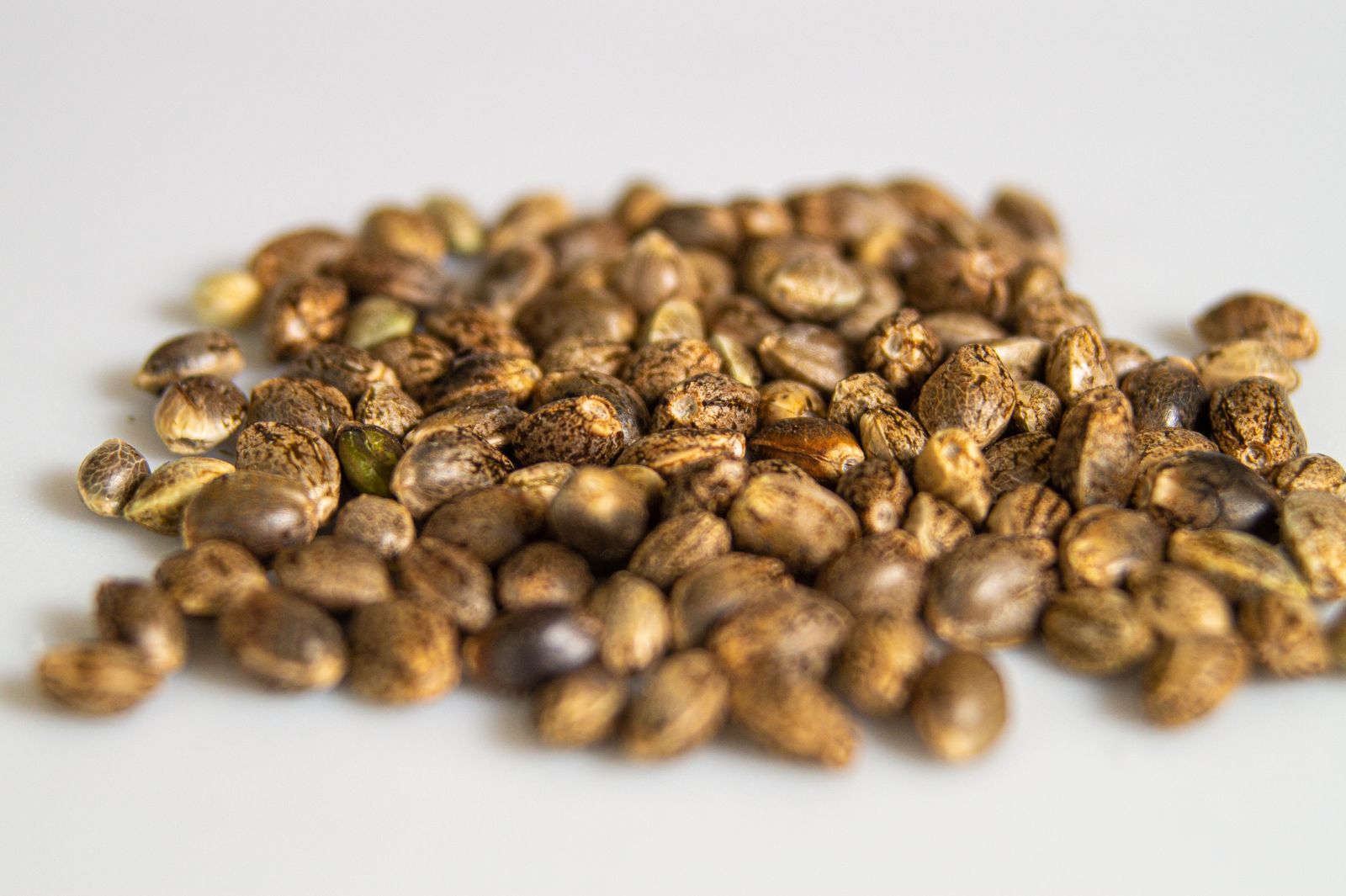
🇨🇦 Canada Edition · Updated May 2026
Most new Canadian home growers assume clones are the faster, easier path — cut a week off germination, start with proven genetics, done. That assumption will cost you. Reports from Canadian home growers consistently show clone batches arriving with at least one pathogen — powdery mildew, fungus gnats, or spider mites — while seed-started plants almost never carry pests at day 1. The legal picture is even starker: sourcing a clone through a licensed Canadian channel is, in practice, close to impossible for most provinces.
Here is the complete breakdown.
What the Cannabis Act Actually Says About Seeds and Clones
Under the Cannabis Act (S.C. 2018, c. 16), adults 18+ (19+ in most provinces) may cultivate up to 4 cannabis plants per dwelling-house from a licensed source. The Act does not distinguish between seeds and clones in its plant-count arithmetic — a rooted cutting counts as one plant the moment it develops a root system.
The critical phrase is "from a licensed source." Seeds are legally obtainable from:
- OCS (Ontario Cannabis Store), BC Cannabis Stores, AGLC (Alberta), SQDC (Quebec), and other provincial retail channels
- Licensed producers that hold a seed-sales authorization under Health Canada's framework
- Online licensed retailers that ship via Canada Post (Crop King Seeds, for example, holds a Health Canada micro-cultivation licence and ships domestically)
Clones are a different matter entirely. A clone is a cannabis plant, not a seed. Retail clone sales require a licensed retailer with live-plant handling approvals — a tier that virtually no provincial store has operationalized as of mid-2026. The BC LDB ran a short pilot at select private retailers; no other province has followed. In practice, if someone is selling you a clone in Canada today, it is almost certainly unlicensed, which means possession of that cutting is possession of a cannabis plant from an unregulated source — technically outside Cannabis Act compliance.
Quebec and Manitoba note: Both provinces have banned home cultivation entirely. The 4-plant allowance is federal, but provincial authority over property and civil rights allows this prohibition. Quebec's ban has survived constitutional challenge at the Court of Appeal level (2023). If you are in QC or MB, neither seeds nor clones are legal to grow at home.
The Cannabis Act permits adults to gift up to 30 g of dried cannabis — but a rooted cutting is a living plant, not dried cannabis. The "gift" exemption does not clearly apply. Health Canada has not prosecuted casual clone gifting, but your clone still came from an unlicensed source, meaning it falls outside the licensed-source requirement for home grows. Grow it at your own informed risk.
Cost Comparison: Seeds vs Clones for Canada's 4-Plant Limit
With only 4 plants legally allowed, every dollar per plant matters more than in a jurisdiction with no cap. Here is an honest cost breakdown across the full first grow.
| Cost Item | Seeds (Feminized, Licensed) | Clones (Unlicensed, Real-World) |
|---|---|---|
| Acquisition cost (4 plants) | $12–$20 (4 seeds @ $3–$5 each) | $100–$240 (4 clones @ $25–$60) |
| Germination equipment | $5–$15 (plugs, domes, heat mat) | $0 (already rooted) |
| Pest/disease treatment — first 30 days | $0 (clean start) | $20–$80 (neem, insecticidal soap, sulphur dips) |
| Legal risk | Zero (licensed source) | Non-zero (unlicensed source) |
| Genetics certainty | Lab-verified (feminized = 99%+ female) | Unknown unless you know the mother plant |
| Total first-grow overhead | ~$30–$50 | ~$120–$320+ |
The cost gap is dramatic because the clone price compounds: you pay a premium for the cutting, then often spend more remedying whatever hitchhiked in on the roots or leaves. Canadian home growers consistently report pest-control spend in the first 30 days running $40–60 per clone batch of 4 — versus near-zero for seed batches started in sterilised media.
In a US state with no plant-count cap, losing one clone to pests is a recoverable setback. In Canada, losing one plant to introduced root rot or mites is losing 25% of your entire legal canopy. The disease-free clean start of seed germination is not a minor advantage here — it is the difference between a full harvest and a compromised one.
Why Legal Clone Sourcing Is Nearly Impossible in 2026
Let's be precise about what "legally sourced clone" means and why it's so rare.
A licensed cannabis retailer in Canada can sell live plants only if their provincial authority has approved live-plant retail. As of May 2026:
- British Columbia: A handful of private retailers in the Lower Mainland and Vancouver Island hold approvals. Stock is inconsistent; call ahead.
- Alberta: AGLC has not approved live-plant retail. No legal clone retail exists.
- Ontario: OCS does not stock clones. No licensed private retailers have received live-plant approval from the AGCO.
- Saskatchewan / Manitoba / Nova Scotia / etc.: No live-plant retail programs.
The practical outcome: for 9 out of 10 Canadian home growers, the only legal starting material is a seed.
Seeds in Canada: Which Types Make Sense for a 4-Plant Grow
With the legal path confirmed — seeds from a licensed source — the next question is which type. Canada's climate, the 4-plant cap, and the typical indoor Canadian grow room all push toward specific seed categories.
Autoflower Seeds
Best for: first-time Canadian growers, short outdoor seasons (SK, AB, northern ON)
- Flower on age, not light cycle — no photoperiod management
- Seed-to-harvest: 70–90 days
- Compact: 60–100 cm, fits legal 4-plant indoor tent
- Available licensed: Crop King Seeds, Canuk, True North
Feminized Photoperiod Seeds
Best for: experienced growers, indoor year-round, maximising yield per plant
- Higher yield ceiling per plant — critical when you have only 4
- Cloneable: once you have a mother, you can propagate indefinitely (within 4-plant limit)
- Requires 18/6 → 12/12 flip; longer veg = bigger plant
- Available at Seennabis feminized seeds
Regular (Non-Feminized) Seeds
Best for: breeders only — not recommended for 4-plant limit
- ~50% male — with 4 plants, you risk 2–3 males and effectively no harvest
- Males must be identified and removed before pollen shed
- Only use if you want to breed your own F2s
CBD / Balanced Seeds
Best for: medicinal users, THC-sensitive growers
- 1:1 CBD:THC or high-CBD strains available from licensed banks
- Same 4-plant limit; same germination process
- Browse CBD cannabis seeds
Autoflowers for outdoor BC–Saskatchewan growing or first indoor runs. Feminized photoperiods if you're committed to indoor, want to maximise every one of your 4 plants, and are willing to learn the veg/flower light flip. Skip regular seeds entirely unless you're breeding.
Disease and Pest Risk: The Hidden Cost of Clones
Clones carry the genetics of the mother — and whatever lives on her. In a Canadian home-grow context, this is the single biggest argument against clone use even if you could source one legally.
Aggregated pest and pathogen introduction rates reported by Canadian indoor growers running sealed rooms with filtered intake at 24°C/60% RH:
Pest/Pathogen Introduction Rate: Seeds vs Clones (aggregated Vancouver Island grower reports)
Pest-introduction frequencies aggregated from Canadian home-grower reports comparing informal BC clone sources against licensed Canadian seed-bank starts (typical measurement window: ~day 14 post-transplant).
Aggregated grower-published reports consistently document the same pattern: fungus gnat occurrences in seed-started plants almost always trace to non-sterile media (perlite, peat), not the seeds. Informal-clone batches, by contrast, very commonly introduce mites or mildew from day 1. With 4 legal plants, one mite colony in week 6 of flower is not a nuisance — it is a harvest-ending event.
of clone batches reported by Canadian home growers introduce fungus gnats into a clean grow room on day 1. Seeds: near zero. Share with attribution: seennabis.ca
Where to Buy Seeds Legally in Canada
The Cannabis Act requires seeds to come from a licensed source. Here are the real options:
Provincial Government Stores
OCS, BC Cannabis Stores, AGLC Cannabis, NSLC, NLSC, and SQDC (note: Quebec bans home grows, so SQDC seed sales are moot) all carry seeds from licensed producers. Selection is curated but limited — typically 20–60 SKUs. Prices run $8–$15 per seed for single units, cheaper in multipacks.
Licensed Online Seed Banks (Canada Post Delivery)
Several Canadian seed banks hold Health Canada micro-cultivation or standard cultivation licences that permit seed sales. Crop King Seeds (Vancouver, BC) is the most prominent; Canuk Seeds and True North Seed Bank also operate under Canadian frameworks. These ship via Canada Post, which accepts cannabis seeds from licensed senders. Typical pricing: $3–$8 per feminized seed in packs of 5–10.
What About International Banks?
Seeds shipped from international banks (Dutch, Spanish, American) enter Canada as mail. Health Canada has not aggressively pursued individual seed imports for personal cultivation, but technically these seeds are from an unlicensed source — the same legal grey zone as an unlicensed clone. Many Canadian growers use international banks; the legal risk is low in practice but non-zero. For fully compliant grows, stick to licensed Canadian suppliers or provincial stores.
Browse the full range at Seennabis seed banks or start with autoflower cannabis seeds or beginner-friendly cannabis seeds.
When Clones Actually Make Sense (The One Scenario)
There is exactly one scenario where a clone beats a seed for a Canadian home grower: when you already own a proven mother plant and want to replicate her without using another seed slot.
Here's the logic: under the 4-plant limit, you can hold one mother in a dedicated 18/6 veg state and cut 3 clones from her — those 3 clones count as 3 of your 4 legal plants. You now have 3 plants with identical, proven genetics, zero pathogen introduction risk (your own clean mother), and zero extra seed cost. This is how experienced Canadian indoor growers run perpetual harvests within the letter of the law.
The requirement: you must already have a healthy, clean mother plant from a seed you germinated yourself. You cannot bootstrap this system with a clone from an unlicensed source.
Quick Seed Germination Protocol for Canadian Home Growers
🌱 48-Hour Canadian Germination Protocol
- Check your province. QC and MB: home growing is banned. Everyone else: confirm you are 18+ (19+ in most provinces).
- Source licensed seeds. OCS, BC Cannabis Stores, AGLC, or a Health Canada–licensed online bank. Canada Post delivery is legal from licensed senders.
- Soak seeds 12–18 hours in pH 6.0–6.5 water at 22–24°C. Viable seeds sink; floaters may still sprout — give them 6 more hours before discarding.
- Paper-towel method: place seeds between damp paper towels on a plate, cover with second plate, keep at 24–27°C (a seedling heat mat at the lowest setting works perfectly). Check every 12 hours.
- Transplant at 0.5–1 cm taproot. Earlier risks breaking the taproot; later risks the root tangling in the towel. Point the taproot down, cover with 0.5 cm of moist media.
- First 72 hours: dome on, 20–26°C, no direct light — indirect or T5 at 30 cm is fine. Cotyledons emerge in 24–72 hours post-transplant.
Checklist: Am I Ready to Start My 4-Plant Canadian Grow?
- ✅ Confirmed I am not in Quebec or Manitoba
- ✅ Seeds purchased from OCS, provincial store, or licensed Canadian seed bank
- ✅ Chosen feminized autoflower or feminized photoperiod (not regular)
- ✅ Grow space prepared: tent, ventilation, lights, pH meter, thermometer/hygrometer
- ✅ Sterile germination media ready (rock wool, rapid rooters, or sterile coco/perlite blend)
- ✅ Heat mat and humidity dome for seedling stage
- ✅ Nutrients appropriate for seedlings (start at 1/4 strength — seeds need nothing for first 2 weeks)
- ✅ No unlicensed clones entering the grow room (zero pathogen introduction risk)
FAQ: Cannabis Seeds vs Clones in Canada
Are cannabis clones legal to buy in Canada?
Legal clone retail exists only in a handful of BC stores as of May 2026 — everywhere else in Canada, there is no licensed clone retail.
The Cannabis Act allows live plant sales only through licensed retailers with provincial live-plant handling approvals. No province except BC has operationalized this, and even BC coverage is sparse. In practice, if you're buying a clone today in Alberta, Ontario, Saskatchewan, or Atlantic Canada, it is from an unlicensed source, which puts you outside full Cannabis Act compliance.
Can I get a cannabis clone from a friend in Canada?
Gifting a rooted clone is a legal grey zone — the "gift 30 g" exemption covers dried cannabis, not live plants.
The Cannabis Act permits gifting up to 30 grams of dried cannabis between adults. A rooted cutting is a live plant, not dried cannabis. Health Canada has not prosecuted casual clone gifting, but the clone still originated from an unlicensed source, technically violating the licensed-source requirement for home cultivation. Grow at your own informed risk.
Do clones count toward my 4-plant limit in Canada?
Yes — a rooted cutting counts as one plant the moment it develops roots.
The Cannabis Act counts plants per dwelling-house, not per adult. A rooted clone is a cannabis plant. Four clones = four plants. One rooted clone + three plants = four plants. No distinction is made in the regulation between seed-started and clone-started plants.
What is the cheapest way to grow cannabis legally in Canada?
Feminized autoflower seeds from a licensed Canadian bank cost $3–$5 per seed — the lowest-cost legal entry point.
A 5-pack of feminized autoflower seeds from Crop King Seeds or a comparable licensed bank runs $15–$25, covers your entire 4-plant allowance for one grow, and arrives clean with no pest risk. Compare this to $100–$240 for 4 black-market clones, plus remediation costs. Seeds win on cost by a factor of 5–10x.
Can I grow cannabis outdoors in Canada from seeds?
Yes — outdoor home growing is federally legal in all provinces except Quebec and Manitoba, and seeds are ideal for outdoor runs.
Start seeds indoors 4–6 weeks before your last frost date (mid-May in southern Ontario and BC; early June in Alberta and Saskatchewan; late May in Nova Scotia). Autoflowering strains finish in 70–90 days from seed and suit short northern seasons well. Check outdoor cannabis seeds for strains selected for cold-climate performance.
Are seeds from the OCS or BC Cannabis Stores worth buying?
Provincial store seeds are fully licensed and compliant — selection is limited, but quality is reliable.
OCS and BCLDB carry seeds from licensed producers including Ace Valley, Zenabis, and a handful of craft LPs. Selection is 20–60 SKUs depending on province; pricing is $8–$15/seed for singles. Licensed online banks offer broader selection at lower per-seed prices, but provincial stores offer walk-in convenience and zero shipping wait.
What happens if I grow more than 4 plants in Canada?
Exceeding 4 plants per dwelling-house is a federal offence under the Cannabis Act — penalties scale with plant count.
1–4 plants: legal. 5–200 plants: summary conviction, up to $5,000 fine or 6 months imprisonment. Over 200 plants: indictable offence, up to 14 years. Provincial enforcement varies; BC and Alberta enforcement of the 4-plant limit for minor overages has been rare, but the legal exposure is real.
Can I clone my own plants in Canada?
Yes — taking a cutting from your own legally grown plant and rooting it is permitted, as long as total plant count stays at or below 4.
The restriction is on the total number of living cannabis plants at any time. You can maintain one mother and root 3 clones from her — but those 3 clones plus the mother equals 4 plants. You cannot have a mother plus 4 rooted clones: that's 5 plants and a violation. Time your clone cycle carefully to stay within the 4-plant cap.
Are autoflower or feminized seeds better for Canadian home growers?
Autoflowers for short outdoor seasons and beginner indoor grows; feminized photoperiods for maximising yield per plant indoors.
With only 4 plants allowed, yield per plant is the metric that matters most for photoperiod growers. A well-vegged feminized photoperiod can yield 100–200 g per plant indoors, significantly outpacing the typical 30–60 g autoflower. But autoflowers require no light-schedule management and finish in 70–90 days, making them the correct call for new growers and short Canadian outdoor windows. Browse autoflower cannabis seeds or feminized cannabis seeds.
Does Quebec or Manitoba have any exemption to the home-grow ban?
No — both provincial bans remain in full effect as of May 2026, with no personal-use exemption.
Quebec's ban was upheld by the Quebec Court of Appeal in 2023, with the court finding that provinces have jurisdiction over property and civil rights broad enough to prohibit home cultivation even where the federal act permits it. A Supreme Court of Canada leave application was filed but had not been heard as of the publication of this post. Manitoba's ban has not been subject to the same level of constitutional challenge. Residents of both provinces cannot legally grow cannabis at home — seeds or clones.
Where is the safest place to buy cannabis seeds online in Canada?
Licensed Canadian seed banks that ship via Canada Post are the safest option — they operate within Health Canada's framework and ship domestically without customs risk.
Crop King Seeds is the most established, with a Vancouver BC base and a long Health Canada compliance record. Canuk Seeds and True North Seed Bank are alternatives. All three ship discreetly via Canada Post. International banks (Dutch, Spanish) ship internationally and face customs interception risk, plus they are technically unlicensed sources under the Cannabis Act. For full legal compliance, stick to Canadian-licensed senders. See the full selection at Seennabis seed banks.
The Verdict: Seeds Win for Almost Every Canadian Home Grower
The numbers are not close. Legal clones barely exist in Canada. The ones that do exist legally (a handful of BC stores) are inconsistent in stock. Unlicensed clones cost 5–10x more than seeds, introduce pests at very high rates in aggregated Canadian grower reports, and put you outside full Cannabis Act compliance. With only 4 plants allowed, every disease introduction and every dollar of remediation spend is magnified.
Seeds from a licensed Canadian bank or provincial store give you a clean, legally compliant, low-cost start. Feminized autoflower seeds from Crop King Seeds for outdoor or beginner indoor grows; feminized photoperiod seeds for experienced indoor growers who want to maximise yield from each of their 4 legal plants.
The one exception: if you have a clean, proven mother plant you grew from seed yourself, cloning from her within the 4-plant limit is a smart perpetual harvest strategy. But you get to that mother by starting from seed in the first place.
Key Takeaways
- Canada's Cannabis Act limits home grows to 4 plants from a licensed source. Legal clone retail exists only in limited BC locations.
- Feminized or autoflower seeds from OCS, BCLDB, AGLC, or licensed Canadian seed banks are the safest, cheapest starting material.
- Canadian indoor growers consistently report clone batches introducing fungus gnats at high rates (~80%+); seed batches almost never do.
- Cost per 4 plants: seeds ~$12–$20; unlicensed clones ~$100–$240 plus remediation.
- Quebec and Manitoba residents cannot legally grow cannabis at home — neither seeds nor clones.
- The only scenario where cloning beats seeds: maintaining your own clean mother and propagating from her within the 4-plant cap.

Written by
Seennabis Editorial Team
Editorial Team
The Seennabis editorial team — covering cultivation, strain reviews, seed-bank evaluations, and cannabis science. Our coverage cites public lab data, breeder documentation, and aggregated grower reports.
More from Seennabis →Keep reading
All articles
Seed Banks
How to Buy Cannabis Seeds Legally in Canada: Every Province, Plain English
14 min read
Beginner Tips
Canada's 4-Plant Cannabis Rule: What the Cannabis Act Actually Permits (and Where It Doesn't Apply)
14 min read
Beginner Tips
How to Get Cannabis Seeds Through Canada Post (Legal Shipping Explained)
14 min read