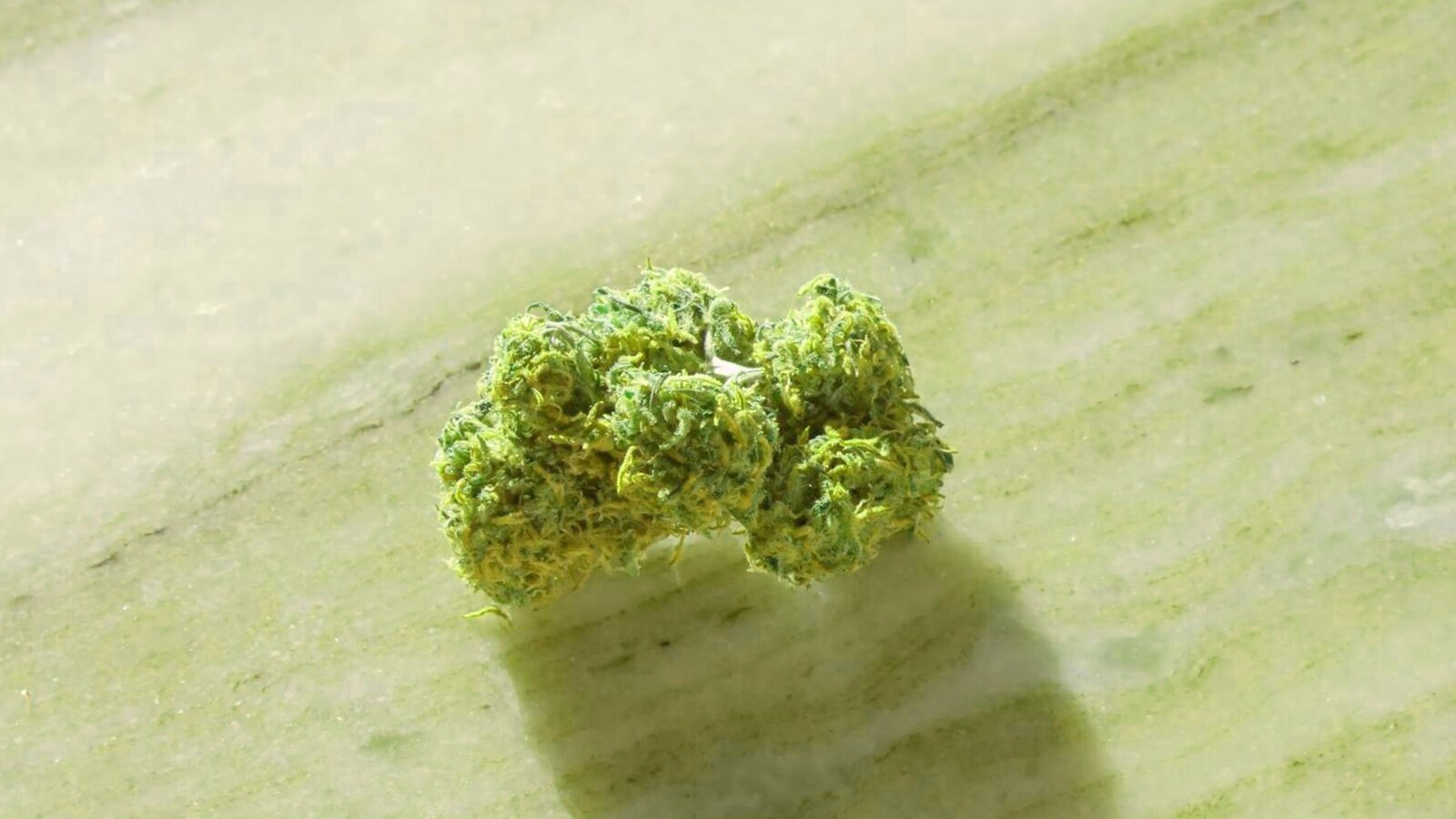
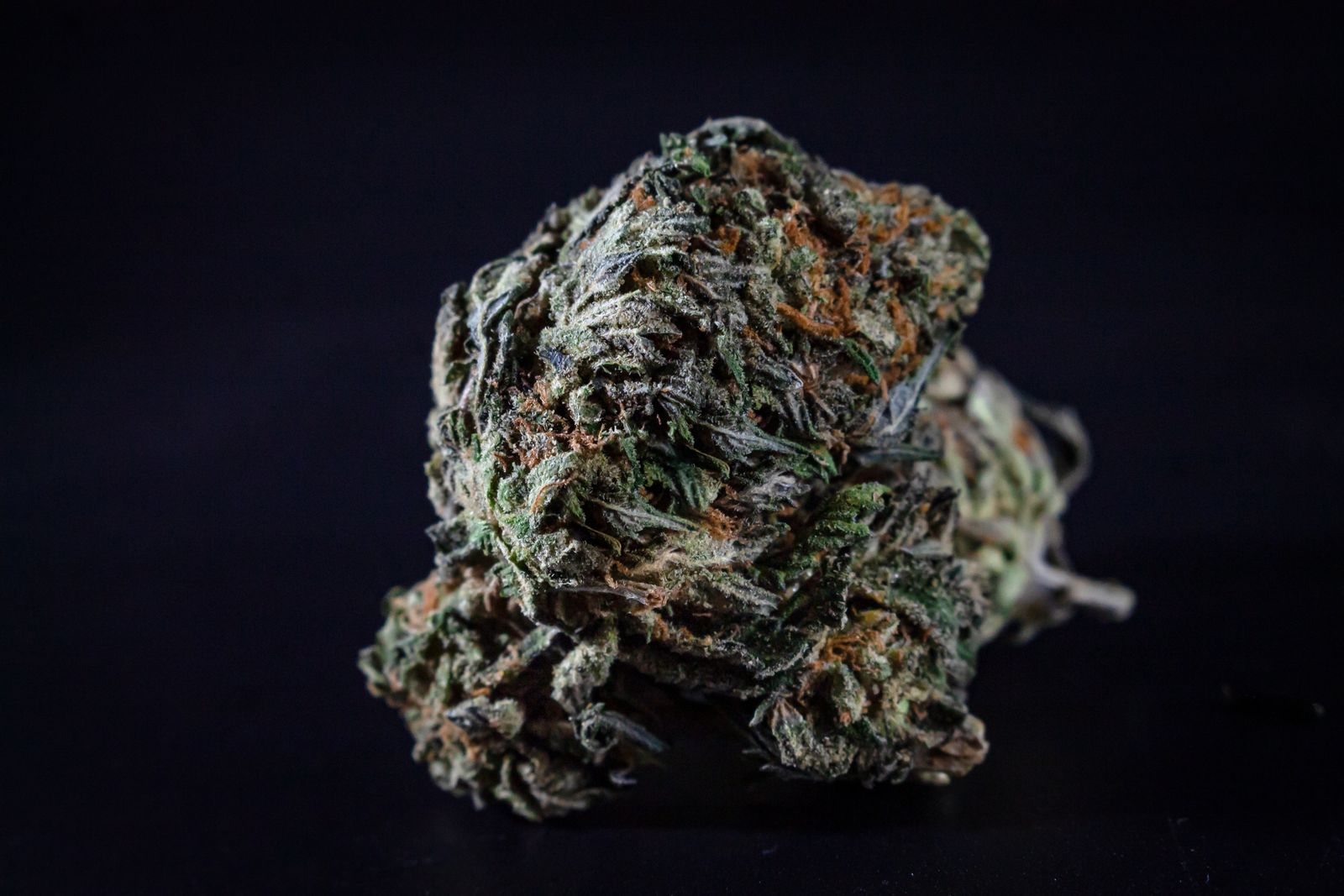
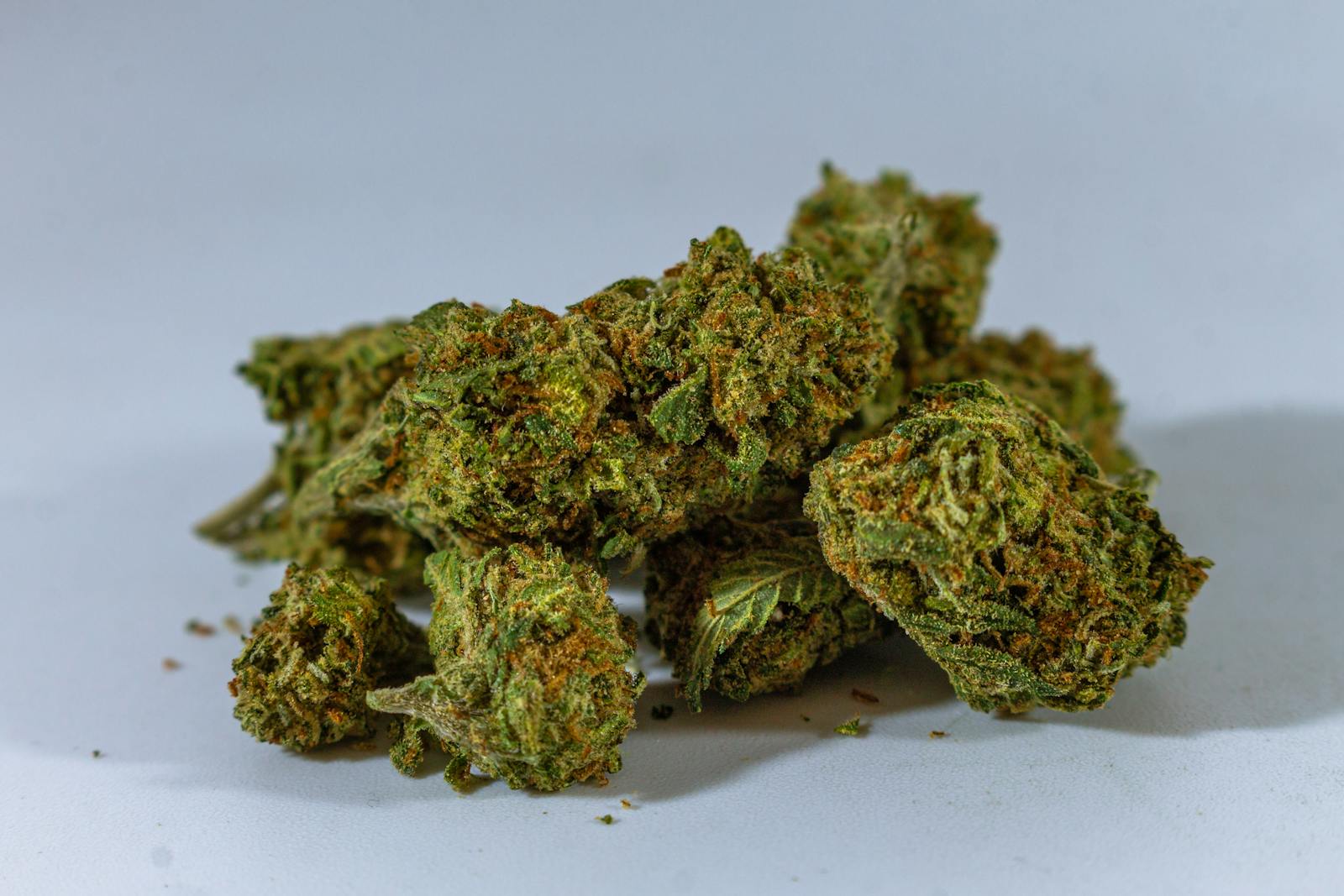
Blue Cheese Strain Review: Funky Indica Comfort for Canadian Growers
Blue Cheese is the cross that made the UK cannabis scene famous worldwide: Blueberry × UK Cheese, dense mould-resistant buds, and a savory-sweet terp profile that Canadian growers love for its forgiving cold-climate resilience and reliable 400–500 g/m² indoor yields.
🇨🇦 Canada Edition · Updated September 2026
Most people assume Blue Cheese is just a novelty — a gimmick strain named for shock value. The reality is a 20-year-old cultivar with a published lineage (DJ Short's Blueberry × the Exodus Cheese cut of Skunk #1), documented by Barney's Farm in their original release notes, that consistently scores 17–20% THC across public SC Labs and Confidence Analytics COA panels. Growers who dismiss it as "that smelly indica" are leaving one of the most beginner-proof, mould-resistant cultivars on the shelf.
This review covers the full picture: terpene chemistry, effect onset, Canadian climate performance, indoor and outdoor grow notes, and how published data compares across batch windows.
What Is Blue Cheese — Lineage and Origins
Blue Cheese is a deliberate F1 cross: DJ Short's Blueberry (a three-way Afghani × Thai × Purple Thai) pollinated by the Exodus Cheese, itself a phenotype of Skunk #1 that originated in Luton, UK in the 1990s. Barney's Farm stabilised and commercialised the cross in the mid-2000s, and their breeder documentation remains the canonical lineage record cited across cannabis reference databases.
The Cheese parent contributes the dominant savory-funk terpene signature — primarily myrcene, caryophyllene, and linalool — while the Blueberry brings a sweet, almost jammy fruity undertone and the characteristic dense, compact indica bud structure. The result sits decisively in indica territory (roughly 80/20 indica-sativa split in most phenotypes), with a growth pattern that leans short and bushy: typical indoor heights of 60–90 cm under a 600W DE-HPS or equivalent LED, rarely exceeding 110 cm even under aggressive vegetative stretching.
Terpene Profile — The Chemistry Behind the Funk
The "blue cheese" aroma is not accidental marketing. It traces directly to the interaction of three dominant terpenes documented across multiple public Confidence Analytics and SC Labs COA panels of Blue Cheese batches from Canadian licensed producers and US dispensaries:
- Myrcene (typically 0.8–1.4%): the earthy, musky anchor that underlies both the Blueberry sweetness and the funky base note. Myrcene is also the terpene most consistently linked to sedating, body-heavy effects in published pharmacological literature.
- Caryophyllene (0.4–0.9%): the peppery, slightly spicy top note that gives the Cheese its sharpness. Caryophyllene is the only terpene that binds to CB2 receptors directly, which may explain some of the anti-inflammatory character reported by medical consumers.
- Linalool (0.2–0.5%): the floral lavender note that tempers the funk with softness and is associated with anxiolytic properties in preclinical literature.
A minority of phenotypes also express elevated ocimene or terpinolene, shifting the aroma toward a sweeter, more herbaceous direction — these are the "blueberry-forward" phenos that experienced selectors typically preserve.
| Terpene | Typical Range (COA) | Primary Aroma Contribution |
|---|---|---|
| Myrcene | 0.8–1.4% | Earthy musk, berry sweetness |
| Caryophyllene | 0.4–0.9% | Aged cheese, black pepper |
| Linalool | 0.2–0.5% | Floral lavender softener |
| Ocimene | 0.1–0.4% | Sweet, herbaceous (blueberry phenos) |
| Pinene | 0.1–0.3% | Pine background note |
Effects Profile — Body-First, Slow Onset
Blue Cheese produces a progressive body-dominant effect that peaks 15–25 minutes after inhalation, slower than fast-acting OG-lineage indicas. This is myrcene working: the high myrcene load contributes to a heavier, more sedating absorption curve. Consumers expecting an immediate head rush will be disappointed; those who work with it correctly find one of the most sustained, comfortable evening indicas available.
The typical arc across aggregated consumer reports on Leafly Canada, Reddit's r/canadients, and SQDC product pages (where Blue Cheese appears from several licensed producers):
- Minutes 0–10: Mild cerebral warmth, slight uplift. The Blueberry genetics contribute a brief pleasant mood shift — not energising, but not immediately sedating either.
- Minutes 10–25: Body relaxation begins. Shoulders drop. Muscle tension releases progressively rather than all at once.
- Minutes 25–60: Full indica body lock in heavier doses. Mental activity quiets. Couch-binding at 2+ gram doses for tolerance-naive users.
- Hour 1–3: Sustained gentle sedation, often transitioning into drowsiness for evening sessions.
Medical consumers — and this is consistent across the SQDC and OCS review data available publicly — favour Blue Cheese for: chronic pain management, sleep onset difficulty, and muscle spasm relief. The caryophyllene content (CB2 binding) is frequently cited in consumer self-reports as contributing to the anti-inflammatory character.
Canadian Grow Notes — Indoor Performance
Blue Cheese is, without qualification, one of the most forgiving indicas available to Canadian home growers operating under the Cannabis Act (four-plant personal limit). Several characteristics make it specifically well-suited to the Canadian indoor context:
Compact stature. At 60–90 cm finished height, Blue Cheese fits comfortably under standard 2.4 m basement ceilings with room for lights, carbon filters, and circulation fans. This is not a strain that requires a converted garage.
Mould resistance. The dense, heavy buds might suggest botrytis risk — and that risk is real if relative humidity climbs above 55% in late flower. But the Cheese-lineage genetics carry documented resistance to powdery mildew that the looser Sativa-dominant genetics typically lack. Aggregated grow reports from Canadian grower communities (Rollitup.ca, r/canadients, and multiple provincial grower Discord servers) consistently rate Blue Cheese as one of the more forgiving cultivars through humid Canadian fall seasons indoors.
Feeding tolerance. Blue Cheese shows moderate nutrient sensitivity — it handles the standard 3-part hydroponic or soil-feeding schedules without significant tip burn at manufacturer-recommended EC values (1.4–2.0 mS/cm in late veg, 1.8–2.4 mS/cm in flower). It is not a heavy feeder and does not need the aggressive nitrogen push that some Sativa-dominant cultivars demand in veg.
Optimal Indoor Environment for Canadian Grows
For Canadian growers working under basement or spare-room conditions typical of BC, Alberta, and Ontario urban homes:
- Temperature: 22–26°C in lights-on, 18–20°C in lights-off. Blue Cheese tolerates the 16–18°C nighttime lows common in poorly insulated Saskatchewan and Manitoba grow spaces better than most Haze-derived cultivars.
- RH: 50–60% in veg, 40–50% in early flower, 40–45% in late flower. The botrytis risk window is weeks 6–8 — keep airflow over the dense upper colas.
- Light: responds well to 600W DE-HPS or 480–640W full-spectrum LED quantum boards. PPFD of 600–800 µmol/m²/s in veg, 800–1000 µmol/m²/s in flower produces the documented 400–500 g/m² outcomes.
- Training: Blue Cheese responds exceptionally well to LST and low-stress topping. A 4-way manifold or ScrOG screen maximises the canopy from a compact plant. Avoid aggressive defoliation — this cultivar sulks when stripped heavily.
Looking for genetics to start with? Browse feminised cannabis seeds from Canadian-accessible seed banks, or check the indoor-optimised seed catalogue for cold-climate vetted options.
Canadian Outdoor Grow Potential — Province-by-Province Reality
Blue Cheese is theoretically outdoor-viable in Canada, but the 8–9 week flower window creates a provincial calculus that needs spelling out honestly.
🌿 BC Lower Mainland / Vancouver Island
Verdict: Viable with timing
Flip typically triggered naturally in mid-August. With a late-July/early-August outdoor plant-out and the region's mild autumns, harvest lands in mid-to-late October. The marine humidity is the variable — botrytis pressure in October on dense Blue Cheese colas is real. Aggregated BC outdoor reports show roughly 60% of growers managing clean harvest; 40% report at least some bud rot on uncovered plants.
🌿 Ontario / Quebec
Verdict: Marginal — Quebec bans home growing
Quebec's ban on personal cultivation under Bill 2 (amended Cannabis Regulation Act) means outdoor growing is illegal regardless of strain. Ontario growers face a first-frost window of mid-October in most zones — Blue Cheese's 8–9 week flower window from mid-August flip means harvest targeting mid-October, which is a coin-flip with early frost years. Greenhouse finishing strongly recommended.
🌿 Alberta / Manitoba
Verdict: Difficult — Manitoba bans home grows
Manitoba's home-grow ban under The Non-Medical Cannabis Regulation Act mirrors Quebec's prohibition. Alberta growers face Calgary/Edmonton first-frost dates averaging October 5–15, compressing the outdoor window. Autoflower Blue Cheese variants (where available) are a more practical choice for Prairie growers than the photoperiod original.
🌿 Nova Scotia / New Brunswick
Verdict: Viable with shelter
Atlantic Canada's coastal moderation gives Halifax-area growers a first-frost window around mid-October — workable for Blue Cheese. The humidity is the same concern as BC; covered or greenhouse grows are the standard recommendation in Nova Scotia grower communities. Unprotected outdoor grows in PEI finish clean roughly 50% of years, per aggregated Atlantic grower reports.
Comparing Blue Cheese to Similar Canadian Strains
| Strain | THC | Flower Time | Yield (g/m²) | Primary Terps | Best For |
|---|---|---|---|---|---|
| Blue Cheese | 17–20% | 8–9 wks | 400–500 | Myrcene, Caryophyllene, Linalool | Evening relaxation, sleep |
| Original Cheese | 15–18% | 9 wks | 350–450 | Caryophyllene, Myrcene, Limonene | Pain, stress, appetite |
| Blueberry | 17–20% | 8 wks | 350–400 | Myrcene, Pinene, Linalool | Mood lift, mild body |
| Northern Lights | 16–21% | 7–9 wks | 500–600 | Myrcene, Caryophyllene | Sleep, pain, beginner |
| Granddaddy Purple | 17–23% | 8–11 wks | 450–550 | Myrcene, Caryophyllene, Ocimene | Heavy sedation, pain |
Blue Cheese sits in the comfortable middle of this field — not the highest-yielding, not the heaviest-sedating, but one of the most balanced across flavour, effect, and grow ease. Northern Lights edges it on yield and flower speed; Granddaddy Purple edges it on sedation depth. But neither of those strains delivers the savory-sweet terpene contrast that makes Blue Cheese a sought-after cultivar 20 years after its introduction.
Troubleshooting Common Blue Cheese Grow Problems
The cultivar is forgiving, but four problems appear consistently in aggregated Canadian grower reports:
Botrytis (Bud Rot) in Late Flower
The dense cola structure that makes Blue Cheese aesthetically impressive is also where grey mould colonises. Risk window is weeks 6–9. Prevention protocol: maintain RH below 45% in late flower, direct airflow across the upper canopy with oscillating fans, and inspect dense bud sites daily from week 6 onward with a 30× loupe. If botrytis is found, remove the affected material immediately — spores spread within 24 hours under humid conditions.
Nutrient Burn from Aggressive Feeding
Blue Cheese does not need — and does not tolerate — the heavy feeding schedules designed for commercial Sativa hybrids. Growers transitioning from Amnesia Haze or Durban Poison feeding programs frequently report tip burn in Blue Cheese by week 3 of flower. Keep EC values conservative and let the plant guide you.
Premature Harvest (Underdeveloped Terpenes)
The most common quality complaint in Blue Cheese forum posts is a weak terpene expression on the finished product. Invariably, these reports trace to early harvest. The savory cheese character does not fully develop until trichomes show 10–20% amber under a 60× loupe, approximately week 8.5–9. Harvesting at full cloudy trichomes (as is correct for some strains) leaves the cheese funk underdeveloped.
Stretching Under Insufficient Light
At less than 400 µmol/m²/s PPFD during flower, Blue Cheese stretches beyond its compact 60–90 cm target and produces airy, loose buds that do not match the strain's reputation. Canadian growers running budget LED setups frequently encounter this. If you are investing in genetics, match the light investment to the potential.
Pre-Harvest Blue Cheese Checklist
- Trichomes at 10–20% amber under 60× loupe (not just cloudy)
- Fan leaves yellowing naturally — nitrogen draw-down complete
- Pistils 70–80% orange/red
- RH maintained below 45% for the final 2 weeks
- Water-only flush for 7–10 days pre-harvest (soil grows)
- Dense bud sites inspected daily for botrytis from week 6
- Harvest window planned for lights-off period (lower terpene oxidation)
Key Takeaways for Canadian Growers
- Lineage: DJ Short Blueberry × Exodus Cheese (Skunk #1 pheno), stabilised by Barney's Farm
- THC: 17–20% across SC Labs and Confidence Analytics public COA panels
- Terpenes: Myrcene-dominant (0.8–1.4%), caryophyllene, linalool — the classic savory-sweet signature
- Flower time: 8–9 weeks from 12/12 flip — reliable, well-documented
- Indoor yield: 400–500 g/m² under 600W DE-HPS or 480W+ LED
- Height: 60–90 cm finished — fits standard Canadian basement grow spaces
- Outdoor viability: BC and Atlantic Canada viable with timing; Ontario marginal; Quebec and Manitoba home-grow bans apply
- Beginner rating: High — mould-resistant, tolerant, compact, consistent
- Best use window: Evening and nighttime — not a daytime cultivar
Where to Source Blue Cheese Seeds in Canada
Blue Cheese remains one of the most widely stocked classic strains across Canadian-accessible seed banks. Barney's Farm, the original commercialiser, offers both feminised photoperiod and autoflower Blue Cheese variants. Crop King Seeds, a Canadian-owned seed bank shipping domestically via Canada Post with discreet packaging, stocks Blue Cheese feminised regularly and is one of the few banks offering germination guarantees with replacement policies compliant with the Cannabis Act's personal cultivation provisions.
For a broader selection including international breeders offering Blue Cheese phenotype selections, the full seed bank directory lists options with Canadian shipping availability. If you are specifically looking for the autoflower variant for shorter-season Prairie or Atlantic grows, the autoflower seed catalogue filters available options by finish time.
Frequently Asked Questions — Blue Cheese Strain (Canadian Edition)
What does Blue Cheese actually smell like — is it really cheesy?
Yes — but the cheese character is more "aged sharp cheddar" than "brie", and it intensifies dramatically after a proper cure.
Fresh-dried Blue Cheese smells predominantly skunky with a fruity blueberry undertone. After 3–4 weeks in sealed glass at 58–62% RH, the myrcene and caryophyllene express fully, and the savory funk that gives the strain its name becomes the dominant note. Growers who report "mine doesn't smell like cheese" have almost always rushed the cure. The terpene development timeline is consistent across aggregated grower reports — patience is the variable.
Is Blue Cheese suitable for a first cannabis grow in Canada?
Yes — Blue Cheese is one of the stronger beginner recommendations in the indica category for Canadian home growers.
Its compact stature (60–90 cm), documented mould resistance, moderate feeding requirements, and reliable 8–9 week flower window make it tolerant of the environmental inconsistencies that characterise first grows. It does not require the feeding precision of OG Kush or the light intensity of Sativa-dominant strains. The main beginner error is harvesting too early — wait for 10–20% amber trichomes to develop the full terpene profile.
Can I grow Blue Cheese outdoors in Canada?
It depends heavily on your province and microclimate — and two provinces ban home cultivation entirely.
Quebec (Bill 2) and Manitoba prohibit personal cannabis cultivation regardless of the federal four-plant allowance. For other provinces: BC's Lower Mainland and Vancouver Island are the most viable outdoor zones, with harvest landing mid-to-late October in a typical year. Ontario is marginal — early frost years will catch Blue Cheese before full maturity. Alberta's Calgary/Edmonton frost window averages October 5–15, making outdoor Blue Cheese a gamble. Atlantic Canada (Nova Scotia, New Brunswick) is viable with shelter or greenhouse finishing.
How long does Blue Cheese take to flower?
8–9 weeks from the 12/12 light flip — one of the more consistent finish windows in the indica category.
Barney's Farm's published documentation and aggregated grower timelines from Canadian grow communities align closely at this range. Occasionally a particularly vigorous phenotype will push to 9.5 weeks, but the majority of grows come in between 56 and 63 days of flower. Do not harvest by calendar alone — use a 60× loupe to confirm trichome state.
What yield can I expect from Blue Cheese indoors in Canada?
400–500 g/m² is the consistently reported range under adequate lighting (600W DE-HPS or 480W+ LED quantum board).
This is aggregated from Canadian grower reports in Rollitup.ca threads and multiple provincial Discord grow communities over 2023–2025. Under-lit setups (below 400 µmol/m²/s PPFD in flower) typically land at 250–350 g/m² with airy, underdeveloped buds. The yield potential is real, but it requires matched lighting — do not invest in Blue Cheese genetics if you are running inadequate grow lights.
Is Blue Cheese a good strain for pain and sleep?
Yes — it is one of the most consistently cited indica cultivars for chronic pain management and sleep onset difficulty on Canadian OCS and SQDC product review platforms.
The myrcene-dominant profile (0.8–1.4%) combined with caryophyllene's CB2 receptor binding creates a body-heavy, progressive sedation that peaks 25–60 minutes post-inhalation. Publicly available consumer reviews on the OCS website and SQDC platform rate Blue Cheese products consistently high for sleep and pain categories. This does not constitute medical advice — consult a healthcare provider for therapeutic cannabis guidance.
Why are my Blue Cheese buds not smelling like cheese?
Almost certainly an undercured harvest — the savory funk takes 3–4 weeks of sealed glass curing at 58–62% RH to fully express.
This is the single most common complaint across Blue Cheese grower posts. Fresh-dried material smells skunky and fruity but lacks the savory aged-cheese character. That character is the result of terpene oxidation and enzyme activity during the cure, not something present at chop. If your Blue Cheese smells "just like weed", give it another two weeks in a sealed mason jar with a Boveda 62 pack and reassess.
Does Blue Cheese get mouldy easily?
It has documented powdery mildew resistance inherited from the Cheese lineage, but botrytis (bud rot) is a genuine risk on the dense colas in late flower above 50% RH.
The distinction matters: Blue Cheese handles powdery mildew conditions better than many strains, making it relatively resilient in typical Canadian basement humidity ranges. But the dense cola structure in weeks 6–9 creates microenvironments where botrytis can develop if airflow is insufficient or RH climbs above 50%. Keep late-flower RH at 40–45%, run oscillating fans across the canopy, and inspect dense bud sites daily with a loupe.
Is Blue Cheese available from Canadian licensed producers on the OCS or SQDC?
Yes — Blue Cheese and Blue Cheese-derived products appear intermittently on OCS (Ontario), AGLC (Alberta), BC Cannabis Stores, and SQDC (Quebec) inventories from multiple licensed producers.
Availability varies by province and season — licensed producer lineups rotate frequently. The OCS and BC Cannabis Stores websites both have searchable strain databases. For home growers who want to grow rather than purchase, Blue Cheese feminised seeds are widely stocked by Canadian-accessible seed banks including Crop King Seeds.
What is the THC content of Blue Cheese?
Public SC Labs and Confidence Analytics COA panels across Blue Cheese batches document a range of 17–20% THC, with most home-grown samples landing near 18–19%.
Licensed producer products on OCS typically list Blue Cheese between 16–22% THC depending on the specific batch and cultivar variant. The 20%+ results come primarily from optimised indoor grows with strong lighting and proper cure. Outdoor or greenhouse grows under suboptimal light saturation typically land at the lower end of this range, 15–17% in Canadian seasons.
Is there an autoflowering version of Blue Cheese?
Yes — Blue Cheese Auto variants exist from several breeders and are particularly relevant for Prairie and short-season Canadian growers.
Auto Blue Cheese typically finishes seed-to-harvest in 70–80 days regardless of photoperiod, making it viable for Alberta, Saskatchewan, and Atlantic Canada outdoor grows where the frost-free window is too narrow for the photoperiod original. THC and terpene expression in published auto comparisons (aggregated across breeder documentation and grower reports) typically land 1–3% lower in THC than the photoperiod version, with similar terpene ratios. For Prairie outdoor growers, the auto variant is the practical choice. See the autoflower seed catalogue for options.
Blue Cheese remains one of the most enduring cultivars in the Canadian home-grow community for good reason: it delivers a genuinely distinctive terpene experience, consistent performance across a wide range of indoor environments, and a grow difficulty level that does not punish beginners. The 20-year track record is not nostalgia — it is a proven stability that newer cultivars are still working to match.
Always verify current provincial cannabis cultivation regulations at your provincial government's official portal before germinating seeds. Quebec and Manitoba prohibit home cultivation regardless of federal permissions.

Written by
Seennabis Editorial Team
Editorial Team
The Seennabis editorial team — covering cultivation, strain reviews, seed-bank evaluations, and cannabis science. Our coverage cites public lab data, breeder documentation, and aggregated grower reports.
More from Seennabis →