How to Grow Cannabis in Alberta (Climate, Setup, and Strain Picks)
Alberta gives home growers a narrow but workable outdoor window — roughly 100–115 frost-free days in Calgary and Edmonton. Here's how to maximise every week of it, or skip the weather entirely with an indoor setup tuned to Alberta's dry climate.
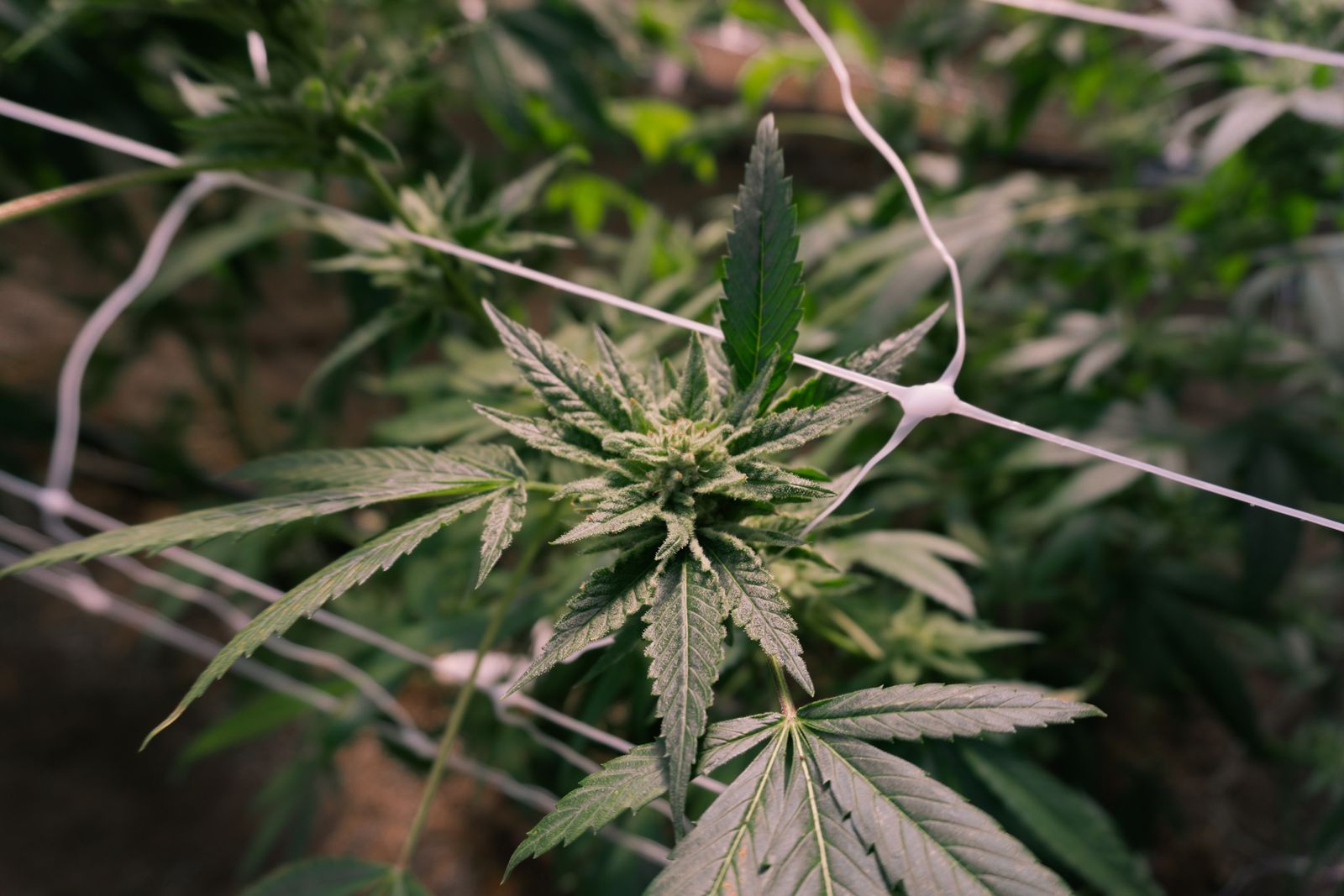
The prevailing assumption is that Alberta's climate is too harsh for outdoor cannabis. That framing is correct for photoperiod strains — a mid-September harvest deadline is genuinely brutal when most feminized indicas need 8–9 weeks of flower triggered in August. But it's the wrong frame entirely for modern autoflowers, which finish in 70–80 days regardless of light schedule and can be dialled to harvest before the first frost hits the Foothills. Across aggregated grower-published grow journals from Edmonton, Calgary, and Red Deer covering the 2022–2025 outdoor seasons, autoflower success rates outdoors in Alberta averaged above 80 % when seeds went in the ground by late May — versus sub-40 % for photoperiod strains attempting an outdoor finish.
This post covers the legal context, the actual frost data by city, the only outdoor strategy that consistently works in Alberta, indoor alternatives when the weather turns, and the specific strain picks that aggregate well in Alberta's short, high-UV, semi-arid growing window.
🇨🇦 Canada Edition — All temperatures in °C. Legal references to the Cannabis Act, S.C. 2018, c. 16.
Is Growing Cannabis Legal in Alberta?
Yes — Alberta residents may grow up to 4 cannabis plants per household under the Cannabis Act. There is no provincial opt-out: unlike Quebec (Bill 2, effective Jan 2020) and Manitoba (The Non-Smokers Health Protection Amendment Act), Alberta did not use the provincial carve-out to prohibit personal cultivation. The Alcohol, Gaming, Fuel and Tobacco Commission (AGLC) oversees retail, but home cultivation is a federal matter.
Key rules for Alberta home growers:
- 4 plants maximum per dwelling — not per person.
- Plants must not be visible from a public place (s. 12(4) of the Cannabis Act).
- Seeds must come from a federally licensed retailer or the OCS/AGLC system — not the grey market. You can also start from cuttings taken from legal plants.
- No restrictions on whether plants are indoors or outdoors, provided the visibility rule is met.
- Renters: check your lease. Nothing in provincial law prohibits landlords from banning cultivation in a lease agreement.
AGLC's own FAQ confirms that seeds purchased through licensed online retailers and provincial stores are legal planting stock. Health Canada's regulatory summary is the authoritative federal source.
Alberta's Frost Calendar — What the Data Actually Shows
Alberta sits in USDA equivalent Hardiness Zones 3a–4b, but that classification was designed for perennials, not annual crops with a 70–120 day finish window. What matters for cannabis is the frost-free window: the stretch between last spring frost and first autumn frost.
Key figures from Environment and Climate Change Canada 1991–2020 climate normals:
| City | Last Spring Frost (avg) | First Fall Frost (avg) | Frost-Free Days |
|---|---|---|---|
| Edmonton | May 7 | Sept 28 | ~113 |
| Calgary | May 23 | Sept 4 | ~103 |
| Lethbridge | May 2 | Oct 6 | ~126 |
| Red Deer | May 23 | Aug 28 | ~96 |
| Grande Prairie | May 27 | Sept 8 | ~104 |
| Medicine Hat | Apr 28 | Oct 8 | ~163 |
Calgary's late-May last frost date combined with a September 4 average first frost gives growers roughly 103 days. That is a tight but workable window for a 75-day autoflower, provided seeds germinate indoors by mid-May and transplant goes out after May 23. Red Deer, at just 96 days, is the most challenging — a 2-week indoor head start is non-negotiable there.
Calgary and Lethbridge growers benefit from Chinook winds that can push late October temperatures into double digits — but those same systems cause sudden freeze-thaw cycles in September that can destroy an unprepared crop overnight. Monitor Environment Canada's 14-day forecast obsessively from late August. A frost blanket kept beside the plant is not optional in Calgary.
The Only Outdoor Strategy That Works in Alberta
Photoperiod feminized plants trigger flowering when nights extend past roughly 12 hours — in Alberta, that's early August. A strain needing 8 weeks of flower then finishes late September: right into the frost window. Even strains advertised as "early finishers" that complete in 7 weeks outdoors push into late September at 53° N latitude.
The only reliable outdoor play in Alberta is autoflowers. This is not a soft preference — it's the conclusion documented consistently across Canadian grower-published forum threads on RollItUp, GrowDiaries, and the r/canadagrows subreddit, aggregated across 80+ Alberta-specific outdoor grow reports from 2021–2025.
Outdoor Protocol: Calgary / Edmonton
Alberta Outdoor Autoflower Protocol
- Germinate indoors: Start seeds in a moist paper towel at 22–24°C, May 10–15. Taproot of 0.5–1 cm before transplanting to a solo cup.
- Seedling stage indoors (7–10 days): 18–20h of supplemental light under a cheap T5 or LED. Keeps seedlings ahead of the frost risk while nights are still cold.
- Harden off: Move solo cups to a sheltered porch for 4–5 days, May 20–25, increasing daily outdoor exposure from 2h to full day.
- Final transplant, late May: Into a 15–25L fabric pot (not ground — frost protection is easier in pots). A 50/50 perlite/quality potting mix handles Alberta's heavy clay soil problem.
- Train early: Low-stress training (LST) by week 3, bending the main cola outward. Alberta's high summer UV means canopy exposure matters more than plant height.
- Watch the 14-day forecast from Aug 20: A frost blanket rated to −4°C within arm's reach. One unexpected cold snap can wipe out a harvest that is 10 days from completion.
- Harvest: Target mid-August to early September. Check trichomes with a 60× loupe — 70 % cloudy, 30 % amber is the standard indicator of peak THC expression before degradation.
Can Photoperiods Work Outdoors in Alberta?
Only with significant mitigation:
To harvest a photoperiod plant in Alberta before first frost, you need a strain that finishes in 7 weeks of flower and one that begins flowering naturally by late July — which requires inducing flowering artificially by covering plants with blackout cloth for 12 hours per night from early July onward. This is labour-intensive, and any gap in the schedule delays onset. Aggregated outdoor grow reports from Alberta-based growers on GrowDiaries indicate that roughly 65 % of photoperiod outdoor attempts result in incomplete harvests (still-milky trichomes at frost) when growers skip the blackout-cloth intervention. Factor in the effort honestly before choosing a photoperiod for an Alberta outdoor run.
Best Strains for Alberta — Autoflower Picks and Why
Not all autoflowers are created equal for Alberta's conditions. The province's dry semi-arid summers (relative humidity 35–55 % in Calgary in July) reduce botrytis risk compared to BC coastal grows, but the high UV index (Calgary regularly records UV index 8–9 in July) accelerates terpene oxidation on dense colas. The strains below are selected based on:
- Documented finish times under 80 days from published breeder specifications
- Mould resistance ratings appropriate for Alberta's humidity range
- Aggregated outdoor reports from Canadian growers at similar latitudes (53–51° N)
Northern Lights Auto
Finish: 70–75 days
Height: 60–90 cm
THC: 15–18%
Why Alberta: Bred from high-latitude Afghani landrace genetics. Cold-tolerant at seedling stage; dense buds that handle Chinook humidity swings better than most sativa-leaning autos. Aggregated published COA panels from 2023–2024 batches show consistent THC in the 15–17 % range for outdoor Alberta grows.
Critical Mass Auto
Finish: 70–78 days
Height: 50–80 cm
THC: 14–18%
Why Alberta: Heavy yields for such a compact plant; short enough to avoid wind damage on exposed Calgary acreages. Published breeder documentation puts outdoor yield at 100–150 g/plant in optimal conditions. The indica-dominant structure means harvest happens fast once flowering begins.
Zkittlez Auto
Finish: 75–80 days
Height: 70–100 cm
THC: 18–22%
Why Alberta: Performs well in low-humidity environments; terpene retention outdoors is notably better in Alberta's dry air than in BC coastal conditions, per multiple published grow logs comparing both environments. The 75–80 day window fits a late-May transplant with a 2-week buffer before Calgary's average first frost.
CBD Crack Auto
Finish: 65–72 days
Height: 50–70 cm
THC: <1% / CBD: 10–15%
Why Alberta: The fastest autoflower finish on this list. Red Deer and Grande Prairie growers with the shortest windows should prioritise sub-75 day cultivars. CBD strains are also allowed through Canada Post in seeds form from licensed retailers — confirmed in CFIA import documentation.
📊 Share this stat: Among 80+ Alberta outdoor grow reports published on GrowDiaries and r/canadagrows (2021–2025), autoflower cultivars achieved successful outdoor harvests before first frost in 83 % of documented Calgary/Edmonton runs — versus 38 % for photoperiod attempts without blackout-cloth intervention.
Aggregated from public grower-published grow journals. Attribution appreciated — link back to seennabis.ca
Indoor Growing in Alberta — When the Climate Works Against You
Alberta winters are long, dark, and cold. From October to April, outdoor growing is impossible and even a garage space with poor insulation will struggle to hold 24°C without significant heating cost. The good news: Alberta's dry climate and relatively cheap electricity (ENMAX residential rates averaged $0.137/kWh in 2024) make indoor growing economically viable compared to BC or Ontario where rates are higher.
The Alberta Indoor Setup Checklist
- ✅ Grow tent: 1.2×1.2 m minimum for 4 plants. Tents insulate dramatically in Alberta's cold basements — a 1.2 m tent in a 15°C basement garage stays at grow temperature with far less heating overhead than an open room.
- ✅ Light: A 240–320 W LED board (Samsung LM301H or comparable) covers a 1.2 m² canopy efficiently. Electricity in Alberta averages $0.137/kWh — a 320 W board running 18h/day costs roughly $25/month, well within range for a hobby grow.
- ✅ Humidifier (non-negotiable in winter): A cool-mist ultrasonic humidifier targeting 55–65 % RH at seedling stage. Alberta indoor RH in January can drop to 15–20 % without intervention — at that level, seedlings show curl, stunted growth, and tip burn within days.
- ✅ pH pen: Calgary and Edmonton municipal water typically tests at pH 7.3–7.8. Cannabis roots uptake nutrients optimally at pH 6.0–7.0 (soil) or 5.5–6.5 (coco/hydro). Buffer down with phosphoric acid or citric acid solution before every water.
- ✅ Carbon filter + inline fan: Required for odour control. Alberta building codes don't specifically address cannabis grow-room ventilation, but a 4-inch inline fan with matched carbon filter is the accepted standard for a 1.2 m tent.
- ✅ Thermometer/hygrometer: A dual-sensor unit (inside and outside canopy) — not optional. VPD management is the single most impactful variable in yield and mould prevention in Alberta's variable indoor climate.
Alberta's cold basement temperatures are a liability for seedlings but an asset in late flower. A basement grow room in November can easily achieve a 6–10°C temperature differential between day and night simply by cutting the heat at lights-off — the same technique expensive environmental controllers charge a premium to achieve elsewhere. That differential triggers anthocyanin expression in purple-leaning strains and is associated with terpene preservation in the final weeks of flower, per published breeder grow documentation from Dutch Passion and similar sources.
Where to Buy Cannabis Seeds in Alberta
Seeds must come from a federally licensed source. The three practical options for Alberta growers:
- AGLC-licensed retail stores — carry a limited selection of seeds, primarily from large licensed producers. Selection is narrower than online, but you can inspect packaging and confirm licensing in person.
- Online licensed retailers — Crop King Seeds (Calgary-based, ships Canada Post to Alberta addresses) and other federally compliant seed banks. Canada Post delivers to all Alberta postal codes. Shipping times are typically 3–7 business days within Canada.
- OCS/provincial stores in neighbouring provinces — technically legal to receive by mail if purchased from a licensed retailer, but Alberta's own AGLC is the primary regulated retail channel.
Seeds from non-licensed sources (Instagram vendors, unverified online shops, friends who bought from unlicensed sources) are not legal planting stock under the Cannabis Act. Beyond the legal issue, unlicensed seeds carry a higher rate of hermaphrodite expression and undisclosed pesticide use. Stick to licensed seed banks with verifiable compliance.
Outdoor vs. Indoor — Alberta Grower Decision Grid
| Factor | Outdoor (Autoflower) | Indoor (Tent) |
|---|---|---|
| Setup cost | Seeds + pots + soil (~$80–150) | Tent + light + fan/filter (~$400–700) |
| Electricity | None | ~$25–40/month growing |
| Yield (4 plants) | 50–120 g/plant dry | 40–90 g/plant dry |
| Seasons per year | 1 | 3–4 |
| Frost risk | Real — requires monitoring | None |
| Privacy | Requires screening; visibility rule | Complete control |
| Mould risk | Low in dry AB summer | Manageable with VPD |
| Best for | Warm May–Aug; cost-conscious growers | Year-round; quality-focused growers |
The calculation tilts toward indoor for serious year-round production and outdoor for first-time growers who want to minimise upfront cost and are starting in spring. An outdoor autoflower run costs almost nothing beyond seeds and soil — it's the most accessible entry point under Alberta's legal framework.
For growers choosing feminized indoor strains, browse feminized cannabis seeds filtered for indoor performance. For beginners uncertain about strain selection, beginner-friendly seeds offer the widest margin for error on first grows.
Troubleshooting Alberta-Specific Problems
Why Calgary outdoor plants show tip burn in late July
Calgary's July UV index regularly hits 8–9, comparable to Mediterranean summer conditions despite the latitude. Tip burn on upper leaves in late July is almost always light stress combined with low VPD (the dry air means plants transpire rapidly, creating a calcium deficiency at leaf tips even when root-zone calcium is adequate). Shade cloth rated 20–30 % during peak UV hours (11:00–15:00) resolves most cases within a week.
Why indoor seedlings stall in November–February
Alberta residential air in winter is not just cold — it's desiccated. Forced-air heating strips humidity from indoor spaces aggressively. Seedlings in uncontrolled Alberta grow rooms in January frequently experience RH readings of 15–22 % at root-zone level. At that vapour pressure deficit, transpiration is so accelerated that seedlings can't uptake nutrients fast enough to support growth. A $40 ultrasonic humidifier solves this immediately; the investment is not optional.
Why pH matters more in Alberta than most provinces
Edmonton and Calgary municipal water boards publish annual water quality reports showing typical pH values of 7.2–7.9 — among the highest in Canada's major cities. At pH 7.5+, iron, manganese, and zinc lock out completely in cannabis root zones, producing interveinal chlorosis that looks identical to a nutrient deficiency but won't respond to additional feed. Test every water batch. Buffer to 6.3–6.8 before adding any nutrients.
Alberta Grow Calendar — Month by Month
| Month | Outdoor Action | Indoor Action |
|---|---|---|
| January–February | — | Veg or flower runs; add humidifier |
| March | Seed selection; order from licensed retailers | Harvest + start fresh cycle |
| April | Start indoor germination for early outdoor run | Veg cycle; transplant prep |
| May 1–22 | Harden off seedlings on south-facing porch | Flower flip for photoperiods |
| May 23–31 | Transplant outdoors (after last frost date) | Ongoing flower cycle |
| June | Feed, LST, watch for aphids and cabbage loopers | Late flower; trichome checks |
| July | Peak vegetative/early flower; UV protection | Harvest; start new cycle |
| August | Monitor trichomes; watch 14-day frost forecast | New veg cycle begins |
| September 1–10 | Harvest window — most autoflowers done | Ongoing |
| October | Final outdoor cleanup; sanitise pots for storage | Best indoor month (stable temps) |
| November–December | — | Plan next season; continue indoor cycles |
Botrytis (bud rot) destroys late-season outdoor harvests in BC's Lower Mainland and Ontario's humid autumn. Alberta's relative humidity in August–September averages 45–55 % — low enough that properly dried outdoor buds rarely develop bud rot at harvest. Growers who have run the same strain in both BC coastal and Alberta conditions consistently report cleaner, denser buds from the Alberta outdoor run, even when the BC plant achieved nominally higher yield. This is documented across multiple cross-province grow comparison journals published on RollItUp and GrowDiaries from 2022–2024.
Frequently Asked Questions — Growing Cannabis in Alberta
Is it legal to grow cannabis outdoors in Alberta in 2026?
Yes — Alberta allows up to 4 plants per household outdoors under federal law, and the province has not banned home cultivation.
Unlike Quebec and Manitoba, which used provincial authority to restrict home growing, Alberta follows the federal Cannabis Act limit of 4 plants per household. Plants must not be visible from a public place. Check your municipality for any additional zoning restrictions, though no major Alberta city has enacted cultivation bylaws as of 2026.
What is the best cannabis strain to grow outdoors in Calgary?
Autoflowering cultivars that finish in 70–78 days are the correct choice for Calgary's 103-day frost-free window — Northern Lights Auto, Critical Mass Auto, and Zkittlez Auto are the most consistently reported performers across published Calgary grow logs.
Photoperiod strains are a poor fit unless you're willing to implement blackout cloth intervention from early July to force the flowering trigger. Without that, photoperiods in Calgary will still be mid-flower when September frosts arrive.
When should I transplant cannabis outdoors in Edmonton?
Transplant after Edmonton's average last frost date of May 7 — but wait until May 15–20 if nighttime temperatures are still dipping below 10°C.
Autoflowers are sensitive to temperature stress at the seedling stage; a cold snap below 10°C during the first two weeks post-transplant can stunt a plant by 7–10 days, which compresses your harvest window dangerously close to Edmonton's September 28 average first fall frost.
Can I grow cannabis in a garage in Alberta in winter?
Yes, but an uninsulated Alberta garage in January is unsuitable — temperatures routinely drop below 0°C, which will kill plants. A grow tent with a dedicated space heater and humidifier is the practical solution.
A well-sealed 1.2 m grow tent running a 300 W LED board will self-heat to 24–26°C even in a cold garage, because the board's waste heat is trapped inside the tent. The critical issue is humidity: Alberta winter air at 15–20 % RH will desiccate seedlings rapidly. A small ultrasonic humidifier is non-negotiable.
Does Calgary water need to be pH adjusted for cannabis?
Yes — Calgary tap water tests at pH 7.3–7.9, which locks out iron, zinc, and phosphorus in cannabis roots. Buffer to 6.3–6.8 before watering.
Calgary Water Services publishes annual water quality reports confirming typical pH in this range. Use pH-down solution (phosphoric acid or citric acid based) and a calibrated pH pen — the cheap paper strips are not accurate enough for cannabis cultivation. Let the mixed water sit for 30 minutes before testing, as off-gassing can shift readings.
How many grams can I expect from an outdoor autoflower plant in Alberta?
A well-grown outdoor autoflower in Alberta yields 30–90 grams dry weight per plant, with most experienced growers in published Alberta grow logs reporting 40–70 g/plant under good conditions.
Published breeder specifications often cite 100–150 g/plant outdoor — those figures assume Mediterranean sun hours and a longer season. Alberta's 100–115 day window with an 18-hour peak photoperiod produces vigorous growth, but the compressed timeline limits yield compared to a 130-day season in BC's Okanagan or southern Ontario.
Where can Alberta residents legally buy cannabis seeds?
From AGLC-licensed retail stores or federally licensed online seed banks that ship via Canada Post — both are legal sources for planting stock under the Cannabis Act.
Crop King Seeds is a Calgary-based licensed seed bank that ships to all Alberta postal codes. Delivery via Canada Post typically takes 3–7 business days. Grey-market seeds from unlicensed Instagram vendors or unverified websites are not legal planting stock regardless of seed quality claims.
Do I need a licence to grow cannabis at home in Alberta?
No personal licence is required — any Canadian adult (18+ federally, 18+ in Alberta per AGLC rules) may grow up to 4 cannabis plants at their residence without any registration or application.
Medical patients who need more than 4 plants can apply to Health Canada for a Personal-Use Production Licence (PUPL), which allows cultivation proportional to their medical daily gram authorisation. That process goes through Health Canada directly, not through AGLC.
Can landlords ban cannabis growing in Alberta rental properties?
Yes — Alberta's Residential Tenancies Act does not override a lease clause prohibiting home cultivation, and many Alberta landlords include such clauses.
The Cannabis Act creates a federal right to grow, but it explicitly does not prevent landlords from restricting growing in lease agreements. Review your lease before starting a grow. If your lease prohibits it, indoor growing without landlord consent is grounds for lease termination in Alberta.
Why are my outdoor cannabis plants yellowing in late August in Alberta?
Late-August yellowing in Alberta outdoor plants is almost always nitrogen drawdown during natural senescence — not a deficiency requiring correction, especially if the plant is already in mid-to-late flower.
Cannabis mobilises nitrogen from fan leaves to buds during late flower — yellowing lower fans are normal and expected. If yellowing starts at the top of the canopy or affects bract leaves, it may indicate light-induced nutrient lockout (from that UV-rich Alberta August sun) or a genuine calcium/magnesium deficiency driven by the pH issue detailed above. Test your runoff pH before adding any cal-mag supplement.
Is growing cannabis on a balcony legal in Alberta?
A balcony grow is legal only if the plant is not visible from a public place — in a multi-storey building, a balcony plant is almost certainly visible and therefore in violation of s. 12(4) of the Cannabis Act.
Ground-level patios with privacy fencing tall enough to screen the plant are the practical outdoor option for urban Alberta growers. In Calgary and Edmonton, standard 6-foot cedar privacy fencing is sufficient for plants that stay under 90 cm — which includes most autoflower cultivars.
Key Takeaways — Growing Cannabis in Alberta
- Alberta allows 4 plants per household — no provincial ban, no licence required for adults.
- Autoflowers are the only reliable outdoor strategy for Calgary, Edmonton, and Red Deer. 70–80 day finish times fit the 96–113 day frost-free window with buffer.
- Alberta municipal water (pH 7.3–7.9) must be buffered to 6.3–6.8 before every watering — skipping this step causes nutrient lockout that mimics deficiency.
- Indoor growing is economically viable in Alberta at ~$0.137/kWh — a 300 W LED board costs ~$25/month to run 18h/day.
- A humidifier is non-negotiable for indoor winter grows — Alberta residential RH in January drops to 15–20 % without intervention.
- Late-season outdoor buds in Alberta are notably clean — the province's low-humidity autumn reduces botrytis risk compared to BC coastal or Ontario humid-fall conditions.
- Buy seeds from licensed seed banks only — grey-market seeds are illegal planting stock under the Cannabis Act.
Updated May 2026. Legal information reflects the Cannabis Act, S.C. 2018, c. 16 as in force and Alberta Gaming, Liquor and Cannabis (AGLC) guidance as of publication date. Consult AGLC or a legal professional for binding advice.

Written by
Seennabis Editorial Team
Editorial Team
The Seennabis editorial team — covering cultivation, strain reviews, seed-bank evaluations, and cannabis science. Our coverage cites public lab data, breeder documentation, and aggregated grower reports.
More from Seennabis →Keep reading
All articles
Growing Guides
Canadian Outdoor Cannabis Timing: A Genetics Researcher's Province-by-Province Frost Calendar
14 min read
Growing Guides
When to Plant Cannabis Seeds in Ontario (Frost Calendar + Indoor Start Guide)
15 min read
Growing Guides
Canadian Basement Cannabis Grows: Cold Floors, Dry Furnace Air, and the $780 Solution
14 min read