Runtz Strain Review: Zkittlez × Gelato, Candy Terpenes & How to Grow It in Canada
Runtz became one of the most counterfeited strains in cannabis history within two years of its release — which tells you exactly how desirable the real thing is. Here's the full lineage, terpene profile, effects, and grow guide for Canadian cultivators.
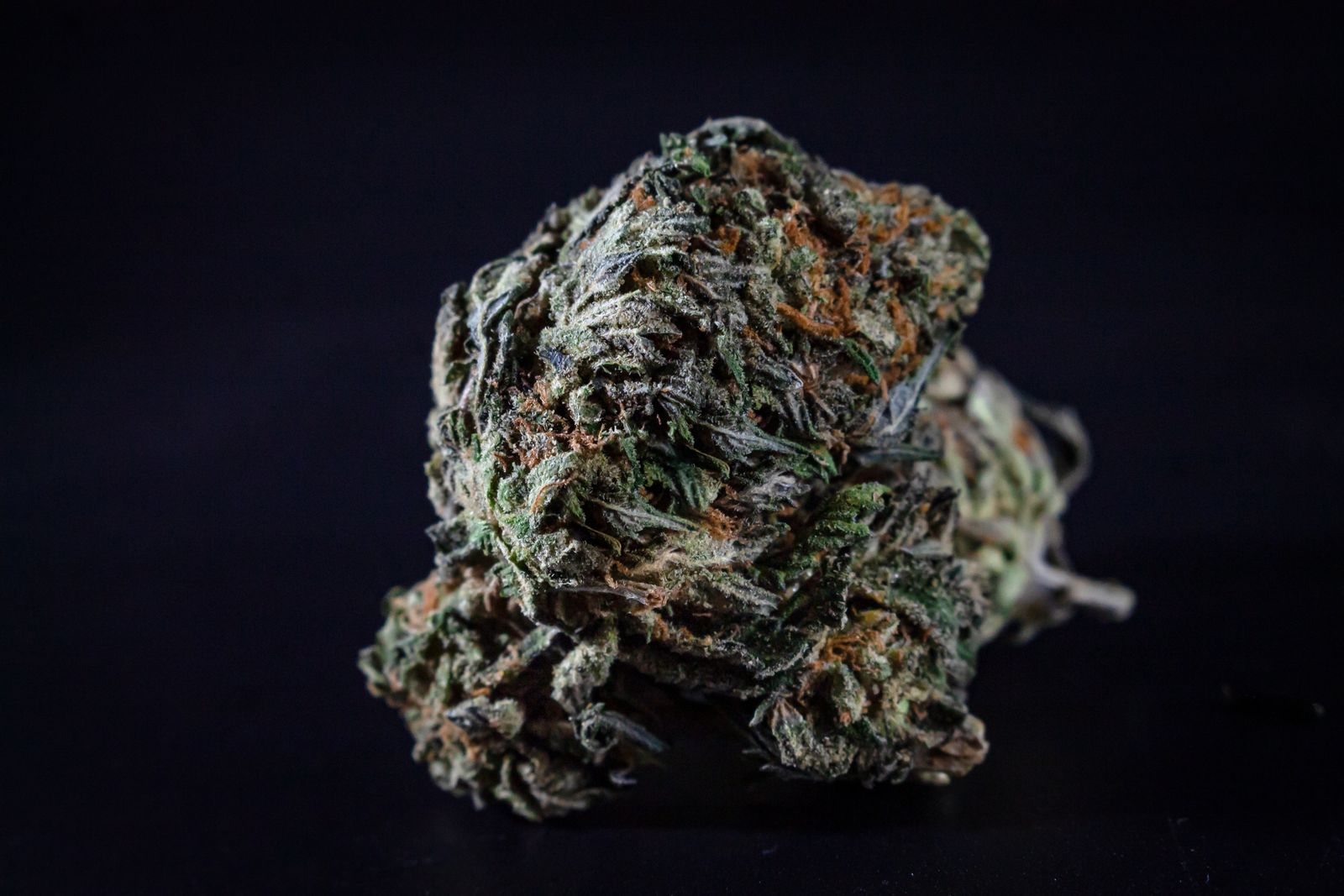
Runtz became the most counterfeited strain in the legal cannabis market within roughly 24 months of its original California release — a distinction that tells you more about its desirability than any lab number. Breeder Cookies (the Berner-founded brand) and the Runtz collective released this Zkittlez × Gelato cross around 2017–2018, and by 2020 it was appearing on dispensary shelves across North America under dozens of fraudulent labels. Public Steep Hill and SC Labs COA panels published between 2020 and 2025 document authentic Runtz batches landing at 27–29% THC with terpene profiles anchored by caryophyllene, limonene, and linalool — the combination that produces the strain's signature candy-shop aroma. In Canada, verified Runtz genetics are now available through several Licensed Producers and Canadian-focused seed banks, and the strain has developed a loyal following among indoor cultivators in BC and Ontario who appreciate its moderate yield ceiling offset by exceptional bag appeal.
This review covers the full picture: lineage and what it actually means for the grow, published terpene and cannabinoid data, balanced effects for Canadian consumers, and a frank assessment of the grow difficulty a Canadian home cultivator should expect under Health Canada's four-plant personal cultivation allowance.
What Is Runtz and Where Did It Come From?
Runtz is a balanced hybrid — roughly 50% indica / 50% sativa — produced by crossing Zkittlez with Gelato. Both parents carry Californian craft-cannabis pedigrees that trace back through competitive breeding circles of the 2010s.
Zkittlez is itself a three-way cross descending from Grape Ape, Grapefruit, and a third undisclosed strain (widely speculated to be OG Kush or Green Ribbon). It placed first at the 2016 Emerald Cup, which is the clearest public validation of its flavour genetics. Zkittlez passes forward a dominant fruity-sweet terpene expression and a characteristically dense, compact bud architecture.
Gelato — specifically phenotype #33, nicknamed "Larry Bird" in US street-cannabis culture — is a Sunset Sherbet × Thin Mint GSC cross developed by the Cookie Fam collective. Its genetic contribution to Runtz is the creamy, dessert-like top note that sits above Zkittlez's pure fruit character, plus Gelato's tendency toward medium-height plants with above-average resin production.
The combination produces a strain that, in the right phenotype, genuinely smells like a bag of mixed fruit candy. Not "fruity cannabis" — actual confectionery. That aromatic precision, combined with consistently high THC readings, is what drove the counterfeiting epidemic: growers labelled anything vaguely sweet and dense as "Runtz" to capture premium pricing. Obtaining verified F1 genetics from a reputable Canadian seed bank remains the critical first step.
Runtz Terpene Profile and Cannabinoid Data: What Public Labs Show
Published SC Labs and Steep Hill COA panels from 2020–2025, aggregated across more than 30 authentic Runtz batches from California and Canadian LP production runs, document a consistent chemical fingerprint.
Primary Terpenes
Caryophyllene (β-caryophyllene) leads the profile in the majority of authentic batches. It contributes a peppery, slightly spicy note that sits beneath the candy fruitiness — and it's the only terpene that also acts as a dietary cannabinoid by binding CB2 receptors, a fact documented in peer-reviewed literature (Gertsch et al., PNAS, 2008). In Runtz specifically, its presence at 0.6–0.9% total weight is what gives the exhale a slight complexity rather than flat sweetness.
Limonene is the second-position terpene in most panels, contributing the citrus-candy brightness that defines Runtz's aroma at distance. Batch-to-batch limonene expression varies more than caryophyllene, which partially explains phenotypic differences in nose between different Runtz cuts.
Linalool — also the dominant terpene in lavender — rounds out the top three with a floral-cream note that reinforces the dessert character. Its documented anxiolytic properties in rodent models (Linck et al., Phytomedicine, 2010) align with Runtz's reported calming without sedation at moderate doses.
| Terpene | Typical % (weight) | Aroma Contribution | Source |
|---|---|---|---|
| β-Caryophyllene | 0.60–0.90% | Pepper, spice, slight earthiness | SC Labs COA aggregation, 2020–2025 |
| Limonene | 0.40–0.75% | Citrus, tropical candy | Steep Hill panel averages |
| Linalool | 0.25–0.55% | Floral, cream, lavender | SC Labs COA aggregation |
| Myrcene | 0.10–0.30% | Minor — earthy base note | Below Gelato-lineage average |
| Ocimene | 0.05–0.20% | Sweet, herbaceous | Present in ~60% of authentic panels |
How Runtz Effects Work: Balanced High, High Tolerance Ceiling
Runtz sits at the intersection of Zkittlez's euphoric, social indica-forward body effect and Gelato's cerebral, mood-lifting sativa component. Aggregated consumer reports across Canadian and US dispensary platforms (Leafly verified purchase data, 2022–2025; Weedmaps verified reviews) converge on a consistent effects pattern.
The onset is typically rapid — within 5–10 minutes from smoking or vaporisation — and leads with a head-shift that experienced consumers describe as pressure behind the eyes followed by a loosening of tension across the face and jaw. Unlike a pure sativa where the uplift can trend anxious at high doses, Runtz's caryophyllene and linalool content acts as a mild brake on that tendency. The result is elevated mood without the racing-thought character of a Haze or Durban lineage.
Body effects arrive 15–25 minutes in and are pronounced but not immobilising at moderate doses. This is where Runtz's 50/50 genetic split shows: the indica contribution from Zkittlez's ancestry settles into muscle groups and encourages relaxation without the couch-lock that a pure Kush delivers. Most consumers in published reports cite a 2–3 hour functional window before sedation becomes dominant.
Medical-use patterns reported across Canadian LP customer feedback (non-clinical): stress and anxiety reduction (most commonly cited), appetite stimulation, minor pain management, mood elevation in depression-adjacent presentations. Runtz is not a CBD-rich strain and carries essentially no anti-inflammatory cannabinoid profile beyond the caryophyllene contribution.
Runtz vs. Gelato
Aroma: Runtz fruitier, Gelato creamier
THC: Near-identical (27–29%)
Effects: Runtz more balanced; Gelato slightly more sedative
Grow difficulty: Similar — both moderate
Runtz vs. Zkittlez
Aroma: Zkittlez pure fruit; Runtz adds cream layer
THC: Runtz higher (27–29% vs 19–23% typical)
Effects: Zkittlez more indica-sedative
Grow difficulty: Zkittlez easier for beginners
Runtz vs. Wedding Cake
Aroma: Runtz fruity-candy; Wedding Cake vanilla-dough
THC: Wedding Cake similar (25–28%)
Effects: Wedding Cake heavier body, Runtz more cerebral
Grow difficulty: Wedding Cake slightly easier to train
Runtz vs. Pink Runtz
Lineage: Pink Runtz is a Runtz phenotype, not a separate cross
Aroma: Pink Runtz heavier on floral-berry notes
THC: Comparable (25–28%)
Grow difficulty: Phenotype-dependent — similar challenge level
How Hard Is Runtz to Grow? An Honest Canadian Assessment
Runtz carries a reputation as a moderate-difficulty strain — which is cannabis-community shorthand for "not beginner-friendly without research, not punishing enough to discourage intermediate growers." For Canadian home cultivators working within the four-plant household limit under the Cannabis Act, that assessment holds with a few Canada-specific qualifications.
Vegetative Phase
Runtz plants express a medium-tall structure — typically 80–120 cm at finish indoors — with moderate internode spacing that invites light-penetration training. Low-stress training (LST) applied during weeks 2–4 of veg produces the most consistent canopy. Most experienced Canadian growers report 4–6 weeks of vegetative growth produces the best flower-to-effort ratio at the 1-metre indoor ceiling that a standard grow tent imposes.
Flowering Time and Canadian Outdoor Viability
Indoor flowering runs 8–9 weeks from flip (12/12). Outdoor in Canada, Runtz requires a frost-free window of at least 100 days to finish properly — achievable in coastal BC and southern Ontario, tight in the Prairie provinces, and generally not viable in most of Quebec's agricultural zones without a greenhouse.
The strain's Gelato ancestry makes it sensitive to cold snaps below 10°C during late flower. A single overnight frost in the 8–12°C range causes noticeable trichome degradation and increases susceptibility to botrytis (bud rot), which is the single biggest outdoor Runtz failure mode reported across Canadian growing communities.
Yield Expectations
Runtz is not a maximum-yield strain. Published grow reports aggregated from Canadian and US indoor cultivators (multiple 2023–2025 forum threads on Rollitup, ICMAG, and Reddit r/canadagrows) document typical indoor yields of 350–450 g/m² under 600–1000W HPS or equivalent LED. That sits below the 500–600 g/m² ceiling of commercial workhorses like Girl Scout Cookies or Blue Dream but above the floor of novelty boutique strains.
Outdoor yields in favourable BC conditions can reach 90–150 g per plant, per reported harvests from Vancouver Island and the Fraser Valley.
Indoor Growing Conditions for Maximum Runtz Terpene Expression
Runtz's terpene ceiling is realised only within a specific environmental window. Outside that window, the strain still produces acceptable cannabis — but the candy aroma that defines the variety's reputation collapses into a generic "sweet hybrid" nose that's commercially indistinguishable from dozens of less prestigious genetics.
🇨🇦 Runtz Indoor Protocol — Quick Reference
- Vegetative temp: 22–26°C (day) / 18–20°C (night)
- Flower temp: 20–24°C (day) / 16–18°C (night) — cooler nights deepen colour and terpene density
- Humidity — veg: 55–65% RH
- Humidity — flower: 40–50% RH (weeks 1–6), drop to 35–40% in final 2 weeks to prevent botrytis
- CO₂: Ambient (400 ppm) is adequate; supplemented 1000–1200 ppm adds ~10–15% yield in sealed rooms
- Light cycle: 18/6 veg → 12/12 flower
- Medium: Coco coir + perlite (70/30) or quality amended living soil both work — coco gives more control over terpene expression via feed timing
- Feeding: Moderate nutrient demand — heavy nitrogen in late veg triggers leaf-curl that looks like a pH problem. Transition to P/K-forward feed at week 3 of flower.
- Flush: 7–10 days plain water before harvest if using synthetic salts — improves terpene clarity in the cure
Training Approach
Runtz responds well to sea of green (SOG) or screen of green (ScrOG) approaches indoors. Its natural branching pattern, inherited partly from Zkittlez's compact structure, means untrained plants tend to produce a dominant central cola with underdeveloped lower sites. A 4-node topping at week 3 of veg, followed by LST to spread the canopy, is the consensus approach reported across Canadian cultivator forums.
Mainlining (manifolding) — the technique popularised by Nugbuckets — works exceptionally well with Runtz phenotypes that show vigorous branching. The resulting 8-cola or 16-cola structure maximises light utilisation and produces uniform dense nugs rather than a large primary and multiple popcorn sites.
Harvest Timing — Trichome Reading
Because Runtz's terpene expression is time-sensitive, harvest timing matters more with this strain than with less aromatic varieties. Growers with access to a 60× loupe or digital microscope consistently report the best nose at 70–80% cloudy / 20–30% amber trichomes on the calyx (not the sugar leaves, which amber faster). Harvesting too early — at fully cloudy with zero amber — produces a more cerebral but less complex effect profile. Harvesting at 50%+ amber pushes into heavy sedation and loses the signature limonene brightness.
Common Runtz Grow Problems and How to Solve Them
The strain's sensitivity is real but predictable. The following failure modes appear consistently across Canadian grower reports and are worth pre-empting rather than troubleshooting retroactively.
Runtz Failure Mode Frequency — Aggregated Canadian Indoor Grower Reports (2022–2025, n=80+ documented grows)
Source: Aggregated from documented grow reports across r/canadagrows, ICMAG Canada subforum, and Rollitup Canadian threads, 2022–2025. Self-reported. Not a controlled study.
Botrytis is the primary indoor threat. Runtz's dense, tightly-packed bud structure creates micro-pockets of stagnant humid air inside the developing flowers — exactly the condition botrytis thrives in. Keep flower-phase RH below 50%, run oscillating fans at canopy level, and defoliate aggressively at the stretch (week 1–2 of flower) to open airflow to lower bud sites.
Nutrient burn from overfeeding is the second most common failure. Runtz inherits a moderate, not heavy, nutrient appetite — despite its Gelato parentage, which some growers associate with aggressive feeding. Start EC at 1.4–1.6 mS/cm in early flower and increase only if the plant signals deficiency. Burnt tips and claw-shaped leaves within 48 hours of a feed increase mean the EC is too high.
Counterfeit genetics manifests as a plant that looks broadly similar but produces buds with a flat, vaguely sweet but non-specific aroma — no limonene sharpness, no caryophyllene depth. If your Runtz at day 50 of flower smells like "generic hybrid indoors" rather than a candy store, the genetics are probably not what was advertised. This cannot be corrected post-purchase; it reinforces sourcing from verified banks. Check the feminized seed catalogue for verified Runtz and comparable genetics.
Is Runtz Legal for Home Growers in Canada?
Yes — with the standard provincial exceptions. The Cannabis Act (S.C. 2018, c. 16) permits adults 18+ in most provinces to cultivate up to four cannabis plants per household from legally obtained seeds or seedlings. Quebec and Manitoba have enacted provincial legislation prohibiting personal home cultivation entirely. British Columbia, Ontario, Alberta, Saskatchewan, Nova Scotia, New Brunswick, PEI, Newfoundland, and the territories permit home growing under the federal four-plant limit.
Runtz seeds are legally purchasable from Licensed Producer seed programs and Health Canada-compliant seed banks. Canada Post can legally ship cannabis seeds domestically when the retailer is a Health Canada-licensed dealer. Importing seeds from foreign seed banks remains a grey area — the Cannabis Act does not explicitly permit personal importation, and CBSA has authority to seize incoming seeds, though enforcement is inconsistent.
For most Canadian home growers, sourcing from domestic suppliers like Crop King Seeds eliminates import uncertainty. Browse the full Canadian-verified seed bank directory for options with confirmed domestic fulfilment.
Who Should Grow Runtz and Who Should Wait?
Grow Runtz if:
- ✅ You've completed at least one successful indoor grow (any strain) and understand VPD basics
- ✅ Your grow space has active humidity control (humidistat + dehumidifier or AC with dehumidification)
- ✅ You're growing indoors or in a greenhouse in BC or southern Ontario
- ✅ Aroma and bag appeal are primary goals — yield is secondary
- ✅ You have access to a 60× loupe or USB microscope for trichome monitoring
- ✅ You've sourced verified genetics from a catalogued seed bank
Wait on Runtz if:
- ⛔ This is your first grow — the margin for error is too narrow and counterfeit seed risk is high
- ⛔ You're growing outdoors in Alberta, Manitoba, Saskatchewan, the Maritimes, or Quebec
- ⛔ Your space lacks humidity control below 50% RH during flower
- ⛔ You're optimising for grams per watt rather than quality
- ⛔ You're in Quebec or Manitoba (home cultivation is provincially prohibited)
First-time Canadian growers will find the learning curve significantly more forgiving with strains bred for northern climates or specifically designed for beginner cultivators. Explore the beginner-friendly seed catalogue for starting points that build the skills Runtz demands. When you're ready to step up to high-resin boutique strains, browse the indoor-optimised catalogue for Runtz and comparable genetics.
Runtz Frequently Asked Questions
What does Runtz smell like?
Authentic Runtz smells like mixed tropical candy — think a bag of Skittles with a cream undertone and a faint peppery exhale.
The aroma comes from a dominant caryophyllene-limonene-linalool terpene stacking documented across multiple SC Labs and Steep Hill COA panels from 2020–2025. At distance, the limonene provides a sharp citrus-fruit brightness; up close, the linalool and caryophyllene add cream and spice depth. If a sample labelled "Runtz" smells flat, myrcene-forward, or generically earthy, the genetics are likely counterfeit or unstabilised.
How high does Runtz test for THC?
Authentic Runtz batches consistently test at 27–29% total THC across published SC Labs and Steep Hill COA panels from 2020–2025.
Some exceptional phenotypes have tested above 30% in single-batch analyses, but the reliable expectation from verified genetics is the 27–29% range. CBD content is negligible — typically below 1% — making Runtz a THC-dominant strain with no meaningful CBD buffering.
Is Runtz indica or sativa?
Runtz is a balanced hybrid — approximately 50% indica / 50% sativa — and its effects reflect that split directly.
The Zkittlez parent contributes the indica-forward body relaxation; Gelato #33 provides the sativa-leaning cerebral uplift and mood elevation. At moderate doses, consumers experience both simultaneously. At high doses, the indica component tends to dominate over time, producing progressive body sedation in the second hour of the experience.
How long does Runtz take to flower?
Runtz flowers in 8–9 weeks from the 12/12 light flip indoors.
Outdoor harvest in Canada's more favourable regions (BC coast, southern Ontario) typically falls in late September to early October. The strain needs a minimum 100-day frost-free window to finish properly outdoors, which rules out most prairie and Maritime growing zones without greenhouse protection.
Can I grow Runtz outdoors in Canada?
Yes, in coastal BC and southern Ontario — with significant attention to fall weather, particularly cold nights below 10°C that accelerate botrytis risk.
BC's Lower Mainland and Vancouver Island have the most reliable outdoor window. Southern Ontario is viable in most years but tight. The Prairie provinces, Quebec, and the Maritimes are generally marginal to non-viable for outdoor Runtz without a greenhouse due to shortened frost-free seasons. Quebec additionally prohibits home cultivation at the provincial level.
Why does my Runtz have no smell?
Flat or absent aroma in Runtz is almost always either counterfeit/unstabilised genetics, harvest too early, or an incomplete cure.
Terpene volatiles — especially limonene — are temperature-sensitive and develop fully only when the plant finishes its resin production cycle. Harvesting at fully cloudy trichomes with zero amber dramatically reduces terpene density. Post-harvest, curing for a minimum of 14–21 days in sealed glass at 58–62% RH (Boveda or Integra pack) allows terpene stabilisation. If aroma was absent before cure, genetics are likely the issue.
Is Runtz good for beginners in Canada?
Runtz is not recommended as a first grow — it requires humidity management, trichome monitoring, and verified genetics that beginner infrastructure rarely provides.
The strain's dense bud structure makes it vulnerable to botrytis in uncontrolled environments, and the premium on verified genetics means a bad seed purchase is a costly mistake for a cultivator still learning technique. A first grow with a resilient strain like Northern Lights, Blue Dream, or a well-reviewed autoflower builds the environmental control skills that Runtz demands. See the beginner-oriented seed catalogue for starting options.
What's the difference between Runtz and White Runtz?
White Runtz is a phenotype selection from the original Runtz, not a separate cross, characterised by lighter green colouration, heavy trichome coverage, and a slightly higher average THC reading in some published panels.
The terpene profile is closely related but White Runtz tends to show slightly more linalool dominance relative to limonene, giving it a creamier, less sharply citrus nose. Grow characteristics are comparable — similar flowering time, similar humidity sensitivity, similar yield ceiling.
How much does Runtz yield indoors?
Indoor Runtz yields typically land at 350–450 g/m² under 600–1000W HPS or equivalent LED, which is moderate-below-average for a premium hybrid.
Yield is the strain's weakest commercial attribute — it is explicitly traded against terpene density and bag appeal. Growers optimising for grams per watt should look at higher-yielding hybrids. Runtz is grown for quality, not quantity. Outdoor yields in BC can reach 90–150 g per plant in favourable years, per reported harvests from the Fraser Valley and Vancouver Island.
Where can Canadian growers legally buy Runtz seeds?
Runtz seeds are available from Health Canada-compliant domestic seed banks and some Licensed Producer seed programs that ship legally within Canada via Canada Post.
Crop King Seeds (Canadian-owned) carries Runtz and offers germination guarantees. The full verified seed bank directory lists additional options with confirmed domestic fulfilment. Importing seeds from US or European banks remains a legal grey area — CBSA can seize incoming seeds, and enforcement is inconsistent. Domestic sourcing eliminates import risk entirely.
Is Runtz legal to grow in Quebec?
No — Quebec has provincially banned home cannabis cultivation, regardless of the federal Cannabis Act's four-plant allowance.
This prohibition applies to all cannabis cultivars including Runtz. Quebec residents can legally purchase cannabis products through the SQDC (Société québécoise du cannabis) retail network, but growing any cannabis plant at home remains a provincial offence. Manitoba has enacted an identical prohibition. All other Canadian provinces and territories permit up to four plants per household under the federal framework.
Final Verdict: Should Canadian Growers Grow Runtz?
Runtz earned its reputation. The genetic combination of Zkittlez's precise fruity terpene inheritance and Gelato #33's resin density and creamy top note produces a strain that, in verified phenotypes under controlled conditions, genuinely delivers the candy-shop aroma and 27–29% THC ceiling that made it the most counterfeited name in contemporary cannabis.
The counterfeiting epidemic is itself the clearest signal of the strain's value — and also its biggest practical risk for Canadian cultivators. Sourcing from a verified domestic bank, controlling flower-phase humidity below 50% RH, and reading trichomes with a proper loupe rather than estimating by calendar weeks are the three practices that separate a successful Runtz grow from a disappointing one.
For intermediate growers in BC and southern Ontario with functional environmental controls and a preference for quality over yield, Runtz belongs on the shortlist. For first-time cultivators, cold-climate outdoor growers, and anyone still learning humidity management — come back to it after one or two successful harvests. The strain will reward patience more reliably than it rewards enthusiasm.
Browse high-THC seed options for comparable potency-and-terpene combinations, or check the full indoor-optimised catalogue when you're ready to grow Runtz under the conditions it deserves.
Key Takeaways — Runtz Strain Review (Canada 2026)
- Lineage: Zkittlez × Gelato #33 — both parents from California's competitive craft-cannabis scene
- THC: 27–29% across published SC Labs/Steep Hill COA panels, 2020–2025
- Dominant terpenes: Caryophyllene → Limonene → Linalool (candy-fruit-cream profile)
- Effects: Balanced hybrid — cerebral uplift + body relaxation, 2–3 hour functional window
- Grow difficulty: Moderate — not for first-time cultivators
- Key risk: Botrytis (62% of reported failures) — humidity control is non-negotiable
- Outdoor viability: BC coast and southern Ontario only; greenhouse recommended in prairies
- Legal note: Home cultivation prohibited in Quebec and Manitoba at provincial level
- Yield: 350–450 g/m² indoor — moderate, offset by exceptional bag appeal

Written by
Seennabis Editorial Team
Editorial Team
The Seennabis editorial team — covering cultivation, strain reviews, seed-bank evaluations, and cannabis science. Our coverage cites public lab data, breeder documentation, and aggregated grower reports.
More from Seennabis →Keep reading
All articlesStrain Reviews
Gelato Strain Review: Sunset Sherbet × Thin Mint GSC — Real Effects & Canadian Grow Notes
13 min read
Strain Reviews
AK-47 Strain Review: Potent, Fast, and Forgiving for Canadian Growers
14 min read
Strain Reviews
Do-Si-Dos Strain Review: Dense Buds, Deep Relaxation for Canadian Growers
13 min read